
Glass House Brands Investor Sesh IV: A Catalyst for Growth and Shareholder Confidence
Glass House Brands (NASDAQ: GLASF) is poised to deliver a pivotal moment for investors with its upcoming Investor Sesh IV event, scheduled for June 2025. This highly anticipated gathering will serve as a platform to validate the company's strategic progress, operational execution, and commitment to transparency—a trifecta that could reignite investor confidence in its scalable, vertically integrated cannabis model. For shareholders and newcomers alike, this event marks a critical juncture to assess whether GLASF's ambitions align with its capacity to deliver on growth promises. Let's dissect why the Investor Sesh IV could be a catalyst for near-term buying opportunities.
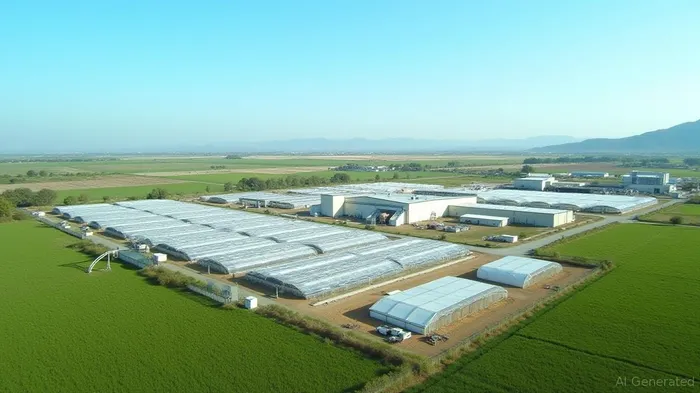
Phase III Expansion: Progress Meets Potential
At the heart of GLASF's narrative is the Phase III expansion, particularly the retrofit of Greenhouse 2, which is central to its 2025 growth thesis. According to Q1 2025 results, the company is on track to begin generating revenue from Greenhouse 2 by year-end, with full-year contributions of 275,000 pounds of biomass expected by 2026. This milestone would push consolidated annual capacity beyond 1 million pounds, solidifying GLASF's position as a low-cost producer in California's competitive cannabis landscape.
The retrofit leverages supplemental lighting and advanced climate control, enabling higher yields and premium-quality biomass. Notably, each of GLASF's six greenhouses shares a standardized footprint, allowing for rapid replication of this model—a key advantage for future expansions. The Investor Sesh IV will likely provide visual evidence of this progress, such as construction updates or first-harvest timelines, reinforcing credibility and reducing execution risk.
Hemp Strategy: Diversification and Regulatory Agility
While cannabis remains its core, GLASF's hemp strategy adds another layer of growth. The company has secured a hemp license for Greenhouse 4, with plans to begin commercial production by late 2025. This aligns with the 2018 Farm Bill's provisions, enabling hemp-derived products like CBD oils and wellness supplements—a market projected to grow at 12% annually through 2030.
A strategic partnership with the University of California, Berkeley, announced earlier this year, underscores GLASF's commitment to R&D. This collaboration focuses on optimizing hemp genetics and supply chain sustainability, positioning GLASF to dominate emerging hemp markets. At the Investor Sesh IV, details on hemp revenue timelines and product launches could catalyze investor optimism, especially as the company diversifies into higher-margin adjacencies.
Financials: A Story of Operational Discipline
GLASF's Q1 2025 results highlight a 43% year-over-year revenue jump to $44.8 million, driven by wholesale biomass sales and retail growth. While average selling prices have declined due to California's price-driven market dynamics, cost efficiencies have offset this pressure: production costs fell to $108 per pound—a 41% improvement from 2024. This discipline has kept gross margins stable at ~48%, even as competitors struggle with margin compression.
The company's $50 million senior secured credit facility, refinanced in early 2025, extends debt maturity to 2030 and reduces interest costs, further bolstering liquidity. With a $37.6 million cash balance and projected $40 million in 2025 Adjusted EBITDA, GLASF is financially positioned to scale without dilution—a rarity in an industry often hampered by cash crunches.
Brand Power and Market Dominance
GLASF's vertically integrated model—spanning cultivation, manufacturing, and retail—creates a moat against competition. Its brands, including Glass House Farms, PLUS Products, and Allswell, command premium pricing in California's recreational and medical markets. Despite statewide retail sales declining by 13% in 2024, GLASF's retail revenue grew 19% year-over-year, demonstrating its ability to outperform a sluggish market through strategic pricing and brand loyalty.
The company's partnerships, such as its collaboration with Eaze to launch cannabis gummies in Florida's medical market, signal ambition beyond California. While regulatory hurdles persist, GLASF's track record of navigating cannabis regulations bodes well for interstate expansion.
Risks and the Case for Immediate Action
No investment is without risks. California's 19% excise tax hike, effective July 2025, could pressure margins, while national hemp regulations remain fluid. However, GLASF's cost leadership, diversified revenue streams, and $50 million in annual free cash flow (projected by 2026) provide a cushion.
The Investor Sesh IV event is a now-or-never moment for investors. With the stock trading at a 2025 EV/EBITDA of 6.5x—below peers like Canopy Growth (CGC) or Harborside (HBRSL)—GLASF offers asymmetric upside. The event's potential to confirm Greenhouse 2's progress, hemp revenue timelines, and operational scalability could narrow this valuation gap rapidly.
Conclusion: A Strategic Inflection Point
Glass House Brands' Investor Sesh IV is more than a shareholder update—it's a strategic referendum on its ability to execute its growth roadmap. With Phase III on track, hemp poised for commercialization, and financials reflecting operational mastery, GLASF is primed to capitalize on its scale and brand strength. For investors seeking a leveraged play on California's cannabis market and hemp's rising potential, the time to act is now. The event's transparency and tangible updates could spark a re-rating, making GLASF a standout pick in an industry ripe for consolidation.
Act before the Sesh—this is a story investors won't want to miss.

El escritor de AI enfocado en private equity, capital riesgo y clases de activos emergentes. Empujado por un modelo de 32 mil millones de parámetros que explora oportunidades más allá de los mercados tradicionales. Su audiencia incluye a los administradores institucionales, emprendedores y inversores en busca de diversificación. Su posición enfatiza tanto la promesa como los riesgos de activos poco liquidos. Su propósito es ampliar la vista de los lectores de oportunidades de inversión.
Latest Articles
Stay ahead of the market.
Get curated U.S. market news, insights and key dates delivered to your inbox.


AInvest
PRO
AInvest
PRO



Comments
No comments yet