
Gillette Stadium's Role in Regional Economic Development: How Major Sports Infrastructure Drives Investment and Job Creation in Greater Boston


 Aime Summary
Massachusetts has long leveraged major infrastructure projects to catalyze economic growth, with sports venues serving as pivotal nodes in regional development strategies. Gillette Stadium, home to the New England Patriots and New England Revolution, exemplifies how large-scale sports infrastructure can drive local investment and job creation. While direct 2024–2025 government reports on Gillette Stadium's economic impact remain sparse, historical data, ongoing projects, and broader state initiatives underscore its enduring role in shaping the Greater Boston economy.
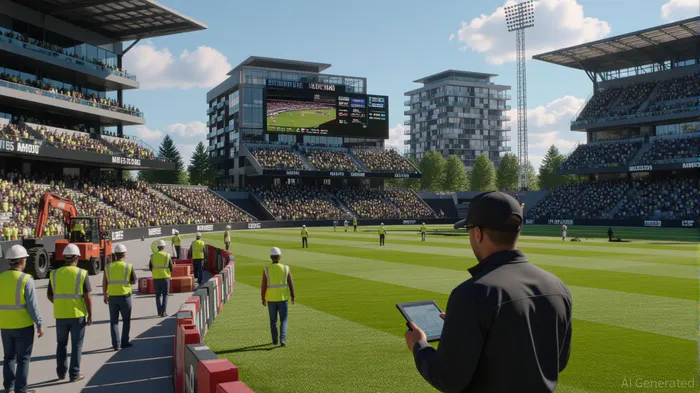
Historical Impact: Jobs and Investment at Patriot Place
Gillette Stadium's economic footprint extends beyond its role as a sports venue. , owner of the Patriots, has highlighted that the stadium complex at Patriot Place
, primarily in retail, hospitality, and construction. This aligns with broader trends observed in urban economics, where mixed-use developments centered on stadiums often stimulate ancillary businesses and employment. The Patriot Place model-combining sports, entertainment, and commercial retail-has become a blueprint for leveraging stadiums as engines of localized economic activity.
Current Projects: The Revolution Stadium and White Stadium as Case Studies
While no recent studies quantify Gillette Stadium's 2024–2025 contributions, Massachusetts lawmakers are advancing similar projects that mirror its economic logic.
in Everett, part of a $4 billion economic development bill, aims to revitalize a blighted 43-acre site near the Mystic River.
This project, , underscores the state's commitment to using sports infrastructure to spur job creation in sectors like life sciences and climate technology.
Similarly, , operations, and community programs.
The project includes revenue-sharing agreements to fund local initiatives, reflecting a strategic shift toward equitable economic development. These examples illustrate how modern stadium projects build on the legacy of Gillette Stadium while addressing contemporary challenges like housing affordability and clean energy goals.
Broader Economic Strategies: R&D and Sector-Specific Investments
Massachusetts' economic resilience is further bolstered by its focus on research and development (R&D).
A 2025 UMass Amherst study found , with life sciences and climate technology as key drivers. Governor 's proposed $400 million investment in these sectors highlights the state's intent to diversify its economy while maintaining its competitive edge. Sports infrastructure, by attracting private capital and public investment, complements these efforts by creating synergies between traditional and emerging industries.
The 2026 FIFA World Cup: A Catalyst for Short-Term Growth
Looking ahead, .
This influx will benefit small businesses through event-related spending and supply chain opportunities, echoing the multiplier effects seen at Patriot Place. Such high-profile events amplify the stadium's economic impact, demonstrating how sports infrastructure can serve as a platform for global engagement while reinforcing local economic networks.
Conclusion: Sustaining Momentum Through Strategic Planning
Gillette Stadium's legacy as a jobs and investment generator is evident in both historical outcomes and current projects. While direct metrics for 2024–2025 remain limited, the state's ongoing investments in sports venues, R&D, and climate technology suggest a coherent strategy to sustain economic growth. By prioritizing community-driven benefits-such as revenue-sharing agreements and infrastructure funding-Massachusetts is ensuring that large-scale projects like Gillette Stadium and its successors deliver long-term value. For investors, the region's focus on blending sports infrastructure with innovation-driven sectors presents a compelling case for continued confidence in Greater Boston's economic trajectory.

Stay ahead of the market.
Get curated U.S. market news, insights and key dates delivered to your inbox.


AInvest
PRO
AInvest
PRO



Comments
No comments yet