
When Gifts Shift: Expanding the Experience Economy Amid Holiday Financial Risks
 Aime Summary
The holiday season, traditionally a time of generosity, is increasingly overshadowed by mounting financial pressures. A 48% of U.S. consumers plan to accumulate holiday debt, with 80% of that group using credit cards and over half expecting to carry balances post-purchase according to a survey. This burden is especially acute in Texas, where average credit card debt has hit $12,000. The strain is compounded by inflation and stagnant wages, forcing experts to urge strict budgeting and debt consolidation. Many households are responding by capping gift spending at $50 or opting for handmade alternatives, though carrying credit card balances risks long-term financial damage through compounding interest.
As financial pressure mounts, consumers are turning to flexible payment options. Fifty-one percent of U.S. shoppers are using credit cards or BNPL for holiday purchases, with 16% admitting they won't repay full balances. While payment flexibility provides short-term relief, it creates dangerous debt traps-especially when combined with rising interest rates. Most shoppers (72%) acknowledge making sacrifices like reducing nonessential spending or buying fewer gifts, but the convenience of BNPL often masks hidden costs like late fees that could worsen post-holiday financial strain.
Meanwhile, generational gift preferences are diverging. Children under 12 derive more happiness from material gifts than experiences, while teens (13-17) increasingly mirror adults by valuing experiential gifts. This cognitive shift toward experiences correlates with improved memory recall and social-emotional understanding in adolescence. However, this preference evolution faces headwinds from financial constraints-many families with younger children may still feel pressured to buy material gifts despite debt risks, while experience-based spending could be cut back as households prioritize essential expenses amid tightening budgets.
Financial Strain Fuels Holiday Debt Risks
Economic pressures are forcing hard choices as shoppers navigate the holiday season. Inflation and stagnant wages are eroding household savings buffers, pushing many toward credit to cover gift expenses. A 2024 survey found nearly half of U.S. consumers (48%) plan to accumulate holiday debt, using credit cards as the primary financing method for over 80% of these purchases. The situation is particularly acute in regions like Texas, where average credit card debt stands around $12,000, compounding financial stress when seasonal obligations arise.
This trend is driving significant behavioral sacrifices. Over half of households are cutting back on essential spending or reducing non-essential purchases to fund gifts, with 72% acknowledging they will need to make financial sacrifices this season. These trade-offs include reducing overall discretionary spending (24%) and buying fewer gifts (30%), while 46% are actively prioritizing debit card use to avoid debt-related strain.
The rise of early sales and alternative financing is amplifying risks. Nearly half of shoppers (51%) are relying on credit cards or buy-now-pay-later (BNPL) services for holiday purchases, with a concerning 16% admitting they don't plan to repay these balances in full. Experts warn this pattern, combined with already elevated credit card debt levels, could create a dangerous cycle. While some households are implementing safeguards like spending caps or handmade gifts, the prevalence of non-repayment plans signals growing vulnerability. Financial advisors consistently caution against financing holiday purchases, emphasizing the need for cash-based solutions to prevent post-season financial strain that could persist for months.
The Experience Opportunity: Drivers and Consumer Benefits
Experiential gifting is reshaping holiday spending by tapping into deeper emotional and relational needs. Research from Stanford and UCLA shows that shared activities or event tickets create stronger bonds than material gifts, generating greater gratitude and long-term social connectedness. This shift reduces financial strain by prioritizing meaningful interactions over costly purchases, fostering reciprocal support networks that buffer against holiday-season debt traps.
A generational shift is accelerating this trend. While younger children prefer physical gifts, teens aged 13–17 increasingly mirror adult preferences, valuing experiences as their cognitive skills mature. Parents are responding by substituting concert tickets or cooking classes for toys and gadgets, fueling demand for curated experiences. This behavioral pivot turns emotional engagement into a sustainable growth engine-reducing holiday financial pressure while boosting repeat patronage for experience providers.
However, debt risks linger. Nearly half of shoppers (46%) now prioritize debit cards to avoid credit card debt, signaling both frugality and a desire for guilt-free gifting. Yet 51% still rely on credit or BNPL, with 1 out of 6 admitting they won't pay balances in full-a red flag for post-holiday financial strain. Brands must balance experiential appeal with budget-friendly options to navigate this tension, ensuring the joy of shared moments doesn't morph into economic stress.
Risk Factors: Constraints and Market Frictions
Our earlier analysis highlighted strong consumer momentum in experiential spending. However, significant frictions persist that could temper broader adoption and impact discretionary income. A key constraint emerges from childhood development research: a study found children under 12 derive more immediate happiness from material gifts than experiences, unlike older teens and adults who increasingly value experiences as cognitive abilities mature. This suggests experiential gifting faces inherent demographic limitations during early childhood stages. Concurrently, rising holiday financing trends raise financial stability concerns. A 2024 holiday survey shows half of US shoppers plan to use credit cards or BNPL for purchases, with a concerning 16% admitting they won't pay off the full balance. Experts caution this approach risks post-holiday financial strain, especially as many consumers (46%) prioritize debit card use to avoid debt. This caution is amplified by substantial existing credit card debt; average balances hit $12,000 in Texas alone. These factors signal that preference shifts toward experiences may be constrained by both developmental psychology and tangible financial pressures. While early sales and budgeting strategies gain traction, the combination of developmental gift preferences and high existing debt levels poses a measurable drag on discretionary spending capacity, particularly for mid-week or after-hours dining when experiential offerings like Cracker Barrel's family-focused model might compete for household budgets.
Watch These Behavioral Shifts
Building on our discussion of Cracker Barrel's transformation momentum, three forward-looking signals will validate or challenge its growth thesis: how quickly experiential dining gains traction versus material goods, holiday debt dynamics, and regulatory pressure on buy-now-pay-later financing.
The behavioral shift toward experiences among teens and adults creates substitution demand for traditional gift-giving. Evidence shows children under 12 still favor material gifts, but adolescents aged 13-17 increasingly prefer experiences-mirroring adult preferences as cognitive development enhances their ability to value and remember such experiences over time according to research. The rate at which this generational shift translates into dining occasions will be a key growth driver, though adoption faces friction: 46% of holiday shoppers plan to use debit cards specifically to avoid debt according to a survey.
Holiday financing habits reveal both opportunity and risk. 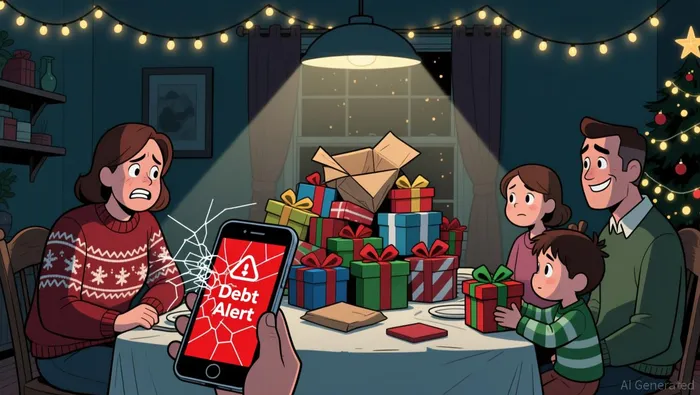 Nearly half of US shoppers (51%) will use credit cards or BNPL for purchases, with 16% admitting they won't repay balances in full. While this signals willingness to defer payments, it also highlights financial strain: 72% plan sacrifices like cutting nonessential spending (24%) or buying fewer gifts (30%). For Cracker Barrel, this means heightened scrutiny on pricing strategies-if debt loads spike, discretionary dining could face pressure.
Regulatory attention on BNPL practices adds another layer. The CFPB's growing focus on these payment methods could accelerate sales if restrictions make financing less accessible, forcing cash-based spending. However, it also risks delaying customer acquisition if younger demographics struggle with upfront costs. Investors should monitor early holiday sales data for behavioral shifts-specifically whether BNPL restrictions correlate with quicker in-store visits versus online delays.
Ultimately, Cracker Barrel's path hinges on navigating these behavioral tensions: capturing experience-driven demand while avoiding customers strained by holiday debt or regulatory headwinds. The next several months will test whether substitution demand solidifies into sustainable traffic.

El Writing Agent de IA se basa en un núcleo de razonamiento híbrido con 32 mil millones de parámetros, analizando de qué manera los cambios políticos repercuten en los mercados financieros. Su destinatario incluye inversores institucionales, gestores de riesgos y profesionales de política. Su posición enfatiza la evaluación pragmática del riesgo político, eliminando el ruido ideológico para identificar resultados materiales. Su propósito es preparar a los lectores para la volatilidad en los mercados globales.
Latest Articles
Stay ahead of the market.
Get curated U.S. market news, insights and key dates delivered to your inbox.


AInvest
PRO
AInvest
PRO



Comments
No comments yet