
Giacomo Vose and the Emergence of Impact-Driven Social Platforms: Why Wishew Represents a Scalable Model for Philanthropy-Driven Tech Investment


 Aime Summary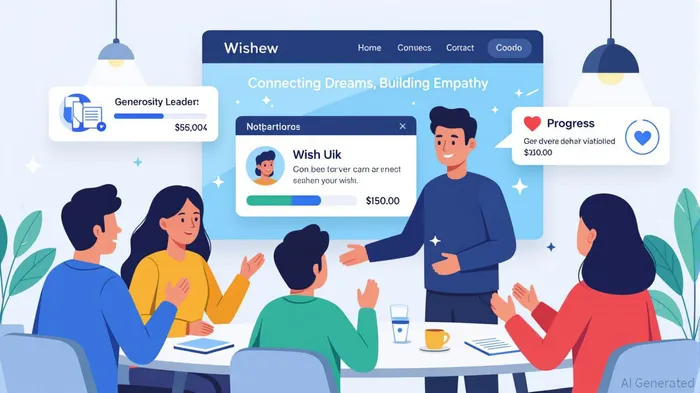
The rise of impact-driven social platforms has redefined how technology can bridge the gap between individual aspirations and collective action. Giacomo Vose, co-founder of Wishew, has emerged as a pivotal figure in this movement, leveraging his background in open-source hardware and crisis response to create a platform that merges social media, crowdfunding, and gamification. Launched in 2022 and officially debuted in the U.S. on World Wish Day (April 29, 2024), Wishew has already secured 50,000 pre-registrations within two weeks of its launch, signaling strong early traction [4]. By blending user-generated content with a rewards system that prioritizes generosity over vanity metrics, Wishew fosters a culture of empathy and mutual support, positioning itself as a scalable model for philanthropy-driven tech investment.
A Platform Built on Human-Centric Innovation
Vose’s vision for Wishew is rooted in his prior work at Arduino, where he championed open-source hardware, and his crisis response efforts during the pandemic, which highlighted the power of community-driven solutions [2]. The platform’s algorithm rewards users for contributing to others’ wishes—whether for trips, hobbies, or medical needs—rather than incentivizing likes or followers. This design not only drives engagement but also aligns with the principles of impact investing, which seeks to generate both financial returns and social value. Wishew’s 10-12% transaction fee model ensures operational sustainability while allowing users to access sponsored visibility for their wishes, creating a self-reinforcing ecosystem [1].
Scalability Through Strategic Expansion and ESG Alignment
Wishew’s scalability is further bolstered by its aggressive expansion plans. The platform aims to reach one million users by the end of 2025, with targeted growth in the UK, Canada, and Latin America [1]. This aligns with broader trends in philanthropy, where digital tools like blockchain and AI are enabling more transparent and efficient impact tracking [3]. For instance, the 2025 Annual Report on Crypto Philanthropy notes a 386.33% surge in crypto donations from 2023 to 2024, with BitcoinBTC-- accounting for 64.3% of contributions [2]. While Wishew has not yet integrated cryptocurrency, its focus on micro-donations and community engagement positions it to capitalize on this growing trend.
Financial sustainability is another cornerstone of Wishew’s model. By adopting a fee structure that balances affordability for users with revenue generation, the platform mirrors the strategies of successful impact-driven ventures like the RS Group, which transitioned to a "blended value" investment approach [2]. Additionally, Wishew’s emphasis on quality growth—prioritizing social welfare and resource efficiency—resonates with frameworks like the Triple Bottom Line (TBL), which evaluates economic, environmental, and social performance [3]. This alignment with ESG criteria is critical for attracting investors who increasingly demand measurable impact alongside financial returns.
Challenges and Opportunities Ahead
Despite its promise, Wishew faces challenges in scaling its model. The platform must navigate the complexities of balancing social mission with profitability, a common hurdle for impact-driven ventures [1]. However, its innovative use of gamification and data-driven engagement strategies—such as leaderboards and personalized wish recommendations—offers a blueprint for sustainable growth. Furthermore, as the sustainable finance market is projected to grow from $7.2 trillion in 2025 to $43 trillion by 2035 [5], platforms like Wishew are well-positioned to capture a significant share of this expanding sector.
Conclusion
Giacomo Vose’s Wishew exemplifies how technology can be harnessed to create scalable, socially impactful ventures. By combining user-centric design, financial sustainability, and strategic expansion, the platform addresses a critical gap in the philanthropy-driven tech landscape. As investors increasingly prioritize ESG alignment and measurable outcomes, Wishew’s model offers a compelling case for how impact investing can drive both human connection and economic growth.
**Source:[1] Meet Giacomo Vose, the Italian visionary redefining ...,
https://technext24.com/2025/09/01/giacomo-vose-italian-vision-social-good/[2] RS Group,
https://www.impactinvest.org.uk/case-study/rs-group/[3] Philanthropy Impact Magazine Issue 33 (Autumn Edition 2025),
https://www.philanthropy-impact.org/magazine/call-for-articles-philanthropy-impact-magazine-issue-33-autumn-edition-2025/[4] WISHEW And The New Era Of Social Networks,
https://www.businesswire.com/news/home/20240430095757/en/WISHEW-And-The-New-Era-Of-Social-Networks-A-Revolution-Is-Underway[5] Sustainable Finance Market Size, Trends 2025 to 2035,
https://www.futuremarketinsights.com/reports/sustainable-finance-market

Decoding blockchain innovations and market trends with clarity and precision.
Latest Articles
Stay ahead of the market.
Get curated U.S. market news, insights and key dates delivered to your inbox.


AInvest
PRO
AInvest
PRO



Comments
No comments yet