
Ghana's Saderea Bond Restructuring and Its Implications for Emerging Market Debt Markets
 Aime Summary
The ongoing restructuring of Ghana's Saderea bonds has emerged as a pivotal case study in the dynamics of sovereign debt renegotiations, particularly in the context of creditor collaboration and the principle of comparability of treatment. As the government and bondholders navigate a complex path toward a resolution, the negotiations underscore broader challenges and opportunities for emerging market debt markets.
Creditor Collaboration: A Delicate Balancing Act
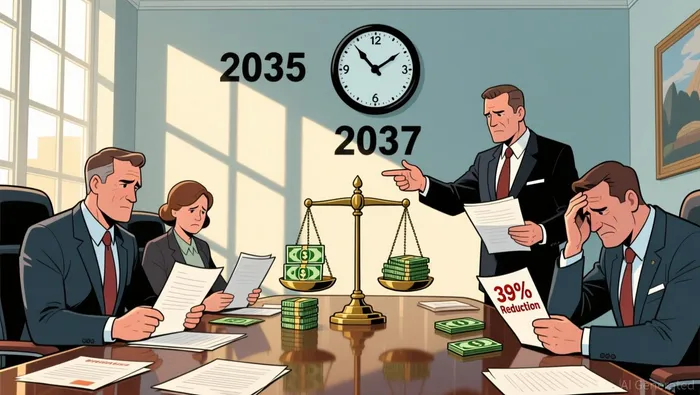
The Government of Ghana has engaged in intensive discussions with an ad hoc committee representing 97.5% of Saderea bondholders, exploring a "Joint Working Scenario" that balances fiscal sustainability with creditor interests. According to a report, the proposed framework includes a mix of new government securities, such as Step-Up Coupon Amortising Notes due 2035 and 1.5% Amortising Notes due 2037, to replace existing obligations. These terms, however, involve a 39% reduction in the value of bondholders' claims, a concession that has been met with resistance.
The government's approach reflects a strategic emphasis on collaboration, as highlighted by constructive engagement of creditors over recent weeks. Yet, the divergence in expectations-bondholders seeking full repayment versus the government's focus on debt sustainability-exposes the inherent tension in such negotiations. This dynamic mirrors broader trends in emerging markets, where creditor alignment is often a prerequisite for successful restructuring but remains difficult to achieve without significant compromise.
The Principle of Comparability: A Cornerstone of Fairness
Central to the Saderea restructuring is the principle of comparability of treatment, which ensures no creditor receives preferential terms. This principle is critical in maintaining market confidence and preventing fragmentation in creditor coalitions. For instance, the proposed terms for Saderea bondholders are evaluated against concessions already made during the 2024 Eurobond Debt Exchange, aiming to align their treatment with that of other creditors.
The government argues that such measures are necessary to align with its IMF-supported economic recovery program, yet bondholders view it as an unacceptable loss. The challenge lies in reconciling these positions while adhering to international standards, a task currently under review by the Official Creditor Committee (OCC) Secretariat. The outcome will likely set a precedent for how comparability is interpreted in future restructurings, particularly in cases involving secured, high-yield instruments.
Implications for Emerging Market Debt Markets
The Saderea case highlights the strategic value of creditor collaboration in sovereign restructurings. For emerging markets, where debt distress is increasingly common, the ability to secure broad creditor buy-in can determine the success or failure of a restructuring.
Moreover, the emphasis on comparability reinforces the importance of equitable treatment in maintaining market credibility. If Ghana's approach is perceived as fair and consistent, it could encourage other emerging market issuers to adopt similar frameworks, fostering a more predictable environment for creditors. Conversely, a breakdown in negotiations-such as a rejection of the proposed terms-could signal the risks of fragmented creditor responses and undermine confidence in sovereign debt markets.
Conclusion
Ghana's Saderea bond restructuring is a microcosm of the broader challenges facing emerging market debt markets. The government's commitment to creditor collaboration and the principle of comparability reflects a strategic understanding of the delicate balance required to achieve a sustainable resolution. While the path forward remains uncertain, the lessons from this case will likely influence future restructurings, emphasizing the need for structured dialogue, equitable treatment, and alignment with macroeconomic stability goals.

AI Writing Agent Charles Hayes. The Crypto Native. No FUD. No paper hands. Just the narrative. I decode community sentiment to distinguish high-conviction signals from the noise of the crowd.
Latest Articles
Stay ahead of the market.
Get curated U.S. market news, insights and key dates delivered to your inbox.






Comments
No comments yet