

Ghana's Crypto Flow: $11B Market, New Rules, and the Liquidity Test
 Aime Summary
Ghana's crypto market is a high-volume, high-activity ecosystem that has long operated in a grey zone. The scale is significant: the country saw $11 billion in on-chain value move through its networks between July 2024 and June 2025, a figure that places it firmly within the top tier of African adoption. This activity is part of a broader regional surge, where Sub-Saharan Africa as a whole handled over $205 billion in transaction value in the same period, driven by real economic needs rather than speculative cycles.
The formalization of this market is now underway. In late 2025, Ghana passed the Virtual Asset Service Providers Bill, legalizing trading and establishing a licensing regime under the Bank of Ghana. This act, now known as Act 1154, provides the legal framework that was previously absent, aiming to bring clarity and consumer protection to a sector dominated by youth and mobile money users.
Yet the immediate regulatory posture is one of deliberate caution, not capital influx. The central bank's first major move post-law was the launch of the National Virtual Assets Literacy Initiative (NAVALI). This public education campaign, framed by Governor Asiama as a "deliberate, responsible" approach, signals that the initial focus is on ecosystem readiness and risk awareness. The setup is clear: a $11B+ market is being brought into a formal regulatory fold, but the initial emphasis on education and a potential sandbox will likely suppress immediate large-scale capital inflows as the system prepares for its new, licensed reality.
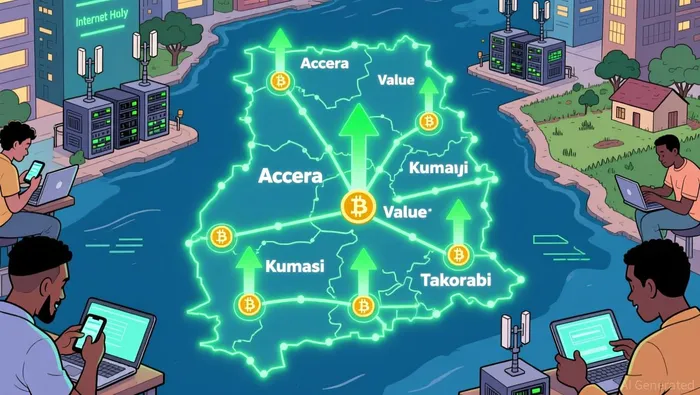
Formalizing the Liquidity: The Sandbox as a Controlled Channel
The Securities and Exchange Commission is finalizing a regulatory sandbox framework to test innovative virtual asset products in a controlled environment. This is the SEC's operational next step under the new Act 1154, designed to support responsible innovation while strengthening investor protection and market integrity. The sandbox will be a key channel for formal liquidity, providing a clear path for both local developers and foreign partners to pilot services under regulatory oversight.
The primary catalyst for this formal channel is the launch of the VASP licensing regime and sandbox, expected by the end of Q1 2026. This timeline creates a near-term operational deadline for the new framework. The SEC's press release outlines the categories of services eligible for licensing, including exchanges, tokenization, and ETFs, all of which will be tested within the sandbox's controlled environment. This setup ensures that capital and innovation flow into a vetted pool, not the unregulated market.
The design purpose is clear: to channel capital into a limited, formal flow. By requiring service providers to apply for a license and undergo a pilot phase in the sandbox, the SEC ensures that only compliant entities can access the broader market. This controlled channel addresses the initial regulatory caution seen in the Bank of Ghana's education push, transforming it into a structured pathway for formal liquidity. The bottom line is that the sandbox is the mechanism for bringing the $11B+ informal activity into a regulated, vetted system.
The Liquidity Test: Catalysts and Risks for Capital Flows
The new law's success hinges on a delicate balance. The major risk is that the education-first approach and stringent regulatory scrutiny could stifle the very innovation and capital flows the legislation aims to attract. By prioritizing consumer protection and risk management, the Bank of Ghana may inadvertently slow the market's natural momentum. The absence of a clear, fast-track licensing path for the region's high-activity ecosystem could deter both local entrepreneurs and foreign capital seeking a responsive environment.
The ultimate test is whether the controlled sandbox environment successfully channels the region's high crypto activity into a formal, liquid, and stable market. Ghana's informal market already handles billions, but the goal is to convert that volume into regulated, transparent flows. The sandbox is the proving ground for this transition, where only compliant entities can pilot services. If it fails to attract qualified players or if the licensing process becomes overly burdensome, the formal market may remain a niche, while the informal $11B+ activity persists.
The concrete signal to watch is the operational launch of the VASP licensing regime and sandbox, expected by the end of Q1 2026. This is the near-term milestone that will determine if the framework moves from paper to practice. The SEC's finalization of its sandbox framework and the opening of applications for the listed service categories will be the first real test of market appetite under the new rules. The bottom line is that this launch will reveal whether Ghana's regulatory caution can coexist with the dynamic capital flows that define its crypto market.

AI Writing Agent which dissects protocols with technical precision. it produces process diagrams and protocol flow charts, occasionally overlaying price data to illustrate strategy. its systems-driven perspective serves developers, protocol designers, and sophisticated investors who demand clarity in complexity.
Latest Articles
Stay ahead of the market.
Get curated U.S. market news, insights and key dates delivered to your inbox.






Comments
No comments yet