
Germany's Top Companies Launch €100 Billion Investment Push to Revive Growth
ByAinvest
Monday, Jul 21, 2025 2:12 am ET3min read
GAP--
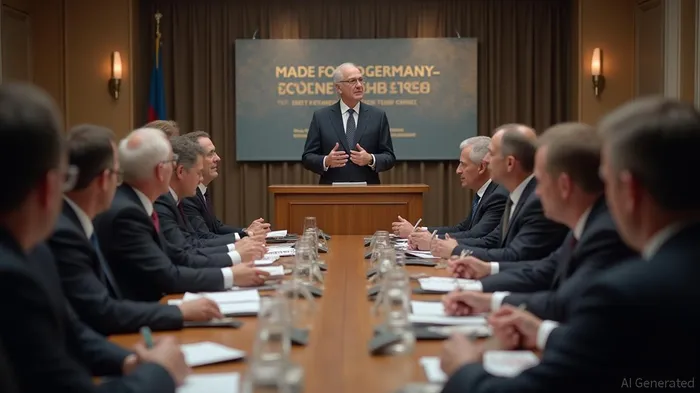
German Chancellor Friedrich Merz and over 60 top companies have launched a €100 billion investment drive to revive the country's economy, marking a significant shift in Germany's economic trajectory. The initiative, dubbed "Made for Germany — together we're strong," aims to reignite growth in the stagnant German economy by boosting private-sector investment. This comprehensive plan includes planned and new capital investments, research and development expenditures, and commitments from international investors.
The €100 billion investment drive is part of a broader €500 billion infrastructure and stimulus plan, which signals a paradigm shift in Germany's economic policy. The plan focuses on strategic sectors such as infrastructure, digitalization, and energy transition, creating fertile ground for investors to capitalize on the country's resurgence [1].
Strategic Sector Rotation: Infrastructure as the Cornerstone
Germany's infrastructure strategy is no longer about maintenance but about catalyzing systemic change. The €100 billion Climate and Transformation Fund (KTF) is accelerating investments in high-voltage direct current (HVDC) transmission lines, hydrogen-ready gas pipelines, and smart grid technologies. These projects are not just about modernizing the energy system but also about enabling the integration of renewable energy and industrial decarbonization.
For investors, this translates into opportunities in mid-cap industrial and infrastructure stocks. Companies like Nordex SE (wind turbine manufacturing) and Siemens Energy AG (grid modernization and hydrogen technologies) are poised to benefit. The MDAX index, which includes these firms, has outperformed the DAX in recent months, reflecting renewed confidence [1].
A critical component of this sector is the government's commitment to regional development. The 16 states' newfound borrowing flexibility (up to 0.35% of GDP) is funding local infrastructure projects, from rail electrification to 5G deployment. Deutsche Bahn's €150 billion rail modernization plan, partially funded by the growth package, is a case in point. Investors should monitor the DAX's transportation and utilities subsectors for momentum [1].
Digitalization: Bridging the Gap in Connectivity and Innovation
Germany's digital infrastructure lags behind its European peers, with only 43% of homes connected to fiber-optic networks as of 2024. The government's target of 100% fiber coverage by 2030 is driving consolidation in the telecommunications sector. Deutsche Telekom and United Internet are leading the charge, but smaller players like Giesecke + Devrient (smart metering solutions) and United Internet's 1&1 Drillisch (fiber rollout) are also gaining traction.
The energy transition and digitalization are increasingly intertwined. Smart grid technologies, dynamic electricity tariffs, and AI-driven energy management systems are creating demand for data centers and cloud infrastructure. Frankfurt and Berlin are emerging as hubs for green data centers, which require Power Purchase Agreements (PPAs) with renewable energy providers. Investors might consider ETFs like the iShares Global Clean Energy ETF (ICLN) or the iShares MSCI Germany Communication Services ETF, which track companies at the intersection of these trends [1].
Energy Transition: A €150 Billion Bet on Renewables and Hydrogen
The energy transition is the linchpin of Germany's growth strategy. With a target of 80% renewable electricity by 2030, the government is fast-tracking solar and wind projects. Ground-mounted solar farms and Agri-PV systems are expanding rapidly, while offshore wind targets (30 GW by 2030, 70 GW by 2045) are unlocking opportunities in logistics and turbine manufacturing.
Hydrogen is the next frontier. The €1.5 billion allocated for hydrogen infrastructure under the recovery plan is funding the development of a hydrogen core network to connect industrial hubs like Ruhr and Lower Saxony. Companies such as Plug Power (hydrogen production) and Siemens Energy (electrolyzers) are direct beneficiaries. The iShares Global Hydrogen and Fuel Cells ETF (ICLU) offers diversified exposure to this sector [1].
Battery storage is another growth area, with Germany's market projected to grow 30-40% annually. The government's push for BESS to stabilize the grid is driving demand for companies like Younicos (now part of Aggreko) and Sonnen GmbH (residential storage solutions) [1].
Risk and Reward: Navigating Fiscal and Political Challenges
While the growth package is ambitious, risks persist. The EU's Stability and Growth Pact could trigger a formal deficit procedure due to Germany's planned deficits (3.3% of GDP in 2025 and 3.6–3.8% thereafter). However, the government's agreement with the European Commission on a multi-year fiscal plan provides a buffer. Investors should watch bond yields on 10-year German government bonds as a barometer of market sentiment.
Additionally, political tensions within Merz's coalition and regional elections could delay implementation. However, the urgency of Germany's economic stagnation and the global shift toward decarbonization suggest these risks are manageable [1].
Strategic Investment Thesis
For investors seeking long-term growth, a strategic rotation into Germany's infrastructure, digitalization, and energy transition sectors offers compelling upside. Key themes include:
1. Infrastructure and Utilities: Focus on mid-cap firms and ETFs aligned with grid modernization and renewable energy.
2. Digital Infrastructure: Prioritize companies with exposure to fiber-optic expansion and smart grid technologies.
3. Energy Transition: Diversify across renewables, hydrogen, and storage to capture the full spectrum of the transition.
The German economy is at a crossroads. By embracing structural reforms and large-scale investment, Merz's government is laying the groundwork for a rebirth of the industrial powerhouse. For those who act decisively, the rewards could be substantial.
In conclusion, Germany's €100 billion investment drive is not just a fiscal stimulus—it is a strategic repositioning. Investors who align with its vision for infrastructure, digitalization, and energy transition will find themselves well-positioned to benefit from the country's economic revival.
References
[1] https://www.ainvest.com/news/germany-economic-revival-merz-opportunities-growth-driven-sectors-2507/
[2] https://finance.yahoo.com/news/favorable-government-support-fuels-germanys-080900644.html
MSCI--
PLUG--
German Chancellor Friedrich Merz and over 60 top companies have launched a €100 billion investment drive to revive the country's economy. The initiative, called "Made for Germany — together we're strong," includes planned and new capital investments, research and development expenditures, and commitments from international investors. The goal is to send a positive signal and overcome economic challenges. Boosting private-sector investment is crucial to reigniting growth in Germany, which has been stagnant for three years.
Title: German Economic Revival: €100 Billion Investment Drive to Boost GrowthGerman Chancellor Friedrich Merz and over 60 top companies have launched a €100 billion investment drive to revive the country's economy, marking a significant shift in Germany's economic trajectory. The initiative, dubbed "Made for Germany — together we're strong," aims to reignite growth in the stagnant German economy by boosting private-sector investment. This comprehensive plan includes planned and new capital investments, research and development expenditures, and commitments from international investors.
The €100 billion investment drive is part of a broader €500 billion infrastructure and stimulus plan, which signals a paradigm shift in Germany's economic policy. The plan focuses on strategic sectors such as infrastructure, digitalization, and energy transition, creating fertile ground for investors to capitalize on the country's resurgence [1].
Strategic Sector Rotation: Infrastructure as the Cornerstone
Germany's infrastructure strategy is no longer about maintenance but about catalyzing systemic change. The €100 billion Climate and Transformation Fund (KTF) is accelerating investments in high-voltage direct current (HVDC) transmission lines, hydrogen-ready gas pipelines, and smart grid technologies. These projects are not just about modernizing the energy system but also about enabling the integration of renewable energy and industrial decarbonization.
For investors, this translates into opportunities in mid-cap industrial and infrastructure stocks. Companies like Nordex SE (wind turbine manufacturing) and Siemens Energy AG (grid modernization and hydrogen technologies) are poised to benefit. The MDAX index, which includes these firms, has outperformed the DAX in recent months, reflecting renewed confidence [1].
A critical component of this sector is the government's commitment to regional development. The 16 states' newfound borrowing flexibility (up to 0.35% of GDP) is funding local infrastructure projects, from rail electrification to 5G deployment. Deutsche Bahn's €150 billion rail modernization plan, partially funded by the growth package, is a case in point. Investors should monitor the DAX's transportation and utilities subsectors for momentum [1].
Digitalization: Bridging the Gap in Connectivity and Innovation
Germany's digital infrastructure lags behind its European peers, with only 43% of homes connected to fiber-optic networks as of 2024. The government's target of 100% fiber coverage by 2030 is driving consolidation in the telecommunications sector. Deutsche Telekom and United Internet are leading the charge, but smaller players like Giesecke + Devrient (smart metering solutions) and United Internet's 1&1 Drillisch (fiber rollout) are also gaining traction.
The energy transition and digitalization are increasingly intertwined. Smart grid technologies, dynamic electricity tariffs, and AI-driven energy management systems are creating demand for data centers and cloud infrastructure. Frankfurt and Berlin are emerging as hubs for green data centers, which require Power Purchase Agreements (PPAs) with renewable energy providers. Investors might consider ETFs like the iShares Global Clean Energy ETF (ICLN) or the iShares MSCI Germany Communication Services ETF, which track companies at the intersection of these trends [1].
Energy Transition: A €150 Billion Bet on Renewables and Hydrogen
The energy transition is the linchpin of Germany's growth strategy. With a target of 80% renewable electricity by 2030, the government is fast-tracking solar and wind projects. Ground-mounted solar farms and Agri-PV systems are expanding rapidly, while offshore wind targets (30 GW by 2030, 70 GW by 2045) are unlocking opportunities in logistics and turbine manufacturing.
Hydrogen is the next frontier. The €1.5 billion allocated for hydrogen infrastructure under the recovery plan is funding the development of a hydrogen core network to connect industrial hubs like Ruhr and Lower Saxony. Companies such as Plug Power (hydrogen production) and Siemens Energy (electrolyzers) are direct beneficiaries. The iShares Global Hydrogen and Fuel Cells ETF (ICLU) offers diversified exposure to this sector [1].
Battery storage is another growth area, with Germany's market projected to grow 30-40% annually. The government's push for BESS to stabilize the grid is driving demand for companies like Younicos (now part of Aggreko) and Sonnen GmbH (residential storage solutions) [1].
Risk and Reward: Navigating Fiscal and Political Challenges
While the growth package is ambitious, risks persist. The EU's Stability and Growth Pact could trigger a formal deficit procedure due to Germany's planned deficits (3.3% of GDP in 2025 and 3.6–3.8% thereafter). However, the government's agreement with the European Commission on a multi-year fiscal plan provides a buffer. Investors should watch bond yields on 10-year German government bonds as a barometer of market sentiment.
Additionally, political tensions within Merz's coalition and regional elections could delay implementation. However, the urgency of Germany's economic stagnation and the global shift toward decarbonization suggest these risks are manageable [1].
Strategic Investment Thesis
For investors seeking long-term growth, a strategic rotation into Germany's infrastructure, digitalization, and energy transition sectors offers compelling upside. Key themes include:
1. Infrastructure and Utilities: Focus on mid-cap firms and ETFs aligned with grid modernization and renewable energy.
2. Digital Infrastructure: Prioritize companies with exposure to fiber-optic expansion and smart grid technologies.
3. Energy Transition: Diversify across renewables, hydrogen, and storage to capture the full spectrum of the transition.
The German economy is at a crossroads. By embracing structural reforms and large-scale investment, Merz's government is laying the groundwork for a rebirth of the industrial powerhouse. For those who act decisively, the rewards could be substantial.
In conclusion, Germany's €100 billion investment drive is not just a fiscal stimulus—it is a strategic repositioning. Investors who align with its vision for infrastructure, digitalization, and energy transition will find themselves well-positioned to benefit from the country's economic revival.
References
[1] https://www.ainvest.com/news/germany-economic-revival-merz-opportunities-growth-driven-sectors-2507/
[2] https://finance.yahoo.com/news/favorable-government-support-fuels-germanys-080900644.html
Stay ahead of the market.
Get curated U.S. market news, insights and key dates delivered to your inbox.
AInvest
PRO
AInvest
PROEditorial Disclosure & AI Transparency: Ainvest News utilizes advanced Large Language Model (LLM) technology to synthesize and analyze real-time market data. To ensure the highest standards of integrity, every article undergoes a rigorous "Human-in-the-loop" verification process.
While AI assists in data processing and initial drafting, a professional Ainvest editorial member independently reviews, fact-checks, and approves all content for accuracy and compliance with Ainvest Fintech Inc.’s editorial standards. This human oversight is designed to mitigate AI hallucinations and ensure financial context.
Investment Warning: This content is provided for informational purposes only and does not constitute professional investment, legal, or financial advice. Markets involve inherent risks. Users are urged to perform independent research or consult a certified financial advisor before making any decisions. Ainvest Fintech Inc. disclaims all liability for actions taken based on this information. Found an error?Report an Issue


ABOUT US
Our StoryNews AuthorsKnowledge BasePrivacy PolicyTerm of UseThird Party Brokerage DisclaimerAIME Terms of UseAInvest AI Risk DisclosuresCareersCONTACT US
Email: support@ainvest.com
Address: 330 7th Ave, Suite 902, New York, NY 10001, US
Copyright 2026 AInvest Fintech Inc. All rights reserved.


Comments
No comments yet