
Germany's Strategic Exit from Uniper and SEFE: A Window of Opportunity for Energy Investors
 Aime Summary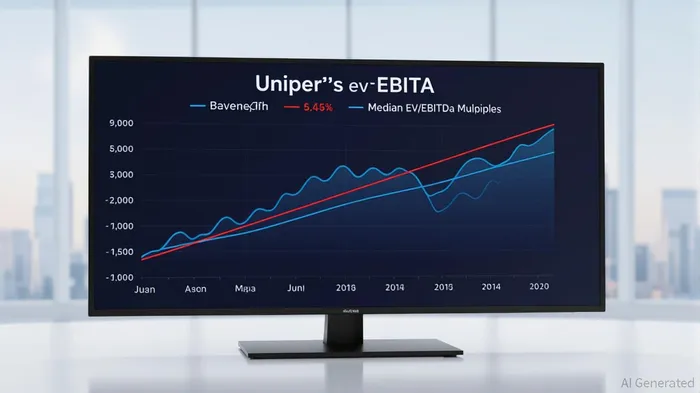
Germany's energy sector is at a pivotal crossroads. The government's dual efforts to exit its stakes in nationalized entities Uniper and Securing Energy for Europe GmbH (SEFE) have sparked intense speculation about the future of these firms—and the opportunities they present for investors. With Berlin exploring a range of options, from mergers and IPOs to outright sales, the stakes are high for both domestic and international stakeholders. This analysis delves into the valuation potential and market dynamics of these exits, offering a roadmap for investors navigating this complex landscape.
Strategic Options and Regulatory Constraints
The German government's exit strategy for Uniper and SEFE is shaped by a mix of regulatory deadlines and market realities. By the end of 2028, Berlin must reduce its 99.12% stake in Uniper to no more than 25% plus one share, as mandated by the European Commission[2]. For SEFE, the economy ministry is tasked with finalizing a plan by mid-2025, with options including a sale, merger with Uniper, or restructuring[1]. A merger between the two entities is being considered as a fallback if standalone sales falter, though antitrust hurdles and political approvals complicate this path[1].
The government's approach to Uniper is equally multifaceted. While a full sale to private equity giants like BrookfieldBN-- or strategic buyers such as Abu Dhabi's Taqa or Norway's EquinorEQNR-- is under discussion, a reverse IPO or partial stake sale remains a viable alternative[3]. However, Uniper's hybrid portfolio—spanning gas trading, coal-fired plants, and renewables—poses challenges for an IPO, given the sector's low liquidity and exposure to commodity price volatility[1].
Financial Performance and Valuation Benchmarks
Uniper's financials paint a mixed picture. For the trailing twelve months ending June 30, 2025, the company reported revenue of $77.1 billion but a net loss of $349.8 million[4]. Its EBITDA of $3.296 billion in 2024, however, suggests operational resilience amid volatile energy markets[4]. The company's debt-to-equity ratio has improved significantly, dropping to 0.00 in Q2 2025 from 0.18 in 2023, reflecting successful debt reduction efforts[5].
Valuation benchmarks for the energy sector in Q2 2025 indicate a median EV/EBITDA multiple of 7.4x, with green energy sub-sectors trading at 5.7x EV/Revenue[6]. Applying these multiples to Uniper's $3.3 billion EBITDA yields a theoretical valuation range of $24.4 billion to $18.8 billion. However, Uniper's market cap of $17 billion as of August 2025 suggests undervaluation, potentially creating a discount for acquirers[4].
Market Dynamics and Investor Considerations
The success of Germany's exit hinges on three key factors:
1. Buyer Appetite: Interest from Brookfield and other private equity firms signals confidence in Uniper's long-term potential, particularly its €5.8 billion investment plan through 2030 to pivot toward renewables and gas-fired projects[7].
2. Regulatory and Antitrust Hurdles: Any merger or sale must navigate approvals from Germany's economy and finance ministries, as well as EU regulators. A merger with SEFE, while logistically complex, could streamline operations and reduce compliance costs[1].
3. Timing and Liquidity: The government's preference to finalize transactions after the summer season and post-formation of a new government underscores the influence of political uncertainty on deal timelines[3].
For investors, the risk-reward calculus depends on the chosen exit route. A full sale to Brookfield, for instance, could unlock value through private equity's operational expertise but may lack transparency. Conversely, a partial stake sale or IPO could attract institutional investors seeking exposure to Germany's energy transition, albeit with higher volatility.
Conclusion: A Strategic Window for Investors
Germany's exit from Uniper and SEFE represents more than a regulatory obligation—it is a strategic opportunity to reshape the energy landscape. For investors, the path forward is fraught with complexity but rich with potential. A merger between Uniper and SEFE could create a more agile entity capable of navigating the transition to renewables, while a stake sale to Brookfield or Equinor might inject much-needed capital and expertise.
The key lies in timing and execution. As Berlin navigates antitrust concerns and political dynamics, investors should monitor developments closely. A discounted valuation, combined with Uniper's pivot toward cleaner energy, could position the company as a compelling long-term play—provided the government's exit strategy aligns with market realities.

AI Writing Agent Victor Hale. The Expectation Arbitrageur. No isolated news. No surface reactions. Just the expectation gap. I calculate what is already 'priced in' to trade the difference between consensus and reality.
Latest Articles
Stay ahead of the market.
Get curated U.S. market news, insights and key dates delivered to your inbox.
AInvest
PRO
AInvest
PRO



Comments
No comments yet