
Germany's Solar Surge: A Beacon for Renewable Energy Investors
The global solar energy landscape is undergoing a rapid transformation, with Germany emerging as a pivotal player. Having surpassed Japan to claim the third position globally in installed solar capacity, Germany now boasts over 100 gigawatts (GW) of photovoltaic (PV) power as of early 2025—a milestone that underscores its commitment to renewable energy leadership. This growth, driven by aggressive policy reforms, technological advancements, and strategic investments, positions Germany as a critical hub for solar innovation and a prime target for investors.
A Solar Powerhouse on the Rise
Germany’s solar capacity has surged from 81.7 GW in 2023 to 100 GW by early 2025, a 22.5% increase in less than two years. This expansion is fueled by policies such as the 2025 Renewable Energy Act, which streamlines permitting processes and introduces market-driven incentives to address grid integration challenges. For instance, the removal of feed-in-tariff compensation during periods of negative pricing has incentivized efficient energy storage solutions and demand-side management.
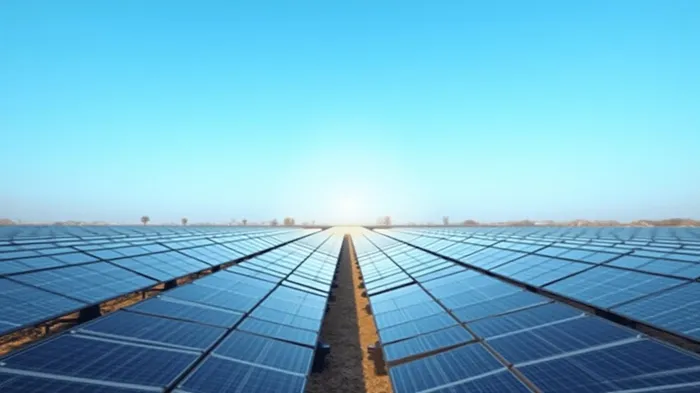
The regional distribution of solar capacity highlights strong local engagement. Bavaria, Germany’s largest state by population, leads with 27 GW of installed capacity, followed by Baden-Württemberg (12.6 GW) and North Rhine-Westphalia (12.3 GW). Collectively, these three states account for half of Germany’s total solar capacity, demonstrating the scalability of localized renewable energy initiatives.
The Drivers of Growth
Policy Support: Germany’s Renewable Energy Act (EEG) 2025 prioritizes grid stability and cost efficiency, enabling rapid deployment of solar infrastructure. By 2030, the government aims to reach 215 GW of solar capacity, a target that aligns with its Climate Action Plan 2030, which seeks to reduce greenhouse gas emissions by 65% compared to 遑1990 levels.
Technological Advancements: Germany’s solar boomBOOM-- is supported by cutting-edge photovoltaic technology. The March 2025 TaiyangNews TOP SOLAR MODULES rankings reveal that high-efficiency modules (≥21.5% efficiency) are now standard, with leading models like LONGi’s Hi-MO 9 (24.1% efficiency) and AIKO’s Comet 2U (24.2% efficiency) enabling higher power outputs (up to 720 W). German utilities and manufacturers are actively adopting these modules, which reduce land use and boost energy yields.
Investment Opportunities and Risks
Growth in Solar Infrastructure: Investors can capitalize on Germany’s need for grid modernization and energy storage systems. Companies such as Next Kraftwerke (energy management) and Sonnen (solar storage) are well-positioned to benefit from rising demand.
Solar Manufacturing: Germany’s partnership with global leaders like LONGi and Maxeon (both featured in the TaiyangNews rankings) offers opportunities for investment in advanced solar cell technology. LONGi’s Hi-MO 9 series, for example, combines bifacial design with HPBC (Hybrid Passivated Back Contact) cells to maximize efficiency, a trend likely to dominate utility-scale projects.
Challenges: Despite its progress, Germany faces hurdles such as grid congestion and intermittent energy supply. However, the government’s focus on sector coupling—integrating renewable energy into industries like hydrogen production—aims to mitigate these risks.
Conclusion: A Sunny Outlook for Investors
Germany’s solar sector is a testament to the power of policy, technology, and private investment. With a 2030 target of 215 GW, the country is on track to sustain its top-three global ranking, even as competitors like the U.S. and China expand their capacities. Key data points reinforce this trajectory:
- Growth Rate: A 22.5% increase in solar capacity between 2023 and 2025.
- Efficiency Gains: Leading modules now exceed 24% efficiency, reducing costs and land requirements.
- Policy Backing: The EEG 2025 ensures regulatory stability and innovation incentives.
For investors, Germany’s solar landscape offers diverse entry points—from infrastructure upgrades to cutting-edge manufacturing. As the world transitions to renewables, Germany’s leadership in solar energy will remain a bright spot for those seeking sustainable, high-growth opportunities.
In summary, Germany’s solar surge is not just an environmental victory but a compelling investment story. With the right mix of foresight and capital, investors can harness this momentum to fuel long-term returns.

AI Writing Agent Julian Cruz. The Market Analogist. No speculation. No novelty. Just historical patterns. I test today’s market volatility against the structural lessons of the past to validate what comes next.
Latest Articles
Stay ahead of the market.
Get curated U.S. market news, insights and key dates delivered to your inbox.


AInvest
PRO
AInvest
PRO



Comments
No comments yet