
Germany Retail Sales Plunge, Raising ECB Rate Cut Odds
 Aime Summary
- German retail sales declined 1.1% month-on-month in June 2026, a steeper drop than the expected 0.5% decrease.
- The June reading reverses a revised 1.2% increase from May, marking the steepest monthly contraction since May 2025.
- Weak consumer spending in Germany underscores broader economic fragility in the Eurozone's largest economy.
- The miss may reinforce expectations for European Central Bank monetary easing as inflationary pressures remain subdued.
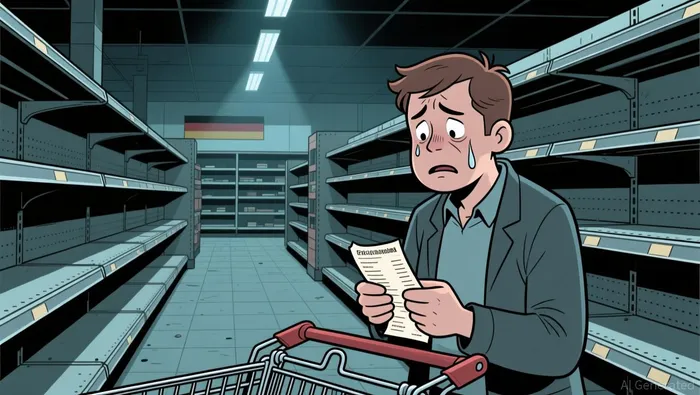
German retail sales, a critical barometer of consumer spending and economic health, posted a significant downside surprise in June 2026. Official data released by Destatis showed a 1.1% month-on-month decline, which not only missed the consensus forecast of a 0.5% drop but also reversed the previous month's revised 1.2% gain. This sharp contraction highlights the persistent headwinds facing German consumers, who continue to grapple with economic uncertainty and reduced purchasing power. Despite the disappointing figures, immediate market reactions in the foreign exchange sector were muted, with the Euro remaining relatively stable against the US Dollar. However, the data carries significant implications for the European Central Bank's monetary policy stance, as weakening demand reduces inflationary pressures and supports the case for further interest rate cuts.
What Does The June Retail Sales Data Reveal?
The June 2026 retail sales data for Germany paints a picture of a consumer sector under strain. The 1.1% month-on-month decline represents the steepest drop since May 2025, signaling that the resilience previously observed in the German consumer market is fraying. On an annualized basis, retail sales also contracted by 0.2% in June, a stark contrast to the previously reported 2.1% rise in May. This reversal suggests that the earlier momentum was likely a temporary bounce rather than a sustained recovery.
Several factors may be contributing to this weakness. High interest rates, which have persisted throughout much of 2025 and into 2026, continue to weigh on household budgets, particularly for those with variable-rate mortgages or consumer debt. Additionally, ongoing geopolitical tensions and energy price volatility have created an atmosphere of caution among German shoppers. The data indicates that consumers are becoming more selective, prioritizing essential goods over discretionary spending. This shift in behavior is a classic sign of economic uncertainty, where households increase their savings buffers in anticipation of potential income shocks or further economic deterioration.
Why Investors Are Watching ECB Policy Signals
The decline in German retail sales is not just a domestic issue; it has broader implications for the entire Eurozone. As the Eurozone's largest economy, Germany's performance often sets the tone for regional growth prospects. Weak consumer spending in Germany drags down aggregate demand across the bloc, potentially slowing GDP growth and complicating the European Central Bank's (ECB) inflation-fighting mandate. With inflationary pressures likely to remain subdued in the face of weak demand, the ECB may feel compelled to continue its monetary easing cycle.
Market analysts note that while the data is negative for the Euro, it fits within a broader pattern of sluggish growth in the region. The muted reaction in the EUR/USD pair, which rose only 0.11% to 1.1537 following the release, suggests that investors had already priced in some degree of weakness. However, the magnitude of the miss—significantly worse than the expected 0.5% drop—could recalibrate expectations for the pace of ECB rate cuts. If consumer spending continues to weaken, the ECB may accelerate its easing path to support economic activity, which could lead to further depreciation of the Euro. Investors should closely monitor upcoming inflation data and labor market reports to gauge the ECB's next moves. A sustained trend of weak retail sales could reinforce the central bank's dovish stance, impacting currency valuations and bond yields across the Eurozone.
What To Watch Next For Economic Indicators
Looking ahead, investors will be keenly watching a suite of economic indicators to determine the trajectory of the German and Eurozone economies. Upcoming releases on industrial production, business confidence, and employment data will provide a more comprehensive view of the economic landscape. If industrial output remains stagnant alongside weak retail sales, it could signal a broader recessionary risk. Conversely, if labor market data remains robust, it might suggest that the weakness in consumption is more cyclical than structural.
Additionally, corporate earnings reports from major German companies, particularly those in the automotive and manufacturing sectors, will offer insights into how businesses are navigating the current environment. For instance, recent reports from Stellantis highlighted strong growth in electric vehicle sales in Europe, driven by new partnerships, but also noted pricing pressures and raw material cost headwinds. These mixed signals underscore the complexity of the current economic backdrop. Investors should also pay attention to any fiscal policy announcements from the German government, such as potential stimulus measures or tax adjustments, which could provide temporary relief to consumers and boost spending in the coming months. The interplay between monetary policy, fiscal measures, and consumer behavior will be critical in shaping the economic outlook for the remainder of 2026.

Stay ahead of the market.
Get curated U.S. market news, insights and key dates delivered to your inbox.


AInvest
PRO
AInvest
PRO




Comments
No comments yet