
Germany's Minimum Wage Hike: Navigating Sector-Specific Risks and Opportunities
The German government's decision to raise the minimum wage to €12.82 per hour in 2025, with further increases planned through 2027, marks a pivotal moment for the country's economy. While the move aims to boost worker purchasing power, its ripple effects across industries are uneven. Investors must parse these impacts carefully to identify sectors poised to thrive—and those likely to falter.
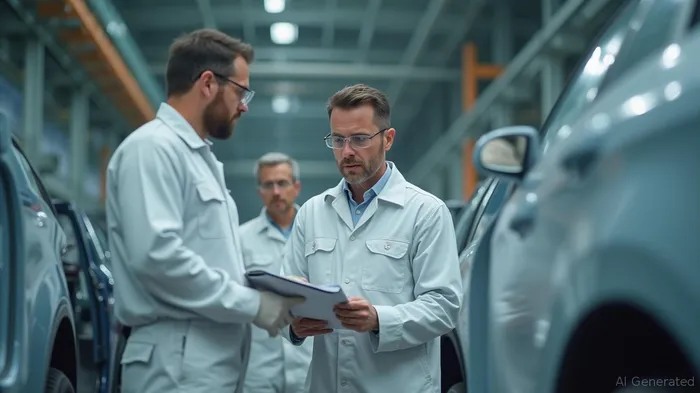
The Automotive Sector: A High-Risk Landscape
Germany's automotive industry, a cornerstone of its economy, faces severe headwinds. U.S. tariffs on imported vehicles—25% on trucks and 2.5% on cars—have inflated production costs by €3,000 per vehicle, while Chinese competitors like BYD dominate the electric vehicle (EV) market.
Key Risks:
- Profit Margin Pressure: The minimum wage hike compounds existing cost challenges.
- Structural Decline: Legacy combustion-engine infrastructure and slow EV innovation could accelerate job cuts. Volkswagen, for instance, plans to eliminate 35,000 roles by 2030.
BMW's stock has dipped 15% since 2023, reflecting investor skepticism about its ability to adapt.
Investment Advice: Avoid pure-play automakers. Instead, consider suppliers pivoting to modular platforms or software-driven solutions, such as Continental AG (DE: CON) or Schaeffler (DE: SCHF), which are repositioning for EV components and autonomous systems.
Healthcare: A Steady Growth Engine
Germany's aging population—projected to hit 29% over 65 by 2030—fuels demand for healthcare services. With 47,400 unfilled roles in 2024, providers are expanding staffing and investing in telehealth and AI diagnostics.
Key Opportunities:
- Telehealth Platforms: Companies like Ada Health (DE: ADA), which uses AI for symptom analysis, are scaling rapidly.
- Specialized Staffing: Roles for radiologists and geriatric nurses command €239k average salaries, attracting both German and international talent.
Fresenius Medical Care, a dialysis giant, has seen 8% annual revenue growth, outperforming broader market trends.
Investment Advice: Allocate to healthcare ETFs like XETRA Health Care Index (DE: XETRA.HE) or direct holdings in diagnostics and digital health firms.
Education & Vocational Training: Building Future Workforces
Germany's dual education system—combining classroom and on-the-job training—is a key advantage. With 65% of international students (469,000 in 2024) staying post-graduation, sectors like engineering and green tech benefit from skilled labor.
Key Opportunities:
- Vocational Training Providers: Firms like Da Vinci Education (DE: DVE) train workers for in-demand roles in renewable energy and manufacturing.
- Government Backed R&D: The state's €20.6 billion annual investment in green tech and AI fuels growth in STEM infrastructure.
Germany's unemployment rate remains at 3.3%, half the EU average, reflecting strong demand for skilled workers.
Investment Advice: Target education ETFs or partnerships with vocational training platforms. Avoid sectors reliant on low-skilled labor, which may see rising costs.
Construction & Green Transition: A Mixed Picture
The Supreme Court's November 2023 ruling limiting the use of Climate and Transformation Funds has slowed green infrastructure projects. While 21.1% of German workers are in green-driven roles, funding constraints and labor shortages in trades like roofing and scaffolding pose risks.
Key Risks:
- Funding Gaps: Reduced public investment may delay projects requiring skilled labor at higher wage rates.
- Skill Mismatches: Vocational gaps persist in green retrofitting and renewable energy installations.
Renewable investments have doubled since 2020, but delays in permitting and funding could stall momentum.
Investment Advice: Focus on specialized green contractors with niche expertise (e.g., RWE Renewables) and avoid generic construction firms.
The Bottom Line: A Balanced Playbook
Investors should adopt a 70/30 defensive-to-cyclical split:
- 70% Defensive: Prioritize healthcare (e.g., Fresenius Medical Care) and education (e.g., Da Vinci Education) for steady returns.
- 30% Cyclical: Bet on automotive innovators (Continental AG) and green tech firms benefiting from policy tailwinds.
The minimum wage has outpaced inflation, but sectors with pricing power (healthcare, tech) will weather costs better than traditional industries.
Final Note: Monitor the Minimum Wage Commission's June 2025 report for clues on further hikes. For now, the path to profit lies in sectors that can adapt through innovation—not just cost-cutting.
John Gapper is a seasoned financial columnist and analyst, known for his incisive commentary on global markets and corporate strategy.

Stay ahead of the market.
Get curated U.S. market news, insights and key dates delivered to your inbox.






Comments
No comments yet