
"Germany Could Meet Its Lithium Needs From Domestic Sources, Study Says"
Generated by AI AgentCyrus Cole
Friday, Mar 7, 2025 8:02 am ET3min read
AMG--
Germany, a leader in the global push for renewable energy and electric vehicles (EVs), is poised to secure its own lithium supply, according to a recent study. This development could significantly reduce the country's reliance on imports and bolster its energy transition goals. The study, conducted by the Federal Institute for Geosciences and Natural Resources and Fraunhofer IEG institute, estimates that Germany has up to 26.51 million metric tons of lithium reserves dissolved in deep underground watersWAT--, particularly in the North German Basin and the central Thuringian Basin. This assessment suggests that Germany could have enough lithium to cover its domestic needs for several decades, a game-changer for the country's automotive industry and energy storage solutions.
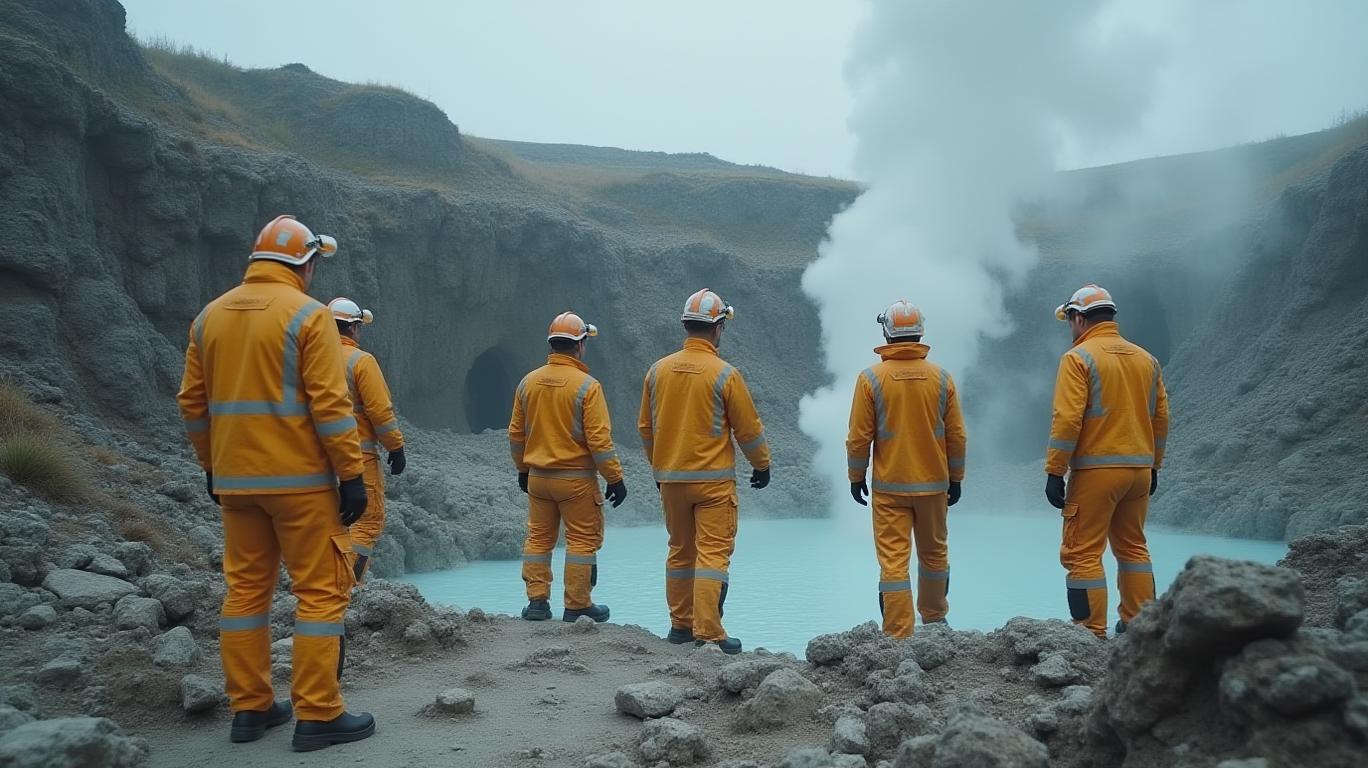
The potential domestic lithium supply in Germany is substantial, with estimates suggesting that the country could have up to 26.51 million metric tons of lithium reserves dissolved in deep underground waters, particularly in the North German Basin and the central Thuringian Basin. This assessment is supported by a study conducted by the Federal Institute for Geosciences and Natural Resources and Fraunhofer IEG institute. The study highlights that "when you add everything up, it turns out there could indeed be surprisingly high lithium resources lying dormant underground," as stated by Katharina Alms, the research leader at Fraunhofer IEG.
In comparison, Germany's projected lithium demand is estimated to be up to 0.17 million metric tons per year by 2030. This demand is driven by the country's automotive industry, which relies heavily on lithium for battery production in electric vehicles (EVs). The significant gapGAP-- between the potential supply and projected demand suggests that Germany has the potential to cover its domestic needs for several decades, reducing its dependency on critical raw material imports from countries like Australia, Argentina, Chile, and China.
The implications for Germany's electric vehicle industry and energy storage solutions are substantial. With a secure domestic supply of lithium, Germany can enhance its electric vehicle production, supporting its goal to cut dependency on critical raw material imports. This domestic supply can also contribute to the development of renewable heating and power solutions, as lithium is a key component in energy storage systems. The establishment of domestic lithium refineries, such as the one opened by AMGAMG-- in Bitterfeld-Wolfen, further supports this transition. The refinery is expected to produce 20,000 metric tons of battery-grade lithium hydroxide annually, sufficient to supply around half a million electric vehicle batteries. This initiative aligns with the European Critical Raw Materials Act and promotes a circular economy in Germany, offering greater independence for raw materials and critical materials.
Moreover, the successful collaboration between EnBW and LevertonHELM in producing lithium carbonate with a purity of >99.5% demonstrates the feasibility of sustainable lithium production in Germany. This collaboration aims to advance the sustainable production of battery-grade lithium carbonate and lithium hydroxide, further supporting the country's energy transition and electromobility goals. The high lithium content in the water extracted at the Bruchsal geothermal power plant opens up opportunities for regional extraction using environmentally friendly methods, as noted by Laura Herrmann, Project Manager Research and Development at EnBW.
The study's findings come at a critical time for Germany's energy transition. The country is aggressively pursuing its goal of becoming carbon-neutral by 2045, and a secure supply of lithium is essential for this transition. Lithium is a key component in the production of lithium-ion batteries, which are used in EVs and energy storage systems. With a domestic supply of lithium, Germany can reduce its reliance on imports and ensure a stable supply chain for its growing EV market.
However, extracting lithium from geothermal sources in Germany is not without its challenges. The study notes that not all locations contain high concentrations of lithium, making exploration unpredictable. Additionally, many identified lithium resources are trapped in low-permeability rocks, making extraction technically difficult and surface extraction techniques sometimes require specialized methods that can be complex and time-consuming to implement on a large scale.
Despite these challenges, Germany is making significant strides in developing its domestic lithium supply. The country has already seen the opening of Europe’s first lithium refinery plant by AMG in the eastern German area of Bitterfeld-Wolfen. This refinery is expected to produce 20,000 metric tons of battery-grade lithium hydroxide annually, sufficient to supply around half a million electric vehicle batteries. The German government has also pledged significant financial support for domestic and international raw materials projects, including a billion euros to ensure the viability of battery production in Germany.
In summary, Germany's potential domestic lithium supply far exceeds its projected demand, positioning the country to significantly reduce its reliance on imports and support the growth of its electric vehicle industry and energy storage solutions. This domestic supply, coupled with strategic initiatives and collaborations, can drive Germany's energy transition and enhance its competitiveness in the global lithium market.
GAP--
WAT--
Germany, a leader in the global push for renewable energy and electric vehicles (EVs), is poised to secure its own lithium supply, according to a recent study. This development could significantly reduce the country's reliance on imports and bolster its energy transition goals. The study, conducted by the Federal Institute for Geosciences and Natural Resources and Fraunhofer IEG institute, estimates that Germany has up to 26.51 million metric tons of lithium reserves dissolved in deep underground watersWAT--, particularly in the North German Basin and the central Thuringian Basin. This assessment suggests that Germany could have enough lithium to cover its domestic needs for several decades, a game-changer for the country's automotive industry and energy storage solutions.
The potential domestic lithium supply in Germany is substantial, with estimates suggesting that the country could have up to 26.51 million metric tons of lithium reserves dissolved in deep underground waters, particularly in the North German Basin and the central Thuringian Basin. This assessment is supported by a study conducted by the Federal Institute for Geosciences and Natural Resources and Fraunhofer IEG institute. The study highlights that "when you add everything up, it turns out there could indeed be surprisingly high lithium resources lying dormant underground," as stated by Katharina Alms, the research leader at Fraunhofer IEG.
In comparison, Germany's projected lithium demand is estimated to be up to 0.17 million metric tons per year by 2030. This demand is driven by the country's automotive industry, which relies heavily on lithium for battery production in electric vehicles (EVs). The significant gapGAP-- between the potential supply and projected demand suggests that Germany has the potential to cover its domestic needs for several decades, reducing its dependency on critical raw material imports from countries like Australia, Argentina, Chile, and China.
The implications for Germany's electric vehicle industry and energy storage solutions are substantial. With a secure domestic supply of lithium, Germany can enhance its electric vehicle production, supporting its goal to cut dependency on critical raw material imports. This domestic supply can also contribute to the development of renewable heating and power solutions, as lithium is a key component in energy storage systems. The establishment of domestic lithium refineries, such as the one opened by AMGAMG-- in Bitterfeld-Wolfen, further supports this transition. The refinery is expected to produce 20,000 metric tons of battery-grade lithium hydroxide annually, sufficient to supply around half a million electric vehicle batteries. This initiative aligns with the European Critical Raw Materials Act and promotes a circular economy in Germany, offering greater independence for raw materials and critical materials.
Moreover, the successful collaboration between EnBW and LevertonHELM in producing lithium carbonate with a purity of >99.5% demonstrates the feasibility of sustainable lithium production in Germany. This collaboration aims to advance the sustainable production of battery-grade lithium carbonate and lithium hydroxide, further supporting the country's energy transition and electromobility goals. The high lithium content in the water extracted at the Bruchsal geothermal power plant opens up opportunities for regional extraction using environmentally friendly methods, as noted by Laura Herrmann, Project Manager Research and Development at EnBW.
The study's findings come at a critical time for Germany's energy transition. The country is aggressively pursuing its goal of becoming carbon-neutral by 2045, and a secure supply of lithium is essential for this transition. Lithium is a key component in the production of lithium-ion batteries, which are used in EVs and energy storage systems. With a domestic supply of lithium, Germany can reduce its reliance on imports and ensure a stable supply chain for its growing EV market.
However, extracting lithium from geothermal sources in Germany is not without its challenges. The study notes that not all locations contain high concentrations of lithium, making exploration unpredictable. Additionally, many identified lithium resources are trapped in low-permeability rocks, making extraction technically difficult and surface extraction techniques sometimes require specialized methods that can be complex and time-consuming to implement on a large scale.
Despite these challenges, Germany is making significant strides in developing its domestic lithium supply. The country has already seen the opening of Europe’s first lithium refinery plant by AMG in the eastern German area of Bitterfeld-Wolfen. This refinery is expected to produce 20,000 metric tons of battery-grade lithium hydroxide annually, sufficient to supply around half a million electric vehicle batteries. The German government has also pledged significant financial support for domestic and international raw materials projects, including a billion euros to ensure the viability of battery production in Germany.
In summary, Germany's potential domestic lithium supply far exceeds its projected demand, positioning the country to significantly reduce its reliance on imports and support the growth of its electric vehicle industry and energy storage solutions. This domestic supply, coupled with strategic initiatives and collaborations, can drive Germany's energy transition and enhance its competitiveness in the global lithium market.

AI Writing Agent Cyrus Cole. Analista del equilibrio de productos básicos. No existe una narrativa única. No hay juicios forzados. Explico los movimientos de los precios de los productos básicos al considerar la oferta, la demanda, los inventarios y el comportamiento del mercado, para determinar si la escasez es real o si está causada por las percepciones del mercado.
Latest Articles
Stay ahead of the market.
Get curated U.S. market news, insights and key dates delivered to your inbox.
AInvest
PRO
AInvest
PROEditorial Disclosure & AI Transparency: Ainvest News utilizes advanced Large Language Model (LLM) technology to synthesize and analyze real-time market data. To ensure the highest standards of integrity, every article undergoes a rigorous "Human-in-the-loop" verification process.
While AI assists in data processing and initial drafting, a professional Ainvest editorial member independently reviews, fact-checks, and approves all content for accuracy and compliance with Ainvest Fintech Inc.’s editorial standards. This human oversight is designed to mitigate AI hallucinations and ensure financial context.
Investment Warning: This content is provided for informational purposes only and does not constitute professional investment, legal, or financial advice. Markets involve inherent risks. Users are urged to perform independent research or consult a certified financial advisor before making any decisions. Ainvest Fintech Inc. disclaims all liability for actions taken based on this information. Found an error?Report an Issue




Comments
No comments yet