
Germany Leads in Autonomous Driving Pilot Projects with 15 Initiatives Across Major and Smaller Cities
ByAinvest
Monday, Sep 1, 2025 11:37 pm ET1min read
LI--
Li Auto's CEO, Xiang Li, highlighted the company's plans to simplify the product portfolio and accelerate the introduction of BEVs, such as the Li Mega and Li i8. Additionally, the company is investing heavily in AI for autonomous driving and vehicle integration, with plans to expand its charging network to 4,000 stations by the end of 2025 [3]. The company expects its AI investments to exceed RMB6 billion in 2025, focusing on infrastructure development and product technology.
The company's Q3 2025 guidance shows revenue expected between RMB24.8B and RMB26.2B, with a 19% gross margin. Li Auto aims to maintain a vehicle sales growth rate twice that of the high-end market for the remainder of the year, capturing market share at the expense of competitors in China. The company's driver model training involves pre-training, post-training, reinforced learning, and real-world simulation, with a focus on reducing iteration costs and periods [4].
Li Auto's overseas market strategy involves building R&D centers in Germany and the U.S., expanding its product portfolio globally, and considering markets such as the Middle East, Central Asia, and Europe. The company aims to achieve 30% of overall sales overseas in the long term [5]. The company's in-house chip development is currently in vehicle testing and is expected to be deployed on flagship models next year, with performance improvements of 2x and 3x compared to leading chips [6].
Li Auto's Q2 results demonstrate the company's commitment to innovation and strategic expansion. With a focus on AI, autonomous driving, and overseas market penetration, Li Auto is positioning itself to capitalize on the growing NEV market and secure a competitive edge in the industry.
References:
[1] https://www.ainvest.com/news/li-auto-q2-2025-contradictions-emerge-product-marketing-ai-strategy-assisted-driving-overseas-expansion-house-chip-development-2508/
[2] https://www.ainvest.com/news/li-auto-q2-2025-contradictions-emerge-product-marketing-ai-strategy-assisted-driving-overseas-expansion-house-chip-development-2508/
[3] https://www.ainvest.com/news/li-auto-q2-2025-contradictions-emerge-product-marketing-ai-strategy-assisted-driving-overseas-expansion-house-chip-development-2508/
[4] https://www.ainvest.com/news/li-auto-q2-2025-contradictions-emerge-product-marketing-ai-strategy-assisted-driving-overseas-expansion-house-chip-development-2508/
[5] https://www.ainvest.com/news/li-auto-q2-2025-contradictions-emerge-product-marketing-ai-strategy-assisted-driving-overseas-expansion-house-chip-development-2508/
[6] https://www.ainvest.com/news/li-auto-q2-2025-contradictions-emerge-product-marketing-ai-strategy-assisted-driving-overseas-expansion-house-chip-development-2508/
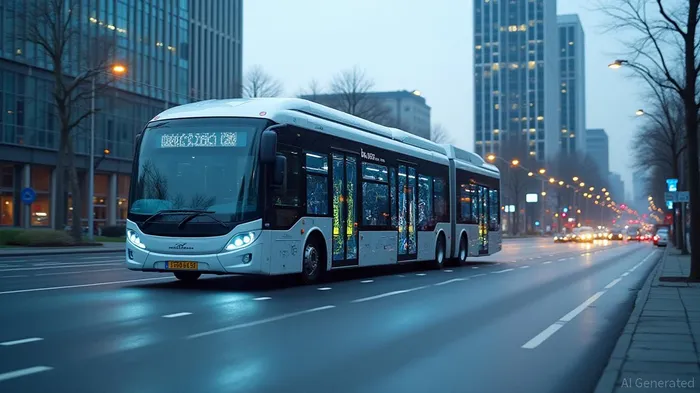
In Germany, 15 pilot projects for autonomous driving are underway in cities such as Hamburg, Berlin, and Leipzig, with most focusing on Level 4 systems. However, the country lacks a type approval for Level 4 vehicles and faces a shortage of drivers in public transport, with an estimated 50,000 bus drivers needed by 2030. Experts are calling for implementation projects with a large fleet of vehicles to gain planning certainty for production capacities.
Li Auto reported its Q2 2025 financial results, showcasing a revenue of RMB30.2 billion, a 4.5% year-over-year (YoY) decline, but a 16.7% quarter-over-quarter (QoQ) increase. The company delivered 110,000 vehicles, securing a 13.4% market share in China's premium new energy vehicle (NEV) segment [1]. Management emphasized strategic shifts in product marketing and channel strategies to achieve the full-year sales target, with a focus on enhancing product competitiveness and expanding the product lineup with battery electric vehicles (BEVs) [2].Li Auto's CEO, Xiang Li, highlighted the company's plans to simplify the product portfolio and accelerate the introduction of BEVs, such as the Li Mega and Li i8. Additionally, the company is investing heavily in AI for autonomous driving and vehicle integration, with plans to expand its charging network to 4,000 stations by the end of 2025 [3]. The company expects its AI investments to exceed RMB6 billion in 2025, focusing on infrastructure development and product technology.
The company's Q3 2025 guidance shows revenue expected between RMB24.8B and RMB26.2B, with a 19% gross margin. Li Auto aims to maintain a vehicle sales growth rate twice that of the high-end market for the remainder of the year, capturing market share at the expense of competitors in China. The company's driver model training involves pre-training, post-training, reinforced learning, and real-world simulation, with a focus on reducing iteration costs and periods [4].
Li Auto's overseas market strategy involves building R&D centers in Germany and the U.S., expanding its product portfolio globally, and considering markets such as the Middle East, Central Asia, and Europe. The company aims to achieve 30% of overall sales overseas in the long term [5]. The company's in-house chip development is currently in vehicle testing and is expected to be deployed on flagship models next year, with performance improvements of 2x and 3x compared to leading chips [6].
Li Auto's Q2 results demonstrate the company's commitment to innovation and strategic expansion. With a focus on AI, autonomous driving, and overseas market penetration, Li Auto is positioning itself to capitalize on the growing NEV market and secure a competitive edge in the industry.
References:
[1] https://www.ainvest.com/news/li-auto-q2-2025-contradictions-emerge-product-marketing-ai-strategy-assisted-driving-overseas-expansion-house-chip-development-2508/
[2] https://www.ainvest.com/news/li-auto-q2-2025-contradictions-emerge-product-marketing-ai-strategy-assisted-driving-overseas-expansion-house-chip-development-2508/
[3] https://www.ainvest.com/news/li-auto-q2-2025-contradictions-emerge-product-marketing-ai-strategy-assisted-driving-overseas-expansion-house-chip-development-2508/
[4] https://www.ainvest.com/news/li-auto-q2-2025-contradictions-emerge-product-marketing-ai-strategy-assisted-driving-overseas-expansion-house-chip-development-2508/
[5] https://www.ainvest.com/news/li-auto-q2-2025-contradictions-emerge-product-marketing-ai-strategy-assisted-driving-overseas-expansion-house-chip-development-2508/
[6] https://www.ainvest.com/news/li-auto-q2-2025-contradictions-emerge-product-marketing-ai-strategy-assisted-driving-overseas-expansion-house-chip-development-2508/
Stay ahead of the market.
Get curated U.S. market news, insights and key dates delivered to your inbox.
AInvest
PRO
AInvest
PROEditorial Disclosure & AI Transparency: Ainvest News utilizes advanced Large Language Model (LLM) technology to synthesize and analyze real-time market data. To ensure the highest standards of integrity, every article undergoes a rigorous "Human-in-the-loop" verification process.
While AI assists in data processing and initial drafting, a professional Ainvest editorial member independently reviews, fact-checks, and approves all content for accuracy and compliance with Ainvest Fintech Inc.’s editorial standards. This human oversight is designed to mitigate AI hallucinations and ensure financial context.
Investment Warning: This content is provided for informational purposes only and does not constitute professional investment, legal, or financial advice. Markets involve inherent risks. Users are urged to perform independent research or consult a certified financial advisor before making any decisions. Ainvest Fintech Inc. disclaims all liability for actions taken based on this information. Found an error?Report an Issue




Comments
No comments yet