
Germany's Industrial Surge: A Tariff-Driven Rally or a False Dawn?
The German economy's May 2025 industrial production rebound—up 1.2% month-on-month—has sparked debate over whether this marks a sustainable recovery or a fleeting blip in a storm of trade tensions. While sectors like automotive and pharmaceuticals surged, the data also highlights vulnerabilities tied to U.S. tariff threats and waning new orders. For investors, the numbers offer both opportunity and caution: a window into sector-specific resilience amid geopolitical risks, but also a warning that short-term gains may mask long-term headwinds.
The Surge: Tariff Front-Running Fuels Automotive, Pharmaceuticals Lead
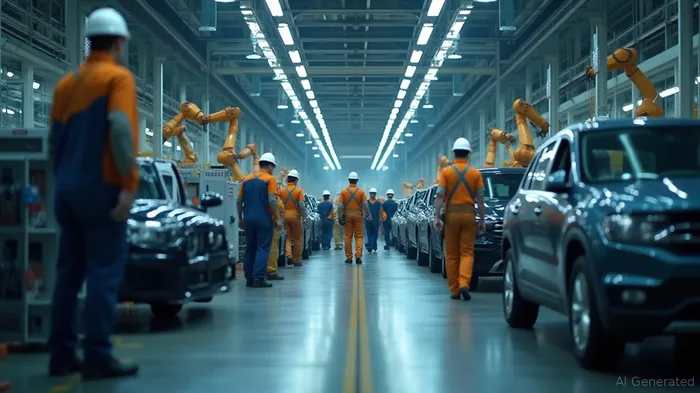
The May rebound was driven by two pillars: automotive production (+4.9%) and pharmaceuticals (+10%). The automotive sector's strength defied expectations, as U.S. tariffs on German cars—set to rise to 25% in July 2025—prompted U.S. firms to stockpile inventory in a classic “front-running” maneuver. This preemptive buying, however, is a one-time phenomenon. Once tariffs take effect, U.S. demand is likely to slump, risking a production correction.
Pharmaceuticals, meanwhile, thrived as tariff exemptions shielded their exports. The sector's robust output underscores the value of diversification—companies like Bayer and MerckMRK--, with global supply chains and non-tariff-sensitive markets, have insulated themselves from trade wars.
Red Flags: New Orders Decline Signals Weaker Future Output
Beneath the production rebound lies a critical weakness: new manufacturing orders fell 1.4% in May, with electronics (-17.7%), electrical equipment (-6.2%), and basic metals (-5.1%) leading declines. The drop in capital goods orders (-0.9%) suggests businesses are delaying investments, wary of a slowing economy. Foreign orders from non-eurozone countries rose 9%, but domestic demand plunged 7.8%, highlighting a lack of domestic demand to offset export risks.
Investment Plays: Targeting Resilient Sectors, Hedging Geopolitical Risks
- Machinery & Fabricated Metals: The “fabricated metal products” sector surged 18.2% in May, driven by demand for industrial components. Companies like Mann+Hummel or Freudenberg, which supply automotive and machinery sectors, could benefit from short-term restocking. However, their long-term prospects hinge on diversifying beyond U.S. markets.
- Pharmaceuticals & Healthcare: Sectors like pharmaceuticals (+10%) and medical equipment, which face fewer trade barriers, offer stable growth. Investors might consider ETFs like XETRA Pharma Index (DPharm) for exposure.
- Energy Transition Plays: The energy sector's 10.8% production jump reflects Germany's push toward renewables. Firms like Siemens Energy, involved in wind turbine manufacturing, could benefit from both domestic policy and global demand.
Geopolitical Risks: Tariffs, Retaliation, and Regional Drag
The U.S. tariffs are a double-edged sword. While front-running boosted May's numbers, retaliation looms. The EU has threatened to impose its own tariffs on U.S. goods, including agricultural exports, which could trigger a trade spiral. Additionally, France's 0.5% industrial production decline signals broader European weakness, with weaker demand from neighbors amplifying Germany's challenges.
Conclusion: A Bumpy Road Ahead
The May surge is a mixed bag: it highlights the agility of German firms in adapting to tariffs but also exposes structural weaknesses. Investors should prioritize sectors with tariff exemptions or non-U.S. market exposure, such as pharmaceuticals or renewable energy. However, a diversified portfolio is critical, as further trade escalations or a global slowdown could reverse gains. The German economy's resilience will depend on whether companies can pivot beyond U.S. markets—and whether policymakers can defuse the tariff time bomb.
Investment Recommendation:
- Buy: Pharmaceuticals (e.g., Merck KGaA), energy transition stocks (Siemens Energy).
- Avoid: Auto exporters with heavy U.S. exposure (e.g., Daimler) unless they secure non-U.S. contracts.
- Hedge: Use inverse ETFs (e.g., ProShares Short MSCIMSCI-- Germany) to mitigate downside risks.
The path forward is fraught with uncertainty, but the May data offers a roadmap for those willing to navigate it.

Stay ahead of the market.
Get curated U.S. market news, insights and key dates delivered to your inbox.




Comments
No comments yet