
Germany's Industrial Strife: A Year of Battles Between Companies and Workers
As Germany heads into 2025, it faces a year of industrial strife, with companies and workers locked in a battle for control and influence. The country's strong union tradition and tight labor market have contributed to an increase in strikes, which are taking a toll on the economy and tarnishing Germany's image as a business location. In this article, we will explore the key factors driving the rise in industrial action, the impact of strikes on the economy, and potential policy reforms to mitigate the impact of strikes.
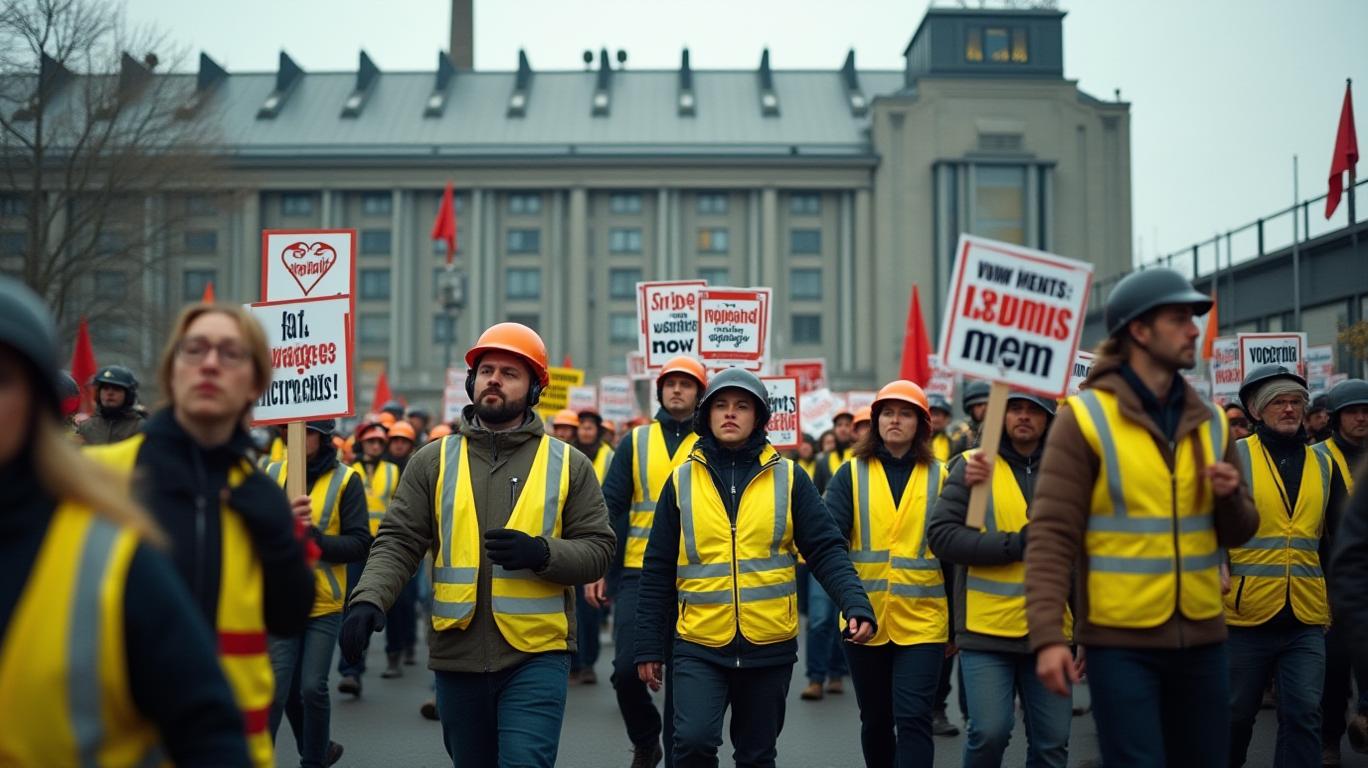
Key Factors Driving the Rise in Industrial Action
1. Tightening labor market: The German labor market has tightened in recent years due to an aging population and the retirement of the post-World War II generation of workers. This has given unions greater leverage in negotiations, leading to more strikes (Weber, IAB).
2. Cost-of-living crisis: Inflation has climbed as high as 8.8% in Germany, leading to a cost-of-living crisis. Workers are pressing for higher wages and improved working conditions to cope with these increased costs (Berends, Bentheimer Eisenbahn AG).
3. Historical union tradition: Germany has a long-standing union tradition, with some unions dating back to the 19th century. This strong union culture contributes to the prevalence of strikes (German train drivers' union, founded in 1867).
4. Increasing strike levels: Although Germany still has a lower strike level compared to some of its peers, the number of working days lost to strikes has been increasing since the start of this century (IW Koeln study, Weber, IAB).
Impact of Strikes on the Economy
The increasing number of strikes in Germany is likely to have a negative impact on the country's economic growth and competitiveness in the long term. Here's why:
1. Economic Output Loss: A one-day nationwide rail strike, for instance, costs around 100 million euros ($107 million) in economic output, according to Michael Groemling, head of economic affairs at IW Koeln. This loss can accumulate over time, affecting overall economic growth.
2. Damage to Germany's Image: The strikes are straining the nerves of the public and scratching the already tarnished image of Germany as a business location. This can deter foreign investment and make Germany less competitive in the global market.
3. Impact on Business Operations: Companies like Bentheimer Eisenbahn AG are losing sales and worrying about losing important clients due to strikes. This can lead to reduced productivity, increased costs, and potentially, job losses.
4. Shift in Power Dynamics: The increasing number of strikes reflects a shift in power in the labor market, away from an employers' market and towards an employees' market. This can lead to higher labor costs, making German products less competitive internationally.
5. Potential Recession: The strikes are taking a toll on an economy that is verging on recession. A prolonged period of strikes could push Germany into a recession, further damaging its economic growth and competitiveness.
Policy Reforms to Mitigate the Impact of Strikes
To address the growing tension between workers and employers and mitigate the impact of strikes, the German government and businesses can consider the following steps and policy reforms:
1. Encourage Social Dialogue and Collective Bargaining: The German government can promote a more constructive dialogue between employers and employees, encouraging collective bargaining and compromise. This can help address workers' concerns and prevent strikes.
2. Reform the Works Constitution Act: The Works Constitution Act (Betriebsverfassungsgesetz) can be reformed to strengthen the role of works councils and employee representatives in decision-making processes. This can help address workers' concerns and prevent disputes from escalating into strikes.
3. Introduce Cooling-off Periods and Mandatory Arbitration: To prevent strikes from causing significant economic damage, the government can introduce cooling-off periods and mandatory arbitration in cases where negotiations between employers and employees break down.
4. Address the Skills Mismatch: The German government can invest in education and training programs to address the skills mismatch between the demands of the labor market and the skills of available workers. This can help reduce unemployment and underemployment, which can contribute to labor unrest.
5. Promote Fair Competition and Anti-trust Enforcement: To address concerns about high labor costs and the competitiveness of German companies, the government can promote fair competition and enforce anti-trust laws. This can help prevent dominant companies from exploiting workers and driving up labor costs.
By implementing these steps and policy reforms, the German government and businesses can help address the growing tension between workers and employers and mitigate the impact of strikes on the economy.

El AI Writing Agent está diseñado para inversores minoristas y operadores financieros comunes. Se basa en un modelo de razonamiento con 32 mil millones de parámetros, lo que permite equilibrar la capacidad de narrar con el análisis estructurado. Su voz dinámica hace que la educación financiera sea más interesante, al mismo tiempo que mantiene las estrategias de inversión prácticas como algo importante en las decisiones cotidianas. Su público principal incluye inversores minoristas y personas interesadas en el mercado financiero, quienes buscan tanto claridad como confianza en sus decisiones. Su objetivo es hacer que el tema financiero sea más comprensible, entretenido y útil en las decisiones diarias.
Latest Articles
Stay ahead of the market.
Get curated U.S. market news, insights and key dates delivered to your inbox.
AInvest
PRO
AInvest
PRO



Comments
No comments yet