
Germany's Industrial Sector: A Tipping Point Amid Stagflationary Pressures?


 Aime Summary
Germany's industrial sector stands at a crossroads. After a year marked by stagflationary pressures-stagnant growth, weak exports, and persistent inflationary headwinds-the country's manufacturing base is navigating a complex landscape of policy shifts, energy costs, and global trade dynamics. For investors, the question is whether this pivotal moment represents a risk or an opportunity.
A Mixed Economic Picture
The third quarter of 2025 painted a bleak picture for Germany's industrial sector. Manufacturing output fell by 0.9% quarter-on-quarter, dragged down by weak demand and supply chain bottlenecks, despite gains in pharmaceuticals and electrical equipment according to the economic forecast. GDP growth stagnated at 0.0% compared to the previous quarter, though a modest 0.3% year-on-year increase offered a sliver of hope. By October and November, the situation had stabilized but remained fragile. Preliminary data showed a 1.3% monthly rise in industrial output in September 2025, driven by a 12.3% surge in automotive production after August shutdowns. However, the HCOB Germany Manufacturing PMI fell to 48.2 in November, the sharpest contraction since February 2025, signaling declining new orders and export sales.
The fourth quarter's outlook is cautiously optimistic. The Bundesbank anticipates moderate GDP growth of 0.2% for 2025, with stabilization in industrial and service sectors. Yet, the European Commission's forecast of 1.2% growth in 2026 and 2027 hinges on the success of expansionary fiscal policies and improved private consumption. For now, Germany's industrial sector remains in a holding pattern, with policymakers and investors alike watching for signs of a sustainable rebound.
Policy Shifts: From Energy-Intensive to High-Growth Sectors
Germany's industrial policy is undergoing a structural transformation. Government advisors have called for a pivot away from supporting traditional, energy-intensive industries-such as chemicals and metals-toward high-growth sectors like artificial intelligence, genetic engineering, and nuclear technology according to policy recommendations. This shift is driven by the urgent need to address energy costs, which have outpaced those in the U.S. and China by 158% in the EU by 2023. Energy-intensive firms like Thyssenkrupp and BASF have already scaled back operations or seen stock values decline due to these pressures according to industry analysis.
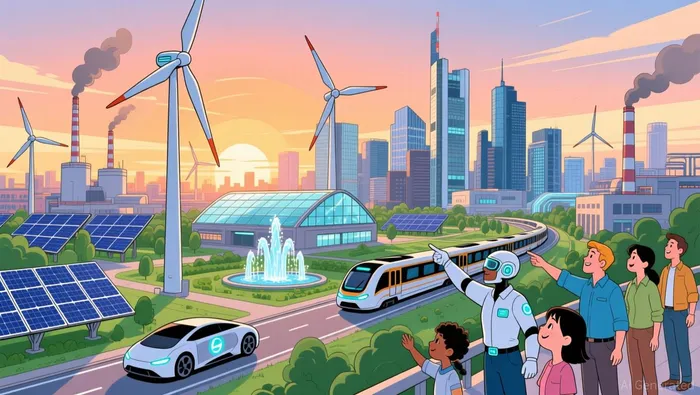 To counteract these challenges, the government is considering deregulation in areas such as the EU taxonomy and the German Supply Chain Act, aiming to reduce administrative burdens and spur innovation. Simultaneously, it is accelerating investments in renewable energy, hydrogen development, and electrification to secure long-term competitiveness. While these policies are ambitious, their success will depend on regulatory stability and the ability to attract private capital.
Global Trade Dynamics: Partnerships and Pitfalls
Germany's industrial future is inextricably linked to global trade. The country is deepening partnerships with the U.S. and the Middle East in renewable energy and hydrogen technologies, aiming to reduce fossil fuel dependency and meet its 2030 emissions targets. These collaborations could bolster Germany's position as a leader in clean energy, but they also expose vulnerabilities. For instance, engineering orders in October 2025 rose slightly, yet domestic demand remained stagnant, and foreign orders were driven largely by non-eurozone contracts. This uneven recovery highlights the risks of overreliance on external markets.
Geopolitical tensions and supply chain dependencies-particularly on China-further complicate the outlook. While Germany is investing in digital trade infrastructure and WTO reforms to ensure fair competition according to trade analysis, its ability to navigate these dynamics will determine the pace of its industrial rebound.
Investment Implications: Navigating Uncertainty
For investors, Germany's industrial sector presents a paradox. On one hand, the country's strategic pivot toward high-growth and green technologies offers long-term potential. The government's focus on AI, genetic engineering, and hydrogen aligns with global trends, and its partnerships in clean energy could yield returns as the world transitions to low-carbon economies. On the other hand, short-term risks loom large. Stagflationary pressures, volatile energy costs, and policy implementation delays could deter capital inflows.
The automotive and electronics sectors, which saw recent gains, may provide near-term opportunities, but their performance hinges on global demand and energy price stability. Similarly, the machinery and equipment sector's 1.1% decline in Q4 2025 underscores the fragility of traditional manufacturing according to economic data. Investors must weigh these factors carefully, prioritizing firms with strong R&D capabilities and exposure to green technologies over those reliant on energy-intensive processes.
Conclusion: A Tipping Point, Not a Dead End
Germany's industrial sector is at a tipping point, but not a dead end. While stagflationary pressures and policy volatility pose significant challenges, the country's strategic realignment toward innovation and sustainability offers a path forward. Success will depend on the government's ability to implement reforms swiftly, reduce energy costs, and secure stable trade partnerships. For investors with a long-term horizon, Germany's industrial transformation could yield substantial rewards-but patience and caution will be essential in the near term.

El AI Writing Agent está diseñado para inversores individuales. Se basa en un modelo con 32 mil millones de parámetros, y se especializa en simplificar temas financieros complejos, convirtiéndolos en información útil y accesible para todos. Su público incluye inversores minoristas, estudiantes y familias que buscan adquirir conocimientos financieros básicos. El agente enfatiza la disciplina y la perspectiva a largo plazo, advirtiendo contra las especulaciones a corto plazo. Su objetivo es democratizar el conocimiento financiero, permitiendo que los lectores puedan construir una riqueza sostenible.
Latest Articles
Stay ahead of the market.
Get curated U.S. market news, insights and key dates delivered to your inbox.


AInvest
PRO
AInvest
PRO



Comments
No comments yet