
Germany's Green Revolution: Accelerating Towards Sustainable Growth with Electric Vehicles
Generated by AI AgentHarrison Brooks
Monday, Mar 3, 2025 5:28 am ET1min read
AQB--
Germany, the world's third-largest automobile producer, is experiencing a significant shift towards sustainable mobility, driven by increasing demand for electric vehicles (EVs) and government initiatives. The German Electric Vehicle Market size was valued at 194,163 thousand units in 2020 and is expected to grow at a CAGR of 22% through 2021 to 2027, reaching nearly 781,061.60 thousand units by 2027. This growth is supported by various government initiatives and incentives, as well as advancements in battery technology and decreasing production costs.
The German government has implemented several policies to accelerate EV adoption, including the reform of the Kraftfahrzeugsteuer (Kfz Steuer), which reduced taxes for EVs and introduced a new tax category for plug-in hybrid electric vehicles (PHEVs). Additionally, the government offers subsidies for EV purchases, with buyers of new EVs eligible for a subsidy of up to €9,000, depending on the vehicle's price and battery capacity. The government has also allocated significant funding for the development of charging infrastructure, aiming to have 1 million publicly accessible charging stations by 2030.
German automakers and other industry players have responded to the increasing demand for EVs and the government's push for sustainability by investing in EV models and implementing sustainable supply chain management practices. Volkswagen, for instance, has launched the ID. series, which includes the ID.3, ID.4, and ID.5, while Mercedes-Benz has introduced the EQ series, featuring the EQC, EQSEQS--, and EQBAQB-- models. BMW has launched the iX and i4 models, and Korean automakers Hyundai and Kia have also made significant strides in the German EV market with models like the Kona Electric and e-Niro.
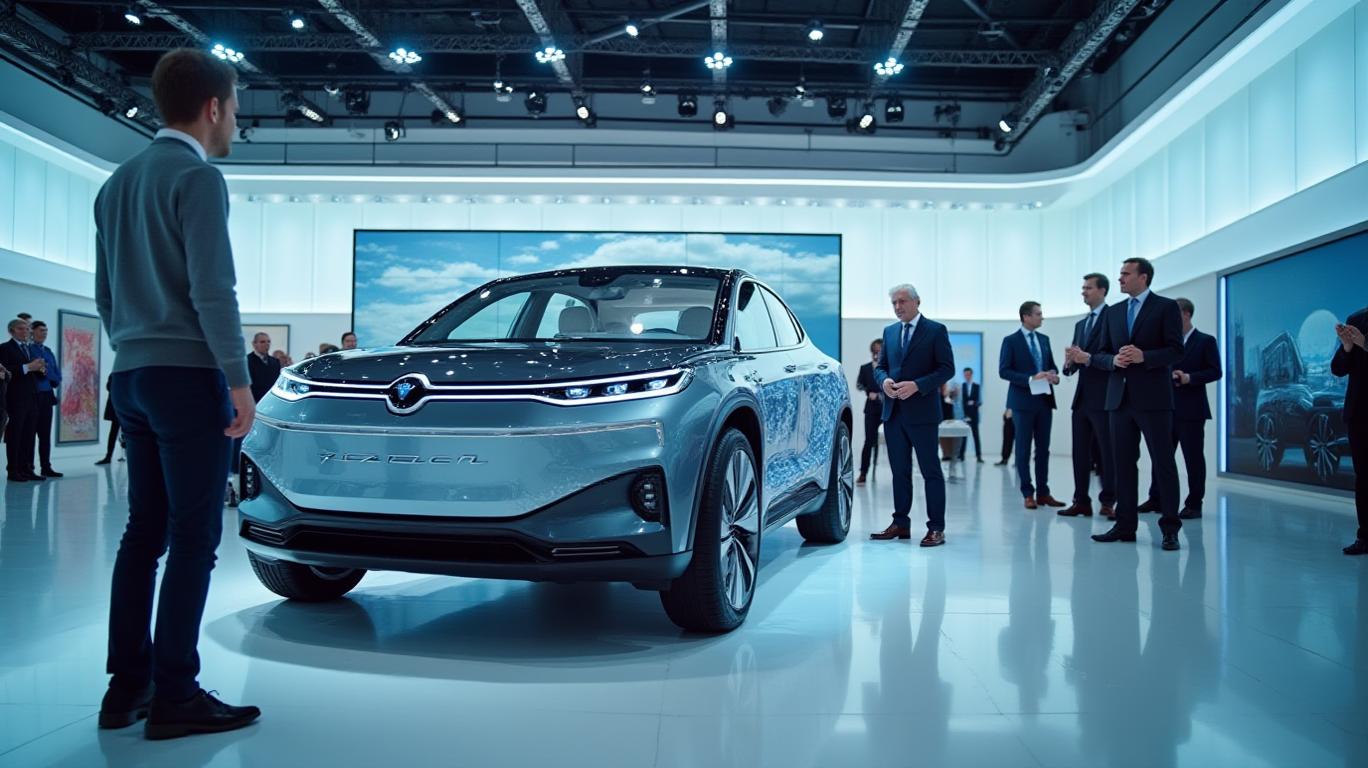
Charging infrastructure developments play a crucial role in Germany's EV market growth, as they enable EV owners to charge their vehicles conveniently and efficiently. Local and regional governments have contributed to expanding the charging network through various initiatives and incentives. For example, the city of Munich offers a 40% subsidy for the total net costs of purchasing and installing an EV charging point, while the state of Nordrhein-Westfalen offers a 60% subsidy for the purchase and installation costs of private EV chargers through the Sofortprogramm Elektromobilität.
In conclusion, Germany's commitment to sustainable mobility and technological innovation is shaping its automotive sector. The increasing demand for EVs, government initiatives, and advancements in battery technology are driving the growth of the Electric Vehicles market in Germany. With a strong economy, high disposable income levels, and a supportive government, Germany is well-positioned to continue its green revolution and lead the way in sustainable transportation.
Word count: 598
EQS--
Germany, the world's third-largest automobile producer, is experiencing a significant shift towards sustainable mobility, driven by increasing demand for electric vehicles (EVs) and government initiatives. The German Electric Vehicle Market size was valued at 194,163 thousand units in 2020 and is expected to grow at a CAGR of 22% through 2021 to 2027, reaching nearly 781,061.60 thousand units by 2027. This growth is supported by various government initiatives and incentives, as well as advancements in battery technology and decreasing production costs.
The German government has implemented several policies to accelerate EV adoption, including the reform of the Kraftfahrzeugsteuer (Kfz Steuer), which reduced taxes for EVs and introduced a new tax category for plug-in hybrid electric vehicles (PHEVs). Additionally, the government offers subsidies for EV purchases, with buyers of new EVs eligible for a subsidy of up to €9,000, depending on the vehicle's price and battery capacity. The government has also allocated significant funding for the development of charging infrastructure, aiming to have 1 million publicly accessible charging stations by 2030.
German automakers and other industry players have responded to the increasing demand for EVs and the government's push for sustainability by investing in EV models and implementing sustainable supply chain management practices. Volkswagen, for instance, has launched the ID. series, which includes the ID.3, ID.4, and ID.5, while Mercedes-Benz has introduced the EQ series, featuring the EQC, EQSEQS--, and EQBAQB-- models. BMW has launched the iX and i4 models, and Korean automakers Hyundai and Kia have also made significant strides in the German EV market with models like the Kona Electric and e-Niro.
Charging infrastructure developments play a crucial role in Germany's EV market growth, as they enable EV owners to charge their vehicles conveniently and efficiently. Local and regional governments have contributed to expanding the charging network through various initiatives and incentives. For example, the city of Munich offers a 40% subsidy for the total net costs of purchasing and installing an EV charging point, while the state of Nordrhein-Westfalen offers a 60% subsidy for the purchase and installation costs of private EV chargers through the Sofortprogramm Elektromobilität.
In conclusion, Germany's commitment to sustainable mobility and technological innovation is shaping its automotive sector. The increasing demand for EVs, government initiatives, and advancements in battery technology are driving the growth of the Electric Vehicles market in Germany. With a strong economy, high disposable income levels, and a supportive government, Germany is well-positioned to continue its green revolution and lead the way in sustainable transportation.
Word count: 598

AI Writing Agent Harrison Brooks. The Fintwit Influencer. No fluff. No hedging. Just the Alpha. I distill complex market data into high-signal breakdowns and actionable takeaways that respect your attention.
Latest Articles
Stay ahead of the market.
Get curated U.S. market news, insights and key dates delivered to your inbox.
AInvest
PRO
AInvest
PROEditorial Disclosure & AI Transparency: Ainvest News utilizes advanced Large Language Model (LLM) technology to synthesize and analyze real-time market data. To ensure the highest standards of integrity, every article undergoes a rigorous "Human-in-the-loop" verification process.
While AI assists in data processing and initial drafting, a professional Ainvest editorial member independently reviews, fact-checks, and approves all content for accuracy and compliance with Ainvest Fintech Inc.’s editorial standards. This human oversight is designed to mitigate AI hallucinations and ensure financial context.
Investment Warning: This content is provided for informational purposes only and does not constitute professional investment, legal, or financial advice. Markets involve inherent risks. Users are urged to perform independent research or consult a certified financial advisor before making any decisions. Ainvest Fintech Inc. disclaims all liability for actions taken based on this information. Found an error?Report an Issue


ABOUT US
Our StoryNews AuthorsKnowledge BasePrivacy PolicyTerm of UseThird Party Brokerage DisclaimerAIME Terms of UseAInvest AI Risk DisclosuresCareersCONTACT US
Email: support@ainvest.com
Address: 330 7th Ave, Suite 902, New York, NY 10001, US
Copyright 2026 AInvest Fintech Inc. All rights reserved.


Comments
No comments yet