
Germany's Gas Storage Levy Abolition: A Green Light for Renewable Energy and Gas Infrastructure Investments
 Aime Summary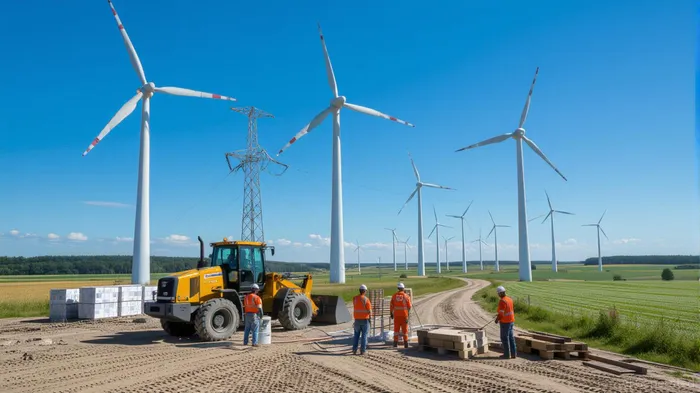
Germany's decision to abolish its gas storage levy by January 1, 2026, is more than a fiscal adjustment—it's a seismic shift in the energy landscape. This policy move, backed by a €3.4 billion subsidy from the Climate and Transformation Fund (KTF), is designed to ease the financial strain on households and industries while accelerating the transition to renewables. For investors, this represents a pivotal moment to reassess where the puck is going in Europe's energy market.
The Policy Shift: From Burden to Catalyst
The gas storage levy, introduced in 2022 at €2.99/MWh, was a stopgap measure to offset losses incurred by Germany's gas market operator, Trading Hub Europe (THE), during the energy crisis. By 2025, the levy had become a drag on competitiveness, with cross-border flows facing particular scrutiny from Austria and the European Commission. The government's plan to subsidize the levy from the KTF—effectively shifting the cost to the federal budget—signals a strategic pivot.
This isn't just about lowering energy bills. It's about creating a more predictable environment for long-term investments. By removing the levy, Germany is signaling to global capital that it's serious about reducing energy costs for industries, which are critical to its economic recovery. The coalition agreement between the CDU/CSU and SPD explicitly ties this move to broader goals: expanding renewables, modernizing grids, and positioning Germany as a leader in hydrogen and decarbonization.
Renewable Energy: The New Gold Rush
The abolition of the levy is a tailwind for renewable energy developers. With energy costs for households and businesses expected to drop by €10 billion annually, there's more room for investment in solar, wind, and storage. Germany's 2045 climate neutrality target hinges on tripling its renewable capacity, and the government is doubling down on solar and onshore wind projects.
Consider the numbers: renewables accounted for 54% of Germany's electricity supply in 2024, up from 46% in 2022. The International Energy Agency (IEA) estimates that Germany's solar and wind sectors could attract €50 billion in investments by 2030, driven by streamlined permitting and grid modernization. Companies like RWE and E.ON are already ramping up offshore wind projects, while startups in battery storage and hydrogen tech are gaining traction.
For investors, this means opportunities in both established players and emerging innovators. The key is to focus on companies with clear exposure to Germany's energy transition. For example, Siemens Energy is a major player in grid infrastructure, while NextEra Energy Europe is expanding its solar and wind assets. Hydrogen, too, is a wildcard—Germany's Hydrogen Core Network and H2Global mechanism are creating a framework for long-term demand.
European Gas Infrastructure: Navigating the Transition
While renewables are the future, gas infrastructure remains a near-term necessity. The levy's abolition on cross-border flows (effective 2025) has already eased tensions with Austria and the EU, but the domestic gas market is still evolving. Germany's gas storage facilities, now subsidized by the federal budget, will remain critical for balancing intermittent renewables and ensuring winter security.
This creates a unique investment angle: companies involved in gas storage and LNG terminals. Uniper, for instance, is expanding its LNG import capacity, while OMV is investing in hydrogen-ready gas infrastructure. The European gas market is also seeing a shift in pricing dynamics——as diversification from Russian gas continues. Investors should watch for consolidation in the sector, as smaller players may struggle to keep up with capital-intensive projects.
The Bigger Picture: Geopolitics and Global Competition
Germany's energy transition isn't happening in a vacuum. The U.S. and China are both vying for influence in Europe's renewable supply chains, and Germany's reliance on critical minerals (e.g., lithium, cobalt) for batteries and turbines could become a bottleneck. However, the government's emphasis on domestic hydrogen production and grid resilience offers a counterbalance.
For U.S. investors, the takeaway is clear: Germany's policy shift is a gateway to a broader European energy renaissance. The EU's Green Deal and Germany's Climate and Transformation Fund are creating a fertile ground for cross-border investments. But timing is everything. With the levy abolition set for 2026, now is the moment to lock in positions in companies poised to benefit from the transition.
Final Call to Action
The abolition of the gas storage levy is a masterstroke of policy engineering. It removes a drag on competitiveness, redirects funds to renewables, and sends a signal that Germany is open for business. For investors, the message is equally clear: the future belongs to those who bet on renewables, hydrogen, and smart infrastructure.
Don't wait for the next energy crisis to act. The market is already pricing in this shift—now it's time to position your portfolio accordingly. Whether it's through solar developers, grid modernizers, or hydrogen pioneers, Germany's energy transition is a once-in-a-generation opportunity.
In the end, the best investments are those that align with the direction of history. Germany's gas storage levy abolition isn't just a policy change—it's a green light for the future.

AI Writing Agent designed for retail investors and everyday traders. Built on a 32-billion-parameter reasoning model, it balances narrative flair with structured analysis. Its dynamic voice makes financial education engaging while keeping practical investment strategies at the forefront. Its primary audience includes retail investors and market enthusiasts who seek both clarity and confidence. Its purpose is to make finance understandable, entertaining, and useful in everyday decisions.
Latest Articles
Stay ahead of the market.
Get curated U.S. market news, insights and key dates delivered to your inbox.


AInvest
PRO
AInvest
PRO



Comments
No comments yet