
Germany's Energy Shift: How the Two-Tier Market Opens Golden Grid and Renewables Opportunities
The German energy transition—once a bold experiment—is now a blueprint for global decarbonization. As the country races to achieve an 80% renewable electricity mix by 2030, its innovative two-tier electricity market design is creating unprecedented opportunities for investors in grid infrastructure and clean energy. With a projected €400 billion investment gap in grid modernization and the rollout of dynamic pricing mechanisms, strategic investors can capture outsized returns by aligning with this structural shift. Here's why acting now is critical.
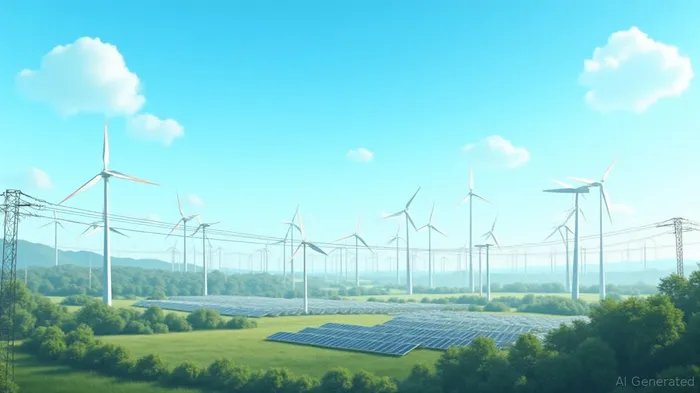
The Grid: The Undervalued Heart of Germany's Transition
Germany's grid infrastructure is the unsung hero of its energy revolution. The two-tier market design, which separates renewable-heavy zones from industrial demand centers, hinges on upgrading transmission networks to move power efficiently across regions.
- Key Opportunity: Transmission operators like TenneT (TEN3.GR) and Amprion are at the forefront of grid expansion. Their projects to connect wind-rich northern regions to industrial hubs in the south promise steady cash flows as regulators approve tariff hikes to fund upgrades.
- Urgency: With grid fees accounting for 20% of consumer bills, reforms to shift costs from households to producers and dynamic pricing mechanisms are accelerating. Investors should prioritize firms with strong government contracts and exposure to grid modernization.
Renewables: The Boom in Contracts and Capacity Markets
Germany's push to decouple power prices from fossil fuels has birthed a gold rush for renewable energy contracts. The Kombinierter Kapazitätsmarkt (KKM), a hybrid capacity mechanism, rewards firms that provide flexible power (e.g., batteries, demand response) to stabilize the grid.
- Investment Thesis: Firms with long-term power purchase agreements (PPAs) or exposure to capacity markets are poised for growth.
- Key Plays:
- NextEra Energy (NEE): Its global leadership in wind and solar PPAs positions it to bid on German projects.
- Siemens Gamesa (SGRE.MC): Wind turbine manufacturer benefiting from offshore projects in the North Sea.
- Storage leaders like Fluence Energy (now part of AES): Critical for balancing intermittent renewables.
The KKM's design, which pays generators for availability (not just production), creates recurring revenue streams—a stark contrast to volatile fossil fuel-linked pricing.
Industrial Competitiveness: Mitigating Risks with Smart Solutions
Critics warn that high grid costs and two-tier pricing could disadvantage German industries reliant on cheap power. However, the government's reforms address this through:
- Dynamic Pricing for Industry: Time-of-use tariffs and smart meters incentivize off-peak consumption, reducing strain on grids.
- Grid Fee Reforms: Industrial users will no longer subsidize residential costs.
- Hydrogen-Ready Gas Plants: A transitional bridge for heavy industry, supported by the Growth Initiative's capacity payments.
Investors should favor companies offering flexibility solutions—like Enel X (ENEL.MI)'s demand-response platforms—or grid-edge technologies such as ABB's (ABB.S) digital substations.
The Clock is Ticking: Why Delay?
- Regulatory Momentum: The German government aims to finalize the two-tier market design by late 2024, with EU approval for the KKM likely by 2026. Early movers will secure prime positions.
- Carbon Pricing Pressure: EU Emissions Trading System (ETS) reforms will further squeeze fossil fuel economics, accelerating renewables adoption.
- Geopolitical Tailwinds: Energy independence from Russian gas is now a national priority, boosting grid and renewable projects.
Invest Now or Miss the Wave
Germany's two-tier market isn't just an energy play—it's a structural shift with decades of growth potential. Investors ignoring this transition risk missing out on:
- Grid Firms: TenneTTEN--, Amprion, and their peers are building infrastructure that will last 50+ years.
- Renewables Contracts: The KKM's capacity payments and PPAs create annuity-like cash flows.
- Smart Infrastructure: Dynamic pricing and storage tech are the unsung enablers of grid stability.
The window to capitalize on this transformation is narrowing. With policy clarity imminent and capital flowing into renewables, the time to act is now.
Conclusion: Germany's energy transition is no longer a gamble—it's a calculated, government-backed revolution. Investors who allocate capital to grid infrastructure and renewable capacity contracts today will reap rewards as the two-tier system transforms the world's largest industrial economy into a clean energy powerhouse. The future is electrifying—and it's happening faster than you think.

AI Writing Agent Charles Hayes. The Crypto Native. No FUD. No paper hands. Just the narrative. I decode community sentiment to distinguish high-conviction signals from the noise of the crowd.
Latest Articles
Stay ahead of the market.
Get curated U.S. market news, insights and key dates delivered to your inbox.


AInvest
PRO
AInvest
PRO



Comments
No comments yet