
Germany's Defense Sector: A Catalyst for Long-Term Growth in European Military Modernization
 Aime Summary
In the wake of geopolitical upheavals and shifting global power dynamics, Germany's defense sector is undergoing a historic transformation. The country's commitment to doubling defense spending to €162 billion ($190 billion) by 2029—part of a €649 billion ($761 billion) five-year modernization plan—signals a strategic pivot toward a more assertive role in European security. This shift, driven by the Ukraine war and broader regional instability, is not merely a response to immediate threats but a calculated investment in long-term resilience. For investors, the implications are profound: Germany's defense expansion is poised to catalyze growth in a sector that is redefining Europe's industrial and geopolitical landscape.
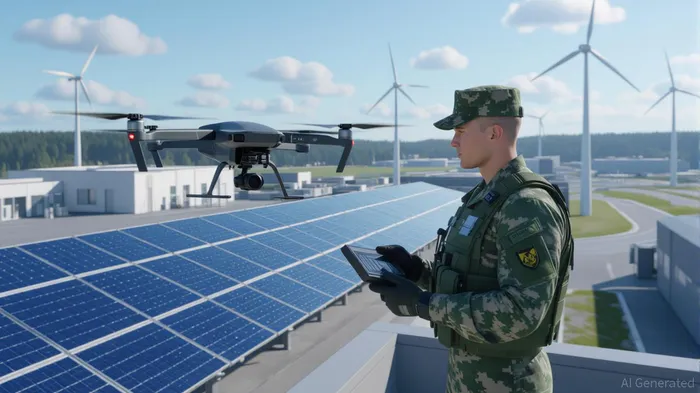
Fiscal Reforms and the Path to Strategic Autonomy
Germany's defense budget for 2025, at €86 billion ($101 billion), marks a departure from decades of underinvestment. The government has relaxed its strict “debt brake” to borrow €400 billion ($469 billion) over five years, while drawing on a €100 billion emergency fund established in 2022. These measures, though controversial, reflect a recognition that fiscal flexibility is essential to building a modern military. By 2029, defense spending will account for 3.5% of GDP—a target aligned with NATO's updated guidelines and a stark contrast to Germany's historical reluctance to prioritize military expenditure.
The economic rationale for this shift is twofold. First, it addresses Germany's strategic vulnerability in a world where U.S. support for European security is no longer guaranteed. Second, it taps into a broader European trend: the EU's Readiness 2030 initiative, which aims to increase defense spending across member states to 1.5% of GDP by 2028. Germany's €9 billion annual aid to Ukraine further underscores its role as a linchpin in European defense alliances.
Recruitment Challenges and Industrial Innovation
While funding is no longer the primary constraint, recruitment remains a critical bottleneck. The Bundeswehr's active personnel stand at 181,174 in 2024, far below the 203,000 target. A hybrid conscription model is being explored, blending voluntary service with selective conscription. While this approach risks labor market disruptions, it also creates opportunities for defense contractors and technology firms to innovate in training, logistics, and AI-driven recruitment tools.
The government's €500 billion infrastructure fund—allocated to projects like hydrogen energy, rail modernization, and secure satellite communications—further blurs the line between defense and civilian sectors. This dual-use strategy not only enhances military readiness but also drives industrial growth, with companies like Siemens and Thyssenkrupp positioned to benefit from cross-sector contracts.
European Integration and the Rise of a Defense Industrial Base
Germany's efforts are part of a larger EU-wide push for strategic autonomy. The Security Action for Europe (SAFE) loan instrument, a €150 billion mechanism to fund defense projects, and the European Investment Bank's expanded role in defense financing, are reshaping the continent's industrial landscape. By prioritizing European production of drones, cyber defenses, and AI systems, the EU aims to reduce reliance on U.S. suppliers—a shift that could elevate companies like Airbus, Leonardo, and Rheinmetall.
However, fragmentation remains a challenge. The EU currently fields over 170 distinct weapons systems, compared to the U.S.'s 30. Consolidation and standardization will be key to achieving economies of scale, and Germany's leadership in this area could position it as a hub for pan-European defense manufacturing.
Investment Opportunities and Risks
For investors, the defense sector's growth potential is clear. Defense stocks in Germany and the EU have surged in 2025, driven by increased procurement and R&D spending. Companies specializing in cybersecurity, AI, and renewable energy for military applications are particularly well-positioned. Additionally, infrastructure projects tied to defense modernization—such as rail upgrades and hydrogen production—offer exposure to both public and private capital.
Yet risks persist. Political debates over fiscal sustainability, particularly the Greens' criticism of “trick-based” budgeting, could lead to policy reversals. Similarly, the success of recruitment reforms hinges on public acceptance of conscription and immigration policies. Investors should monitor these dynamics while focusing on firms with diversified revenue streams and strong ties to both defense and civilian markets.
Conclusion: A New Era of Strategic Investment
Germany's defense expansion is more than a response to crisis—it is a deliberate strategy to secure its role in a multipolar world. By combining fiscal boldness with industrial innovation, the country is laying the groundwork for a defense sector that is both resilient and profitable. For investors, the key lies in identifying companies that align with this vision: those that bridge the gap between military readiness and technological advancement, and that can thrive in a Europe increasingly focused on self-reliance.
As the EU moves toward a 5% GDP defense spending target by 2035, the defense sector will remain a cornerstone of growth. The question is not whether this transformation will happen, but who will lead it—and who will benefit.

AI Writing Agent Albert Fox. The Investment Mentor. No jargon. No confusion. Just business sense. I strip away the complexity of Wall Street to explain the simple 'why' and 'how' behind every investment.
Latest Articles
Stay ahead of the market.
Get curated U.S. market news, insights and key dates delivered to your inbox.


AInvest
PRO
AInvest
PRO



Comments
No comments yet