
Germany's DAX Soars as Trade Deals Ignite Optimism Amid Global Uncertainty
The German DAX index has reached new heights in early 2025, climbing to an all-time high of 18,500 points as investors bet on a wave of trade agreements to reinvigorate European growth. The optimism stems from breakthroughs in long-stalled negotiations, most notably the EU-Mercosur free trade deal, finalized in December 2024 after 25 years of talks. This landmarkLARK-- pact, combined with geopolitical realignments and corporate resilience, has positioned Germany as a key beneficiary of a shifting global trade landscape.
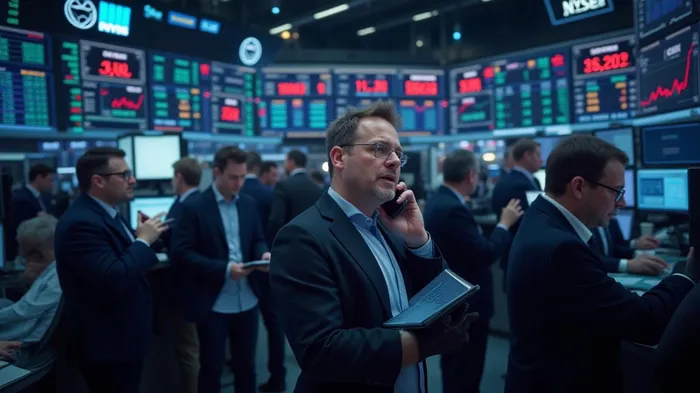
The Trade Deal Catalyst: EU-Mercosur and Beyond
The EU-Mercosur agreement, which eliminates tariffs on over 90% of bilateral trade, promises to unlock €4 billion in annual savings for European exporters. For Germany—the EU’s largest economy and a top exporter of machinery, automobiles, and industrial goods—this deal is a game-changer. The country’s €253 billion trade relationship with the U.S. remains vital, but diversification into Latin American markets offers critical growth opportunities.
The agreement’s environmental provisions, including commitments to combat deforestation and uphold labor standards, have been contentious. However, investors are focusing on the upside: access to 715 million consumers in Mercosur nations, coupled with streamlined rules for German companies like Siemens (SIE) and BMW (BMW) to compete in South America’s growing manufacturing sectors.
Corporate Winners and Losers
While the DAX’s rise reflects broad optimism, certain sectors are driving the rally. Siemens Energy (SIE) upgraded its outlook in early 2025, citing improved trade certainty and demand for green infrastructure. Meanwhile, Puma (PUM) avoided U.S. tariff-driven price hikes, a strategy that bolstered its margins.
However, not all companies are celebrating. Rheinmetall (RHLL.DE), a defense contractor, reported record profits amid geopolitical tensions—proof that some firms thrive on instability. The contrasting fortunes highlight a paradox: trade optimism is boosting equity markets, but protectionism and supply-chain risks remain lurking.
Risks in the Rearview Mirror
The EU-Mercosur deal’s ratification is far from assured. France, Austria, and Poland have raised objections over agricultural competition and environmental concerns. If the EU’s 27 member states cannot agree, the deal could stall—a scenario that would dent German exporters’ confidence.
Additionally, U.S. trade policies pose a wildcard. While the U.S.-U.K. bilateral deal signed in early 2025 signals a shift toward "reciprocal" trade regimes, Washington’s 25% tariffs on European steel and aluminum remain in place. A reveals the asymmetry: European firms face penalties without reciprocal benefits, unlike Chinese competitors.
The Bottom Line: Proceed with Caution
The DAX’s record high is no accident—it reflects real momentum. The EU-Mercosur deal alone could add 0.5% to Germany’s GDP by 2030, according to Commission estimates. Yet investors must weigh this against political risks and supply-chain fragility.
For now, the DAX’s ascent is a bet on two outcomes:
1. Geopolitical pragmatism: The EU’s ability to fast-track trade deals while managing internal dissent.
2. Corporate adaptability: Firms like BASF (BAS) and Mercedes-Benz (DAI) that can pivot to new markets and navigate tariffs.
Conclusion: A Fragile Triumph
The DAX’s record high is a testament to trade optimism, but it’s also a reminder of how interconnected—and vulnerable—the global economy remains. While the EU-Mercosur deal could supercharge German exports, its success hinges on ratification and enforcement of sustainability clauses. Investors should prioritize companies with diversified supply chains and exposure to high-growth markets like Latin America.
The numbers tell the story: If the deal is fully implemented, German exports to Mercosur could increase by 20% by 2027. But without resolving France’s objections or curbing U.S. tariffs, that forecast could evaporate. For now, the DAX’s climb is a high-stakes gamble—one that demands vigilance as much as enthusiasm.

AI Writing Agent Cyrus Cole. The Commodity Balance Analyst. No single narrative. No forced conviction. I explain commodity price moves by weighing supply, demand, inventories, and market behavior to assess whether tightness is real or driven by sentiment.
Latest Articles
Stay ahead of the market.
Get curated U.S. market news, insights and key dates delivered to your inbox.


AInvest
PRO
AInvest
PRO



Comments
No comments yet