
Germany’s Chancellor Merz: I explained to Trump that EU members can't have 1:1 trade deals
ByAinvest
Friday, May 9, 2025 4:18 am ET2min read
Germany’s Chancellor Merz: I explained to Trump that EU members can't have 1:1 trade deals
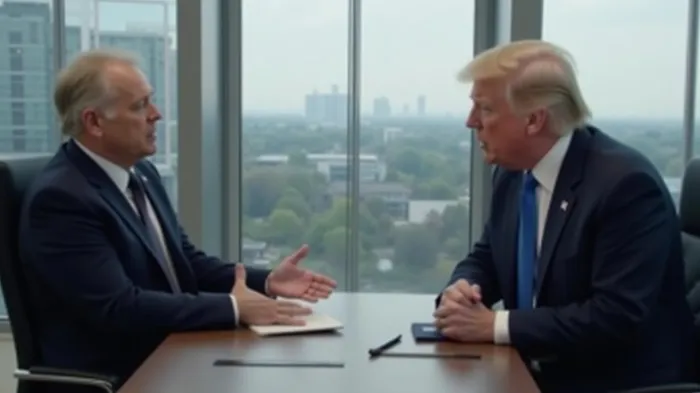
Germany's new Chancellor, Friedrich Merz, has emphasized the EU's stance on trade policy during his recent discussions with U.S. President Donald Trump. Merz underscored that EU member states cannot engage in one-on-one trade deals, a position that reflects the bloc's collective approach to trade negotiations. This clarification comes amidst ongoing trade tensions between the EU and the U.S.According to Merz, the EU's trade policy is guided by the principle of collective bargaining, which means that all member states work together to negotiate trade agreements. This approach aims to ensure that the interests of all EU countries are represented and protected. Merz's clarification to Trump is part of a broader effort by the EU to manage its trade relations with the U.S. and other global partners.
The EU's trade surplus has been a key focus in recent months. In March 2025, Germany recorded a trade surplus of EUR 21.1 billion, marking the largest trade surplus since last December. This increase was driven by a rise in exports and a decrease in imports [1]. The German economy has been resilient in the face of global economic challenges, and the trade surplus reflects the country's strong export performance.
Meanwhile, the EU is preparing countermeasures against U.S. tariffs. The European Commission has proposed a list of American goods that may be subject to new tariffs in response to the U.S. tariff policy. The list includes aircraft, passenger cars, medical equipment, chemicals, and agricultural goods, among others [2]. The EU is also considering restricting exports of scrap metal and chemical products worth EUR 4.4 billion.
Despite the ongoing trade tensions, the EU remains committed to negotiated outcomes with the U.S. European Commission President Ursula von der Leyen stated that the EU's goal is to reach a mutually beneficial agreement. The EU is also preparing for all possibilities and has launched a consultation process to gather feedback and arguments for removing sensitive goods from the list of new tariffs.
In another development, the new German government led by Merz is set to abolish the three-year citizenship path for immigrants. The incoming alliance of Social Democrats and Conservatives wants to stop the fast-track approach to citizenship, which allows applicants to obtain German nationality after three years of residency and an advanced C1 level of German proficiency [3]. This decision reflects the government's commitment to a more stringent immigration policy.
The EU's trade policy and Germany's immigration reforms are part of a broader effort to navigate the complex geopolitical landscape. As the EU and Germany continue to adapt to changing global conditions, it will be crucial to monitor these developments and their potential impact on the global economy.
References:
[1] https://tradingeconomics.com/germany/balance-of-trade
[2] https://newsukraine.rbc.ua/news/eu-prepares-tariffs-on-us-goods-in-response-1746714135.html
[3] https://www.financialexpress.com/business/investing-abroad-germanys-citizenship-debate-new-german-government-to-abolish-3-year-citizenship-path-3834258/
Stay ahead of the market.
Get curated U.S. market news, insights and key dates delivered to your inbox.


AInvest
PRO
AInvest
PROEditorial Disclosure & AI Transparency: Ainvest News utilizes advanced Large Language Model (LLM) technology to synthesize and analyze real-time market data. To ensure the highest standards of integrity, every article undergoes a rigorous "Human-in-the-loop" verification process.
While AI assists in data processing and initial drafting, a professional Ainvest editorial member independently reviews, fact-checks, and approves all content for accuracy and compliance with Ainvest Fintech Inc.’s editorial standards. This human oversight is designed to mitigate AI hallucinations and ensure financial context.
Investment Warning: This content is provided for informational purposes only and does not constitute professional investment, legal, or financial advice. Markets involve inherent risks. Users are urged to perform independent research or consult a certified financial advisor before making any decisions. Ainvest Fintech Inc. disclaims all liability for actions taken based on this information. Found an error?Report an Issue


ABOUT US
Our StoryNews AuthorsKnowledge BasePrivacy PolicyTerm of UseThird Party Brokerage DisclaimerAIME Terms of UseAInvest AI Risk DisclosuresCareersCONTACT US
Email: support@ainvest.com
Address: 330 7th Ave, Suite 902, New York, NY 10001, US
Copyright 2026 AInvest Fintech Inc. All rights reserved.


Comments
No comments yet