
Germany's 5G Revolution: Cybersecurity and Rural Tech Are the Next Gold Rush
The race to dominate 5G infrastructure is heating up, and Germany is leading the charge—thanks to bold government funding, aggressive rural deployment plans, and a laser focus on cybersecurity. This isn't just about faster phone service; it's a $673 billion market by 2031, and the companies positioned to secure Germany's digital backbone are about to cash in.
Let's break down the opportunities—and why investors should act now.
The Cybersecurity Play: Huawei's Exit Means Big Profits for the Brave
The EU's ban on Huawei equipment by 2027 isn't just a geopolitical move—it's a goldmine for cybersecurity firms. Germany's telecom giants, like Deutsche Telekom and O2 Germany, are scrambling to replace Huawei's infrastructure with Open RAN networks (multi-vendor systems that reduce reliance on single suppliers).
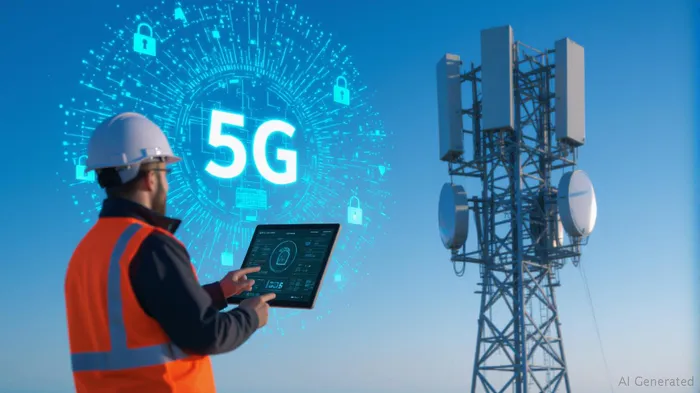
This shift demands advanced encryption, AI-driven threat detection, and network segmentation. Companies like Nokia (already partnered with Deutsche Telekom) and Ericsson (leveraging Open RAN expertise) are prime beneficiaries. But don't stop there: cybersecurity ETFs like HACK (which holds CrowdStrikeCRWD-- and Palo Alto Networks) could surge as Germany's $50 billion transition from Huawei gains steam.
Rural 5G: The Fiber-to-Tower Gold Rush
Germany's Digital Infrastructure Fund is pouring €10 billion into closing the rural-urban connectivity gap. Projects like Deutsche Telekom's fiber-to-the-tower initiative (using €2.2 billion in grants) are slashing deployment costs for remote areas. But here's the kicker: rural 5G isn't just about towers—it's about powering smart agriculture, autonomous farming, and IoT networks.
Enter Ocean Power Technologies (OPTT), a tiny player with big potential. While not yet active in Germany, their AI-enabled PowerBuoy® systems—wave-powered generators that supply reliable electricity to offshore 5G towers—could be a game-changer for coastal regions. Imagine powering 5G nodes along Germany's North Sea coast with renewable energy, eliminating grid dependency. OPTT's tech isn't just innovative; it's a blueprint for how to monetize “hard-to-reach” rural markets.
The Highway to Profits: 5G on the Move
O2 Germany isn't just covering cities—they're blanketing 13,200 km of highways with 5G to support EV charging and autonomous vehicles. This isn't theoretical: 5G-enabled roads could reduce accidents by 30% and cut congestion costs by billions. The companies supplying the hardware—like Ericsson (radio gear) and Keysight Technologies (testing tools)—are critical here.
But the real secret is edge computing. With 5G's low latency, data can be processed locally instead of traveling to distant servers. This reduces latency (and risk) for applications like autonomous trucks. Investors should watch Dell Technologies (edge infrastructure) and NVIDIA (AI processing) for synergies.
The Bottom Line: Buy the Builders, Bet on the Cyber Shield
- Core Holdings: Deutsche Telekom (DTE.DE) and O2 Germany (TEF.MC) are undervalued at 12.5x and 10.8x EV/EBITDA, respectively. Both are executing flawlessly on 5G coverage targets.
- Catalyst Plays: Ericsson (ERIC) for Open RAN and HACK for cybersecurity.
- Speculative Gem: Ocean Power Technologies (OPTT) at $2.50/share—its tech could become essential for Germany's coastal 5G rollout.
The clock is ticking. Germany's 5G boom isn't just about speed—it's about securing the future of connectivity. Don't miss this train.
Action Plan:
1. Buy DTE.DE now—its 97% household coverage and spectrum dominance are unmatched.
2. Dip into HACK—cybersecurity is the unsung hero of 5G's growth.
3. Speculate on OPTT—its AI-powered systems could go from niche to necessity.
This is a must-play sector. The money is in the infrastructure—and the companies that guard it.
Disclosure: The author holds no positions in the mentioned stocks but may initiate them in the future.

Delivering real-time insights and analysis on emerging financial trends and market movements.
Latest Articles
Stay ahead of the market.
Get curated U.S. market news, insights and key dates delivered to your inbox.




Comments
No comments yet