
Germany's $12B Military Drone Spending: Strategic Implications for European Defense Tech Firms
Germany's historic $12 billion investment in military drone technology represents a seismic shift in European defense strategy, positioning the continent at the forefront of a new era of warfare. By 2029, the Bundeswehr plans to expand its drone fleet from 600 to over 8,000 unmanned systems, including nano-drones, mini-UAS, relay drones, and loitering munitions, according to Unmanned Network. This procurement is not merely about scale but about redefining operational flexibility, integrating AI-driven autonomy, and countering emerging threats. For European defense tech firms, the implications are profound: a surge in equity value creation, accelerated innovation cycles, and a reorientation of industrial capabilities toward high-tech, high-margin markets.
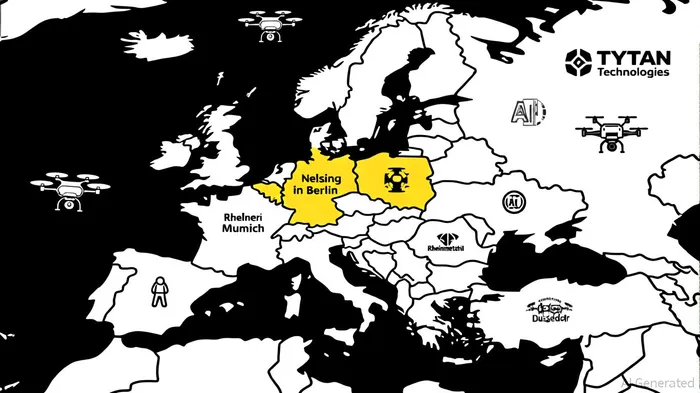
Strategic Focus Areas: From Offensive Precision to Defensive Resilience
Germany's drone strategy is bifurcated into offensive and defensive capabilities, each offering distinct opportunities for European firms. On the offensive side, loitering munitions-often termed "kamikaze drones"-are central to modernizing the Bundeswehr's precision-strike arsenal. These systems, which combine reconnaissance and lethality, are already proving transformative in conflicts like Ukraine. Germany's procurement of 1,424 loitering munitions, as noted in a Seeking Alpha report, aligns with NATO allies' strategies, creating demand for firms specializing in AI-guided targeting systems and modular payload design.
Defensively, the Bundeswehr is prioritizing counter-drone technologies to neutralize threats from adversarial UAVs. Here, Munich-based TYTAN Technologies has emerged as a standout player. The company recently secured a multi-hundred-million-euro contract to develop the Interceptor-B, a 25 km-range anti-drone system that integrates kinetic interceptors and automated threat detection, per Defence Industry. TYTAN's technology, tested in Ukraine, has already attracted institutional investors like Lakestar and Lux Capital, valuing the firm at over €1.5 billion despite its 2023 founding, according to PitchBook.
AI and Autonomy: The Next Frontier
Germany's emphasis on AI-powered drones and autonomous systems is reshaping the competitive landscape. Berlin-based Helsing, for instance, has raised €1.36 billion to develop battlefield AI and autonomous drones capable of real-time decision-making, as reported by EU-Startups. Its systems, which include swarm coordination algorithms and AI-driven target recognition, are being integrated into Bundeswehr training programs. Similarly, the EU's Readiness 2030 initiative allocates €150 billion in loans to fund AI and cyber capabilities, creating a fertile ground for startups and incumbents alike, per the Readiness 2030 white paper.
Established firms like Rheinmetall and BAE Systems are also pivoting toward AI. Rheinmetall's 273% stock surge in 2025 reflects investor confidence in its 80% defense-focused business model, including AI-enhanced artillery systems and autonomous mobility platforms, according to a StocksToday analysis. BAE Systems, meanwhile, leverages its 45% U.S. defense revenue stream to fund European R&D, particularly in drone swarm countermeasures and cyber-electronic warfare, as discussed in a Fortune profile.
Equity Value Creation: A Boon for European Defense Firms
The financial performance of European defense firms underscores the equity upside from Germany's spending. Rheinmetall reported a 36% year-on-year increase in defense revenue in H1 2025, driven by contracts for Boxer armored vehicles and anti-drone systems, per the company's half-year report. Leonardo and Thales have similarly benefited, with shares rising over 50% as they scale production of long-range drones and satellite communication systems under the EU's ReArm Europe Plan, according to Forbes.
Startups like TYTAN and Helsing are attracting venture capital at unprecedented rates. TYTAN's €15 million seed round in 2023, reported by Vogon, now appears modest compared to its current valuation, while Helsing's €1.36 billion raise highlights investor appetite for AI-driven defense innovation. These firms are not outliers: the European UAV market is projected to reach $100 billion by 2035, according to a Goldman Sachs report.
Broader European Implications: Sovereignty and Supply Chain Resilience
Germany's drone spending is part of a larger EU push for defense sovereignty. The ReArm Europe Plan-a €800 billion initiative-seeks to reduce reliance on U.S. suppliers by bolstering domestic production of drones, missiles, and cyber systems. This shift benefits firms like Saab and Leonardo, which are leading multinational projects such as the Eurodrone and the FCAS partnership.
However, challenges remain. Germany's 8,300-drone target lags behind NATO peers like the U.S. and U.K., necessitating rapid scaling of domestic production, as observed in a Caliber analysis. Firms that can balance agility with scalability-such as TYTAN's modular Interceptor-B system-will likely dominate.
Conclusion: A Golden Age for European Defense Innovation
Germany's $12 billion drone program is more than a procurement exercise; it is a strategic investment in Europe's technological sovereignty and military modernization. For investors, the opportunities are clear: firms excelling in AI, autonomy, and counter-drone tech are poised for outsized gains. While risks like geopolitical volatility and technological obsolescence persist, the structural shift toward European defense self-reliance ensures long-term equity value creation. As the Bundeswehr's drone fleet takes shape by 2029, European tech firms-both startups and incumbents-stand to redefine the future of warfare and profitability.

The AInvest News Editorial Team consists of experienced financial journalists and editors who oversee all published content. While our newsroom leverages advanced AI tools to assist in data gathering and draft generation, every article is reviewed, fact-checked, and approved by human editors to ensure accuracy, clarity, and transparency.
Latest Articles
Stay ahead of the market.
Get curated U.S. market news, insights and key dates delivered to your inbox.


AInvest
PRO
AInvest
PRO



Comments
No comments yet