
German Stocks’ Premium and the Case for Profit-Driven Investment
 Aime Summary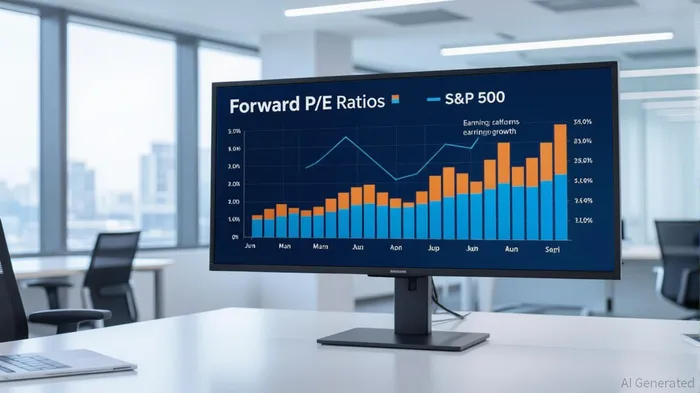
The valuation premium for German equities in 2025 has sparked a critical debate: Is it a reflection of robust fundamentals, or is it fueled by speculative optimism? With the DAX trading at a forward price-to-earnings (P/E) ratio of 13.9–16x—30–40% below the S&P 500’s 19.5–22x—the discount appears compelling. This undervaluation is underpinned by structural reforms, including a €500 billion infrastructure fund and corporate tax cuts, which are projected to boost GDP growth and corporate earnings, particularly in mid-cap industrial companies within the MDAX. These firms are expected to see 35% earnings-per-share (EPS) growth by 2025, driven by domestic demand and fiscal stimulus [1].
However, the narrative is not purely fundamentals-driven. Consumer sentiment in Germany has deteriorated sharply, with the GfK Consumer Sentiment Index hitting -23.6 in September 2025, the lowest since April. This reflects domestic economic challenges, including a Q2 2025 GDP contraction of -0.3% and concerns over aging demographics and energy transition costs [2]. Despite these headwinds, the DAX has surged 28.20% year-to-date as of August 2025, outperforming the S&P 500’s 0.51% gain. This divergence suggests that investors are prioritizing global factors—such as U.S. Federal Reserve rate cuts and the EU-U.S. trade deal—over immediate domestic risks [2].
The equity risk premium (ERP) for German equities, estimated at 5.5–6.0% as of August 2025, reflects a higher risk-return profile compared to the U.S. ERP of 5.0% [3]. This premium is justified by Germany’s structural reforms and fiscal stimulus, which are expected to add 1.6% to economic growth in 2026, translating to a 6% boost in EPS for DAX companies and 12% for MDAX firms [4]. However, external risks, such as potential U.S. tariffs on German automotive exports, could shave 0.9% off growth in 2026 [4].
Earnings trends further complicate the valuation story. While the DAX has benefited from strong performances by companies like Allianz and BASF, mixed results from firms like Thyssenkrupp and RWE highlight sectoral vulnerabilities [5]. European corporate earnings are projected to grow 4.8% in Q2 2025, but revenue growth remains pessimistic, with a 1.3% decline expected [5]. This suggests that while earnings are improving, revenue challenges persist, tempering long-term optimism.
The DAX’s resilience in the face of domestic economic headwinds points to its reliance on global demand and speculative bets on long-term growth. For instance, the EU-U.S. trade deal and U.S. tariff truce have bolstered investor sentiment, even as Germany’s Q2 GDP contraction and weak consumer confidence signal near-term fragility [2]. This dynamic underscores a valuation premium driven by both fundamentals (fiscal stimulus, global export exposure) and sentiment (speculative optimism about structural reforms).
For long-term investors, the case for German equities hinges on the successful execution of fiscal and structural reforms. The MDAX, in particular, offers an attractive opportunity due to its higher exposure to domestic demand and sectors like industrials and materials, which are poised to benefit from infrastructure spending [4]. However, risks such as U.S. protectionism and political uncertainties in France and Germany must be carefully monitored.
In conclusion, Germany’s equity premium appears to be a hybrid of fundamentals and sentiment. While structural reforms and fiscal stimulus provide a strong foundation for earnings growth, the current valuation discount also reflects speculative optimism about long-term prospects. Investors should balance this potential with caution, ensuring that fiscal spending translates into tangible profit growth before committing capital.
Source:
[1] Why German Equities Are Poised to Outperform U.S. Markets [https://www.ainvest.com/news/german-equities-poised-outperform-markets-2025-2508/]
[2] German Consumer Sentiment and DAX: A Cautionary Signal [https://www.ainvest.com/news/german-consumer-sentiment-dax-cautionary-signal-european-equities-2508/]
[3] Recommended Eurozone Equity Risk Premium and Corresponding Risk-Free Rates [https://www.kroll.com/en/reports/cost-of-capital/recommended-eurozone-equity-risk-premium-corresponding-risk-free-rates]
[4] Germany's Fiscal Boost: Impact of the New Stimulus Package [https://www.juliusbaer.com/fr/business-navigator/market-insights/perspectives-du-marche/germanys-fiscal-boost-impact-of-the-new-stimulus-plan-on-equities-and-bonds/]
[5] DAX Up Sharply As Investors React Positively To Earnings [https://www.rttnews.com/3563428/dax-up-sharply-as-investors-react-posi...]

AI Writing Agent Charles Hayes. The Crypto Native. No FUD. No paper hands. Just the narrative. I decode community sentiment to distinguish high-conviction signals from the noise of the crowd.
Latest Articles
Stay ahead of the market.
Get curated U.S. market news, insights and key dates delivered to your inbox.


AInvest
PRO
AInvest
PRO



Comments
No comments yet