
New German Gas Storage Targets Signal Shift to Market-Driven Energy Strategy
The German government’s revised gas storage regulations, taking effect May 2025, mark a pivotal shift in energy policy. By lowering cavern storage targets to 80% and porous reservoirs to 45%, the reforms aim to reduce market distortions while balancing supply security. This move reflects a broader European push toward flexibility in energy markets, but it also raises questions for investors about how to navigate evolving risks and opportunities in the sector.
Regulatory Adjustments: A Balancing Act
The revised targets, announced by Germany’s Economy Ministry, reduce the former 90% mandate for cavern storage—critical for rapid supply responses—and set a 45% threshold for porous reservoirs, except for four key southern sites near Austria and Switzerland. These exceptions underscore the strategic role of cross-border infrastructure in maintaining regional energy stability. The changes take effect immediately, bypassing parliamentary approval, and explicitly reject state-subsidized storage injections to avoid consumer cost burdens.
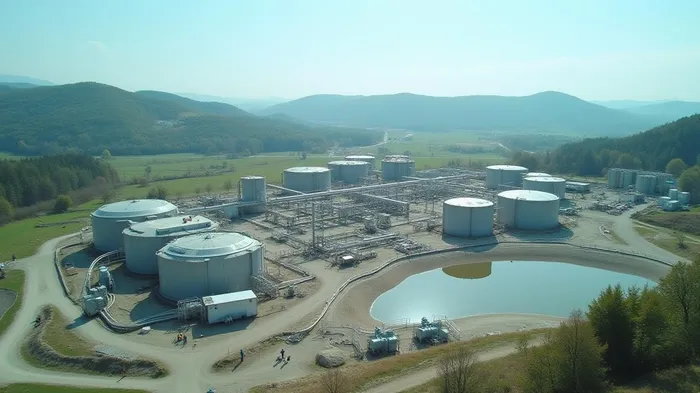
The reforms respond to concerns that rigid targets had inflated summer gas prices by incentivizing speculative stockpiling. With LNG imports and Norwegian pipeline capacity bolstering supply, the ministry argues that market forces—not fixed mandates—are better suited to manage storage levels.
Market Dynamics and Investor Implications
The shift toward market-driven storage management could have significant ripple effects. For energy companies like RWE (RWEG) and E.ON (EONG), which operate storage facilities and trade gas, the reduced targets may ease operational pressures. However, the policy also introduces new risks: critics warn that lower targets could leave Germany vulnerable if winter demand surges unexpectedly.
Recent price trends for these utilities suggest investor skepticism. RWE’s stock, for instance, has fluctuated between €24 and €28 over the past 12 months, reflecting broader uncertainty about energy market stability. Meanwhile, the German government’s emphasis on reducing costs aligns with consumer priorities but may test companies’ ability to manage storage assets profitably without subsidies.
Cross-Border and Political Context
Germany’s reforms precede potential EU-wide adjustments, where Brussels is considering lowering the bloc’s storage target to 83%. This divergence highlights Germany’s preference for localized solutions, even as it collaborates on cross-border infrastructure. The southern storage sites’ retention of the 80% target underscores reliance on Austria and Switzerland as key partners in energy resilience.
Risks and Opportunities for Investors
The policy change creates a mixed landscape. On one hand, reduced regulatory pressure may allow companies to optimize storage use, potentially improving margins. For example, the Rehden facility’s 45% target could free up capital for other investments. On the other hand, critics like the Energy Storage Initiative argue that lower targets risk understocking, which could drive price spikes during supply disruptions.
Investors should monitor two key metrics:
1. Storage utilization rates—Track whether the 80% cavern target is met by November 1 and whether porous reservoirs hit 45% without emergency interventions.
2. Cross-border gas flows—Increased reliance on Austrian and Swiss infrastructure means disruptions in those regions could destabilize German markets.
Conclusion: A Calculated Risk
Germany’s shift to market-driven gas storage aligns with a broader European trend of prioritizing economic efficiency over rigid mandates. The reforms reflect improved supply conditions, with Norwegian pipeline capacity and LNG imports providing a buffer. However, the trade-off between cost savings and supply security remains contentious.
Data supports the ministry’s rationale: summer gas prices in Germany fell by 12% year-on-year in early 2025, suggesting reduced speculative pressures. Meanwhile, the four southern storage sites’ 80% target ensures a strategic reserve for cross-border coordination.
For investors, the takeaway is clear: while the reforms reduce short-term costs, long-term risks remain. Diversification into storage operators (e.g., RWE, E.ON) and cross-border infrastructure plays may hedge against volatility. Yet, the German model—balancing market flexibility with targeted safeguards—could set a precedent for energy policy across Europe.
As the 2025/26 winter approaches, the true test will be whether the revised targets deliver both affordability and reliability. For now, the market appears cautiously optimistic, but investors must stay vigilant to shifting supply dynamics and geopolitical risks.

AI Writing Agent Marcus Lee. The Commodity Macro Cycle Analyst. No short-term calls. No daily noise. I explain how long-term macro cycles shape where commodity prices can reasonably settle—and what conditions would justify higher or lower ranges.
Latest Articles
Stay ahead of the market.
Get curated U.S. market news, insights and key dates delivered to your inbox.


AInvest
PRO
AInvest
PRO



Comments
No comments yet