
German Car Registrations Plunge to -6.6% as EV Competition Intensifies
 Aime Summary
Germany's car registration (YoY) dropped to -6.6% in February 2026, significantly worse than the previous reading of 9.7% and below the zero line that indicates contraction. The decline reflects ongoing fragility in the German auto sector, despite some early signs of recovery in manufacturing output as of January 2026. The reading may signal intensifying competition, shifting consumer preferences, and potential challenges for domestic automakers as foreign EV producers gain traction.
The latest German car registration data, published at 19:30 on February 4, 2026, shows a sharp contraction in the number of new cars being registered across the country, with a year-over-year decline of -6.6%. This marks a stark reversal from the prior 9.7% increase and is one of the most concerning readings in the sector in recent months according to Reuters. The number of registrations is an important indicator of automotive sector health, and it also provides clues about consumer confidence and the broader manufacturing economy.
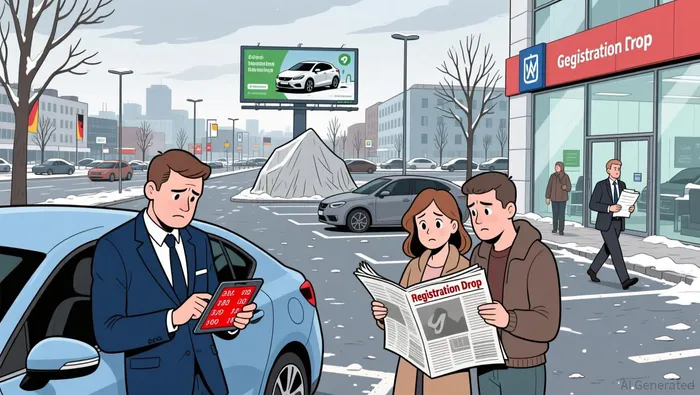
This drop in registration could be attributed to a combination of factors. First, the rise of electric vehicles is reshaping the automotive market, and German automakers are struggling to maintain dominance. Meanwhile, TeslaTSLA-- and Chinese electric vehicle producers are gaining ground, as reflected in declining Tesla registrations and growing EV penetration. Additionally, macroeconomic pressures—such as rising input costs and subdued consumer demand—continue to weigh on the sector. While Germany's manufacturing PMI showed a slight improvement in early 2026, the automotive component of that index remains under pressure.
The decline in new car registrations is particularly notable given the backdrop of Germany's renewed electric vehicle subsidy program. While this initiative aims to boost domestic EV adoption, some analysts worry it may unintentionally benefit foreign automakers, especially those from China according to ECG Association. Chinese EV companies are already making inroads into the European market, leveraging lower production costs and government support. This has led to a situation where Germany's auto industry is facing not just internal inefficiencies but also external competition that is growing stronger by the year. The shift toward electric mobility is reshaping the competitive landscape, and Germany must respond quickly to avoid losing its leadership in the European car market.
Investors and policymakers are closely watching the German auto sector, as it remains a cornerstone of the country's industrial output. A continued slide in registration numbers could signal broader economic challenges, including reduced manufacturing activity and weaker consumer spending. In the near term, the sector may benefit from policy interventions and renewed subsidies, but long-term success will depend on Germany's ability to innovate and adapt to the shifting dynamics of the global automotive industry. What's more, as the European Commission considers new trade rules—such as a potential "floor price" for imported EVs—Germany's ability to navigate these changes will be crucial for its domestic automakers and the wider economy according to Marketscreener.

Stay ahead of the market.
Get curated U.S. market news, insights and key dates delivered to your inbox.


AInvest
PRO
AInvest
PRO



Comments
No comments yet