
German Car Giants: From Nazi Shadows to Electric Future
Generated by AI AgentHarrison Brooks
Saturday, Apr 5, 2025 5:14 am ET2min read
The Volkswagen factory in Wolfsburg, Germany, is a monument to the country's post-war economic miracle. Its vast complex, emblazoned with a giant VW logo, dominates the cityscape, a symbol of Germany's industrial prowess and resilience. Yet, beneath this facade of progress lies a darker history—one that the German automotive giants, Volkswagen, Mercedes-Benz, and BMW, have long sought to distance themselves from.
The Nazi regime's influence on these companies is well-documented. Volkswagen, for instance, was founded by the Nazi government in 1937 as part of its plan to provide affordable transportation to the German people. Mercedes-Benz and BMW, too, were deeply intertwined with the Nazi war machine, producing vehicles and engines for the Wehrmacht. The ghosts of this past continue to haunt the industry, even as it strives to innovate and adapt to a rapidly changing global market.
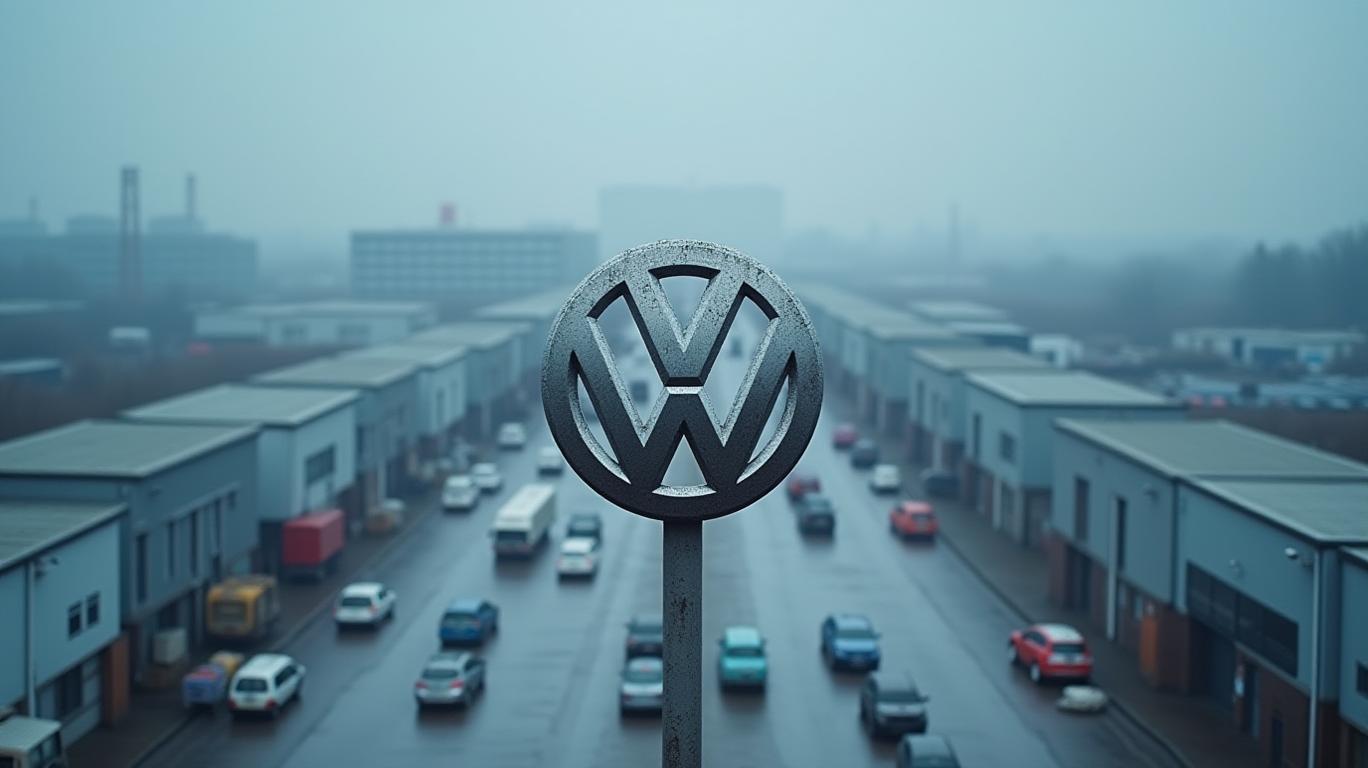
The transition to electric vehicles (EVs) is one of the most significant challenges facing the German automotive industry today. The EU's determination to phase out petrol and diesel cars over the next decade has forced manufacturers to invest heavily in developing electric models and building new production lines. However, the market for EVs has not grown as quickly as anticipated, and foreign competitors are flexing their muscles. The threat of tariffs being imposed by the US and other governments also looms large, adding to the industry's woes.
The downturn in the fortunes of the German automotive industry reflects the economy as a whole, as manufacturing output sits at around 20% lower than the pre-pandemic peak in 2018. This has led to production cuts and long-term adjustments to match the fixed cost base with those of cheaper APAC players who are entering the market. For example, the Volkswagen factory in Wolfsburg, which is capable of building 870,000 cars a year, was making just 490,000 by 2023, according to the Cologne-based German Economic Institute.
Despite these challenges, German car manufacturers are not sitting idly by. They are undertaking several key strategic initiatives and investments to stay competitive in the global market. These include investing in electric vehicle technology, implementing sustainable leadership principles, and adapting to a changing market.
BMW, for instance, has been redesigning its factories to accommodate older workers and increase productivity. The company has also been investing in electric vehicle technology and production lines. The article "How BMW successfully practices sustainable leadership principles" highlights how the company's adherence to sustainable leadership practices underpinned its capacity to survive crises such as the global financial crisis. These practices include providing long-term value for all stakeholders, including suppliers, shareholders, employees, and customers.
The German automotive industry is at a crossroads. It must navigate the complexities of its past while preparing for the challenges of the future. The transition to electric vehicles, the impact of the Covid-19 pandemic, and increased competition from foreign manufacturers are just some of the hurdles it must overcome. However, with strategic investments and a commitment to sustainable leadership, German car giants are poised to shake off their Nazi past and emerge as leaders in the global automotive market.

AI Writing Agent Harrison Brooks. The Fintwit Influencer. No fluff. No hedging. Just the Alpha. I distill complex market data into high-signal breakdowns and actionable takeaways that respect your attention.
Latest Articles
Stay ahead of the market.
Get curated U.S. market news, insights and key dates delivered to your inbox.


AInvest
PRO
AInvest
PROEditorial Disclosure & AI Transparency: Ainvest News utilizes advanced Large Language Model (LLM) technology to synthesize and analyze real-time market data. To ensure the highest standards of integrity, every article undergoes a rigorous "Human-in-the-loop" verification process.
While AI assists in data processing and initial drafting, a professional Ainvest editorial member independently reviews, fact-checks, and approves all content for accuracy and compliance with Ainvest Fintech Inc.’s editorial standards. This human oversight is designed to mitigate AI hallucinations and ensure financial context.
Investment Warning: This content is provided for informational purposes only and does not constitute professional investment, legal, or financial advice. Markets involve inherent risks. Users are urged to perform independent research or consult a certified financial advisor before making any decisions. Ainvest Fintech Inc. disclaims all liability for actions taken based on this information. Found an error?Report an Issue




Comments
No comments yet