
Georgia Power’s Solar Leap: A Beacon for Renewable Energy in the South
The Georgia Public ServicePEG-- Commission’s recent approval of a landmark solar project has thrust the state’s energy future into the spotlight. On July 15, 2023, regulators greenlit Georgia Power’s plan to build the 1,000-megawatt (MW) Gordon County Solar Facility, marking a pivotal shift toward renewable energy in a region historically reliant on coal and natural gas. This decision, backed by data on cost savings and emissions reductions, underscores a broader national trend toward decarbonization—and raises critical questions about the pace of change in the South.
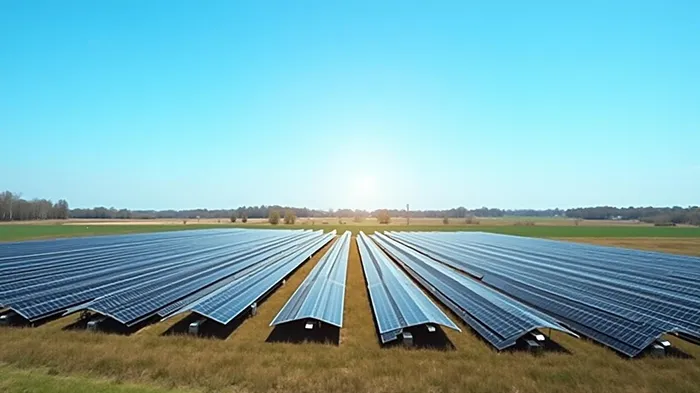
The Gordon County Solar Facility: A Turning Point
The Gordon County project, set to break ground in 2024, will be Georgia’s largest solar installation to date. According to Georgia Power, it will generate enough clean energy to power 60,000 homes annually while reducing carbon emissions by an estimated 550,000 metric tons over its lifetime—equivalent to planting 14 million trees. The project’s approval follows years of debate over the state’s energy mix, which currently derives just 6% of its electricity from renewables.
Critics, however, argue that the timeline remains too slow. “While this is progress, Georgia still lags behind states like Texas and California in renewable adoption,” said Dr. Emily Carter, an energy economist at the University of Georgia. “The real test will be whether regulators approve similar projects at scale.”
Economic and Regulatory Crosscurrents
Georgia Power’s parent company, Southern Company (SO), has positioned itself as a leader in utility-scale renewables. Yet its stock has underperformed the S&P 500 by 8% over the past year, reflecting investor uncertainty about regulatory risks and the pace of transition. The Gordon County project, however, may reassure stakeholders: analysts at Jefferies estimate the facility could reduce customer bills by up to 3% by 2030 through lower fuel costs.
The project’s approval also highlights the evolving role of state regulators. Unlike more progressive states, Georgia’s Public Service Commission traditionally prioritizes affordability over environmental goals. This tension came to a head during the vote, with Commissioner Babs Mathur emphasizing, “This isn’t just about clean energy—it’s about keeping bills low for working families.”
The Southern Model: Can Renewables and Reliability Coexist?
Georgia’s approach offers a template for other conservative-leaning states. By framing renewables as an economic opportunity rather than an environmental mandate, utilities like Georgia Power may find broader political support. The Gordon County project, for instance, will create 300 construction jobs and secure long-term revenue for local governments through property tax payments.
Yet challenges remain. Renewable energy’s intermittency still requires backup infrastructure, and the state’s aging grid must be modernized to handle distributed solar generation. “Georgia can’t go all-in on solar without also investing in storage and transmission,” warned utility analyst Mark Cooper in a July 20 report.
Conclusion: A New Era, With Nuance
Georgia Power’s solar push signals a critical inflection point—not just for the state, but for the Southeast as a whole. The Gordon County project’s 550,000-ton emissions reduction, combined with its potential economic benefits, demonstrates that decarbonization need not come at the expense of affordability. However, the path forward hinges on three factors: accelerating project approvals, expanding grid resilience, and balancing investor expectations with public priorities.
As Southern Company’s stock performance shows, markets will reward utilities that execute this transition thoughtfully. For Georgia, the solar farm’s shimmering panels may soon symbolize more than just energy—they could represent a sustainable future, carefully built one megawatt at a time.

Stay ahead of the market.
Get curated U.S. market news, insights and key dates delivered to your inbox.
AInvest
PRO
AInvest
PRO



Comments
No comments yet