
Georgia Power Customers Face Disruptions as Billing and Utility Issues Arise
 Aime Summary
customers in Atlanta apartment complexes recently had their accounts closed due to miscommunication with property management. Georgia lawmakers are debating whether to continue offering incentives for large-scale data centers, which are placing pressure on the state's power grid. Rising energy demand from data centers could impact electricity costs and grid reliability, with potential long-term implications for utility providers. Georgia Power has apologized and is working to reestablish accounts, but the situation underscores operational and regulatory risks for the company. Residents near data centers have reported increased utility costs and local infrastructure strain, highlighting broader community impacts.
A recent incident has left Georgia Power customers in southwest Atlanta scrambling to regain access to their utility services. Renters at the Fairburn and Gordon Apartments found their electricity accounts suddenly closed, with Georgia Power transferring the accounts under the property owner's name due to a miscommunication between new and previous management. Channel 2 Action News reported that the issue was uncovered after media inquiries, leading to the reactivation of one resident's account and assurances that all eight affected tenants would be reconnected.
This incident is not an isolated case of service disruption. Tenants at the apartment complex have also faced issues with gas and water services. The property has been the subject of ongoing legal and code violation issues, with city records still listing the original owner despite a reported change in management. Georgia Power apologized for the inconvenience and emphasized its commitment to resolving the situation.
Meanwhile, Georgia lawmakers are weighing the long-term consequences of offering incentives for data center construction. These large-scale facilities require massive energy consumption, and with the state experiencing a surge in data center development, concerns are growing about the sustainability of current utility infrastructure.
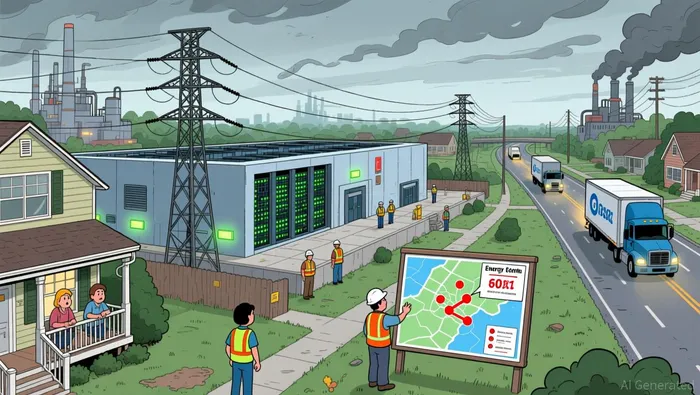
The debate centers on how to balance economic incentives with the need to maintain reliable and stable power systems. As data centers continue to expand, their impact on local utilities—and the associated costs—will likely grow. For instance, a Georgia couple living near a Meta data center has reported increased electricity costs and water-related issues, such as sediment and low pressure. These effects are expected to intensify as data center energy usage is projected to rise significantly in the coming years.
Did the Georgia Power billing issue affect apartment residents?
The billing issue has directly impacted residents at Fairburn and Gordon Apartments in southwest Atlanta. Georgia Power stated that the problem arose from a miscommunication with property management, which mistakenly reported units as vacant. This led to the closure of tenant utility accounts and the transfer of services under the property owner's name.
Many of the affected renters had already experienced prior utility disruptions, including gas and water outages, compounding the inconvenience. The situation has highlighted the vulnerability of residents in properties with complex management transitions. Channel 2 Action News noted that the apartment complex has also faced criticism for poor living conditions, with federal and local housing authorities halting housing vouchers due to unlivable conditions.
What are the implications for Georgia Power and its customers?
The recent issues underscore the operational and regulatory risks that utility companies like Georgia Power must navigate. On one hand, miscommunication or internal errors can lead to significant disruptions for customers. On the other, the growing presence of large data centers in the state is introducing new pressures on the power grid, raising questions about how to sustain incentives while maintaining service reliability.
For investors, these events signal potential volatility in the utility sector, particularly in states with rapid data center expansion. While incentives may drive short-term economic benefits, they also carry long-term costs for utilities. Georgia Power and similar companies must balance infrastructure investments with regulatory expectations and community expectations.
As the debate over data center incentives continues in Georgia, investors should monitor how lawmakers balance economic development with energy sustainability. For Georgia Power, the company will need to demonstrate transparency and responsiveness to customer concerns, particularly in managing disruptions like the recent billing issue. Continued reports of community impacts near data centers could also influence public and political sentiment, potentially affecting the company's reputation and regulatory environment.
Investors may also keep an eye on Georgia Power's customer satisfaction metrics and service reliability indicators, as these factors can impact long-term shareholder value and public perception. The evolving landscape of energy consumption and data center development is reshaping the utility sector, and Georgia Power's ability to adapt will be critical in the months and years ahead.

Stay ahead of the market.
Get curated U.S. market news, insights and key dates delivered to your inbox.


AInvest
PRO
AInvest
PRO



Comments
No comments yet