
Geopolitical Volatility: A Strategic Playbook for Energy and Defense Investors
The Israel-Iran conflict in June 2025 has reignited geopolitical tensions with profound implications for global markets. As Israeli strikes targeted Iranian nuclear facilities and energy infrastructure, the resulting volatility has created asymmetric opportunities in two sectors: energy and defense. For risk-tolerant investors, the surge in oil prices and the outperformance of defense contractors like Raytheon Technologies (RTX) highlight how geopolitical risk can be leveraged—not merely hedged against.
The Oil Market: A Chokepoint-Driven Rally
The strike on Iran's South Pars gas field and an oil depot near Tehran on June 16, 2025, sent West Texas Intermediate (WTI) crude soaring to $75.67 per barrel—the highest since early 2024. Analysts warn that a closure of the Strait of Hormuz, through which 20% of global oil exports flow, could push prices toward $120 per barrel. Even without a full blockade, the mere threat of supply disruption has kept prices volatile around the $75 threshold.
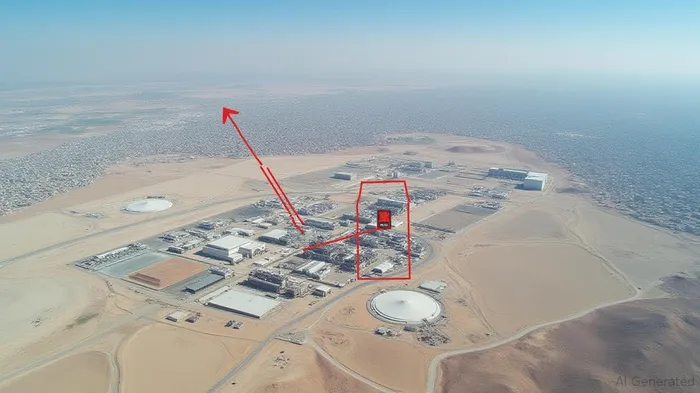
The playbook here is clear: buy oil when prices hold above $75, especially if open interest in futures contracts rises—a sign of sustained institutional bullishness. Stops should be set below $70 to mitigate downside risks from de-escalation or OPEC+ production hikes.
Defense Contractors: The Beneficiaries of Escalation
While oil markets react to immediate supply risks, defense stocks like Raytheon Technologies (RTX) profit from long-term geopolitical shifts. RTX's Q2 2025 surge—up 15%—was fueled by orders for Patriot missile defense systems and SPY-6 radars, critical for countering Iranian drone and missile attacks. A $646 million contract for SPY-6 radar systems underscores the strategic demand.
The defense sector's outperformance reflects a broader trend: investors are pricing in sustained military spending. Even as the S&P 500 fell 1.1% during the conflict's peak, RTX rose alongside peers like Lockheed Martin (+3.7%) and General Dynamics (+1.1%). For investors, RTX presents a compelling entry point near its 20-day moving average of $220, provided geopolitical tensions remain elevated.
Navigating the Broader Market Risks
The conflict's ripple effects are not confined to energy and defense. The S&P 500 and Dow Jones Industrial Average (DJIA) declined 1.1% and 1.8%, respectively, as investors rotated out of risk assets. Airlines and travel stocks—United (-4.4%), Delta (-3.8%)—suffered as Middle East airspace closures disrupted global travel.
This divergence underscores a key risk: a prolonged conflict could trigger a broader market correction. Investors should consider pairing energy/defense exposures with inverse ETFs (e.g., ProShares Short S&P 500 (SH)) or gold (GLD) to hedge against equity declines.
Fed Policy and Inflation: A Tightrope Walk
The Federal Reserve's June 2025 decision to hold rates steady—despite President Trump's calls for cuts—hints at the central bank's dilemma. While rising oil prices threaten to reignite inflation, Fed officials remain wary of stifling an economy already showing signs of fragility. For investors, this means oil's upside could be limited if the Fed signals aggressive tightening, but the immediate focus is on geopolitical supply risks.
Actionable Strategies for Risk-Tolerant Investors
- Energy Plays: Establish long positions in WTI futures above $75, with stops below $70. Monitor Strait of Hormuz shipping data and Iranian missile tests for triggers.
- Defense Exposure: Buy RTX dips near $220, but cap allocations at 5-10% of a portfolio to avoid overconcentration.
- Hedging: Use gold (GLD) or inverse ETFs to offset equity declines if the S&P 500 slips below 4,300.
- Avoid Overcommitment: Geopolitical events can reverse quickly—keep a watchlist for de-escalation signals, such as U.S.-Iran diplomacy or ceasefires.
Conclusion: Volatility as Opportunity
The Israel-Iran conflict has reshaped the investment landscape, creating a stark divide between winners (energy, defense) and losers (equities, airlines). For investors willing to navigate the risks, the asymmetric rewards in oil and defense are compelling—provided they remain vigilant to the conflict's fluidity. As the old adage goes, “markets climb a wall of worry.” In this case, the wall is geopolitical, and the climb is steep but navigable for those prepared to act.

Stay ahead of the market.
Get curated U.S. market news, insights and key dates delivered to your inbox.


AInvest
PRO
AInvest
PRO



Comments
No comments yet