
Geopolitical Volatility in the Middle East: Navigating Energy Risks and Capitalizing on Defense Opportunities
The escalating Israel-Iran conflict has thrust the Middle East into a new era of geopolitical tension, with profound implications for global energy markets and investment opportunities. As military strikes and retaliatory measures dominate headlines, investors must assess the interplay between supply chain disruptions, risk premiums, and sector-specific tailwinds. This analysis explores how prolonged instability could reshape energy prices and defensive industries, offering strategies to capitalize on market divergence.
The Strait of Hormuz: A Chokepoint Under Siege
The Strait of Hormuz, through which 20-21 million barrels per day of oil flows, remains the epicenter of market anxiety. While infrastructure has largely avoided direct damage so far, the threat of attacks on tankers or attempts to block the strait looms large. Even the risk of disruption has injected volatility into crude prices, with WTIWTI-- surging +7.26% in mid-June 2025.
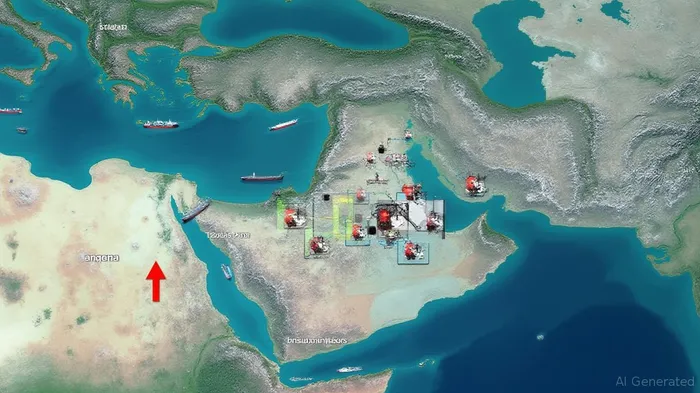
Oil Market Dynamics:
OPEC+'s efforts to stabilize supply—e.g., Saudi Arabia's proposed +411,000 b/d output hike—face headwinds from U.S. shale rig declines (439 active rigs, a 3¾-year low) and global inventory overhangs. Meanwhile, the IEA's 1.2 billion barrels of emergency reserves provide a buffer but may not quell prolonged disruptions.
Energy Sector: Trading Volatility for Yield
Investors must balance two realities: near-term price spikes and long-term structural risks. Short-term traders might leverage oil ETFs like USO for directional bets, while long-term portfolios should focus on companies with geopolitical insulation, such as U.S. shale producers with low leverage (e.g., Pioneer Natural Resources, PXD) or refiners benefiting from supply constraints (e.g., Valero, VLO).
However, outright overexposure to energy equities carries risk. The absence of physical infrastructure damage to date underscores that prices are pricing in “what-ifs,” not tangible disruptions. A stop-loss strategy—pairing ETF exposure with options to hedge downside—could mitigate losses if tensions unexpectedly de-escalate.
Defense and Cybersecurity: The Safe Haven Play
While energy markets oscillate, defense and cybersecurity sectors offer defensive resilience. The conflict has already spurred increased military spending, with regional allies and NATO members likely to bolster arsenals and intelligence capabilities.
Defense Contractors: A Steady Earnings Stream
Companies like Lockheed Martin (LMT) and Raytheon Technologies (RTX) stand to benefit from sustained demand for missiles, drones, and cybersecurity systems. Their diversified order books—spanning fighter jets, radar systems, and hypersonic defense—insulate them from single-geography risks.
Cybersecurity: A New Front in Hybrid Warfare
As cyberattacks proliferate—targeting energy grids, defense systems, and critical infrastructure—cybersecurity firms are poised for growth. CrowdStrike (CRWD) and Palo Alto Networks (PANW), with their endpoint detection and threat intelligence platforms, are well-positioned to serve energy companies and defense contractors. A sector ETF like CIBR offers broad exposure at a lower cost.
Alternative Energy: A Hedge Against Oil Volatility
Investors seeking to mitigate energy price risks should look beyond fossil fuels. Renewables and energy storage gain urgency as geopolitical instability accelerates the push for energy independence.
- Solar/Wind: Companies like NextEra Energy (NEE) and Pattern Energy (PEGI) benefit from long-term contracts and federal subsidies.
- Storage Solutions: Tesla (TSLA)'s battery tech and Enphase Energy (ENPH)'s solar inverters are critical to grid resilience.
- ETF Play: The ICLN Clean Energy ETF tracks a basket of companies positioned to capitalize on decarbonization trends.
Investment Strategy: Diversify, Hedges, and Patience
- Energy Exposure: Allocate 5-10% to oil ETFs (USO) with options to hedge downside.
- Defense/Cybersecurity: Add 10-15% to LMT, RTX, or CIBR for steady growth.
- Alternative Energy: Commit 5-8% to ICLN or NEE as a long-term hedge.
- Risk Management: Use stop-loss orders on energy plays and monitor geopolitical developments closely.
The Middle East's volatility is unlikely to abate soon. Investors who blend sector-specific hedges with diversified exposure to energy alternatives can navigate uncertainty while capitalizing on structural shifts.
In this era of geopolitical flux, portfolios must balance the short-term pulse of oil markets with the long-term rise of resilient industries. The key is to stay agile—prepared for both disruption and opportunity.

Stay ahead of the market.
Get curated U.S. market news, insights and key dates delivered to your inbox.




Comments
No comments yet