
Geopolitical Uncertainty and the Volatility of Oil Markets: Assessing the Strategic Value of Energy Equity Plays Amid Geopolitical Shifts
 Aime Summary
The global energy landscape in 2025 is a chessboard of shifting alliances, tariffs, and supply chain recalibrations. At the center of this turmoil lies the U.S.-Russia trade war, which has sent shockwaves through oil markets and forced nations to rethink their energy dependencies. As President Donald Trump's 25% tariff on Indian imports of Russian crude took effect in August, the ripple effects were immediate: oil prices plummeted to an eight-week low, while energy stocks in key importers like India and China faced renewed scrutiny. Yet, amid the chaos, opportunities are emerging for investors who can navigate the volatility with a strategic lens.
The New Geopolitical Order in Oil Markets
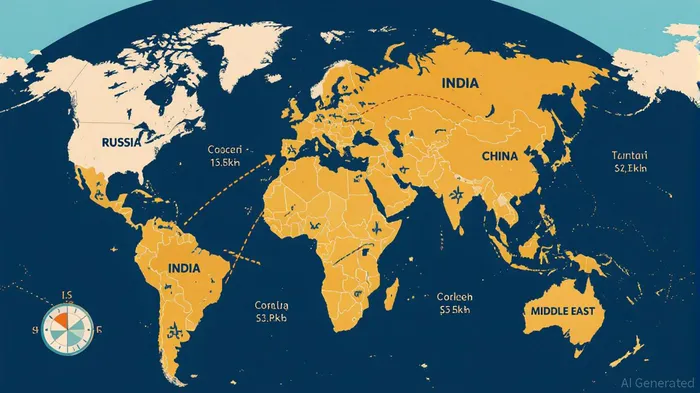
The U.S. strategy of leveraging tariffs as a diplomatic tool has disrupted traditional energy flows. Russia, the world's second-largest oil producer, has pivoted to Asia, where India and China now account for over 80% of its seaborne crude exports. This shift has created a paradox: while U.S. sanctions aim to isolate Russia, Asian buyers are capitalizing on discounted Russian oil, with Urals crude trading at a $15 discount to Brent. The result is a fragmented market where geopolitical risks and arbitrage opportunities coexist.
India, for instance, has suspended Russian crude purchases from state refiners as discounts narrow, but its private sector and strategic reserves continue to absorb the surplus. Meanwhile, China has locked in long-term natural gas contracts with Russian state-owned firms, signaling a strategic bet on energy security. These dynamics are reshaping refining margins, with diesel prices surging in Europe and gasoline inventories stabilizing in the U.S.
Energy Equity Plays: Who's Winning and Who's Losing?
The companies best positioned to capitalize on this volatility are those with diversified supply chains, domestic production resilience, and exposure to both traditional and renewable energy. Here's a breakdown of the key players:
Devon Energy (DVN) and Pioneer Natural Resources (PXD): These U.S. shale giants are benefiting from the domestic energy renaissance. With production concentrated in the Permian Basin, they avoid exposure to international trade tensions while leveraging high operational efficiency. Devon's fixed-plus-variable dividend model rewards shareholders during price spikes, while Pioneer's robust balance sheet allows it to maintain profitability even in volatile markets.
NextEra Energy (NEE) and Duke Energy (DUK): As the energy transition accelerates, utilities with strong EBITDA growth and regulated utility models are gaining traction. NextEra's focus on renewables and long-term power purchase agreements insulates it from fossil fuel price swings, while Duke's investments in grid modernization align with global electrification trends.
Indian Oil Corporation (IOC) and Reliance Industries: Despite the U.S. tariff threat, Indian refiners are adapting. IOC's strategic reserves and Reliance's integrated refining operations allow them to hedge against price volatility. However, their exposure to Russian crude discounts means they remain sensitive to geopolitical shifts.
Sinopec and CNOOC: China's energy majors are securing long-term Russian supply contracts, ensuring stable access to discounted crude. Their ability to reconfigure refining operations for Russian oil gives them a competitive edge in the Asia-Pacific market.
Hedging Against Volatility: ETFs and Diversification
For investors seeking broader exposure, energy ETFs like the iShares Global EnergyIXC-- ETF (IXC) and the SPDR S&P Oil & Gas Exploration & Production ETF (XOP) offer diversified portfolios of companies navigating the geopolitical landscape. These funds include a mix of U.S. shale producers, international oil giants, and emerging renewable energy firms, balancing short-term volatility with long-term growth.
Commodity ETFs, particularly those focused on gold and industrial metals, are also gaining traction as hedges against inflationary pressures tied to oil price spikes. Gold, for instance, outperformed in Q2 2025, reflecting its role as a safe haven during geopolitical uncertainty.
Strategic Recommendations for Investors
- Long-Term Positioning: Prioritize companies with domestic production and exposure to the energy transition. NextEra EnergyNEE-- and Devon EnergyDVN-- exemplify this dual strategy.
- Short-Term Hedging: Use gold ETFs (e.g., GLD) or crude oil futures to mitigate downside risks in a volatile market.
- Geographic Diversification: Allocate capital to Asian energy majors like Sinopec and CNOOC, which are capitalizing on Russia's pivot to Asia.
- ETF Exposure: Consider IXC and XOP for broad energy sector exposure, balancing traditional and renewable energy plays.
Conclusion
The 2025 oil market is a testament to the enduring power of geopolitical strategy in shaping financial outcomes. While U.S. tariffs and sanctions aim to disrupt Russian energy exports, they have inadvertently accelerated the rise of Asian markets as key players in global energy trade. For investors, the key lies in identifying companies that can navigate this volatility—those with resilient supply chains, diversified portfolios, and the agility to adapt to shifting alliances. In this high-stakes environment, the winners will be those who see uncertainty not as a threat, but as an opportunity to rebalance their portfolios for the new energy era.

Delivering real-time insights and analysis on emerging financial trends and market movements.
Latest Articles
Stay ahead of the market.
Get curated U.S. market news, insights and key dates delivered to your inbox.
AInvest
PRO
AInvest
PRO



Comments
No comments yet