
Geopolitical Turmoil and the Uranium Renaissance: Navigating Risks in a Fractured Energy Landscape


 Aime Summary
The global energy landscape is undergoing a seismic shift as nuclear power reemerges as a cornerstone of decarbonization and energy security. Yet, this renaissance is shadowed by escalating geopolitical risks, from cyberattacks on nuclear infrastructure to supply chain vulnerabilities in critical minerals. For investors, the interplay between these threats and the uranium market's dynamics presents both challenges and opportunities.
The New Frontlines: Cyber and Physical Threats to Nuclear Infrastructure
Recent events underscore the fragility of nuclear infrastructure in a polarized world. In October 2024, Iranian nuclear facilities were hit by a sophisticated cyberattack,
attributed to Israeli state actors, which compromised sensitive data and disrupted operations. This was followed by U.S. airstrikes on three Iranian nuclear sites in June 2025,
prompting retaliatory cyber threats from pro-Iranian hacktivists and state-aligned actors. Such incidents highlight how nuclear infrastructure has become a proxy battleground in broader geopolitical conflicts.
The U.S. Department of Homeland Security (DHS) has
issued warnings about retaliatory cyberattacks on American energy networks, emphasizing that nuclear facilities are prime targets for both state-sponsored espionage and ransomware campaigns. These threats are not isolated to the Middle East.
Russia's ongoing war in Ukraine has destabilized regional energy markets, while political instability in Niger-a key uranium producer-has raised concerns about supply chain disruptions.
Uranium Market Dynamics: A Structural Deficit and Rising Prices
The uranium market is grappling with a structural deficit driven by years of underinvestment in mining and a surge in demand from expanding nuclear programs.
By September 2025, uranium prices had climbed to $82.63 per pound, a 28.7% increase from March 2025 lows, as countries like France, Japan, and the U.S. ramp up reactor operations to meet net-zero targets.
The World Nuclear Association projects global uranium demand will soar to over 204,000 tU by 2040, far outpacing current production.
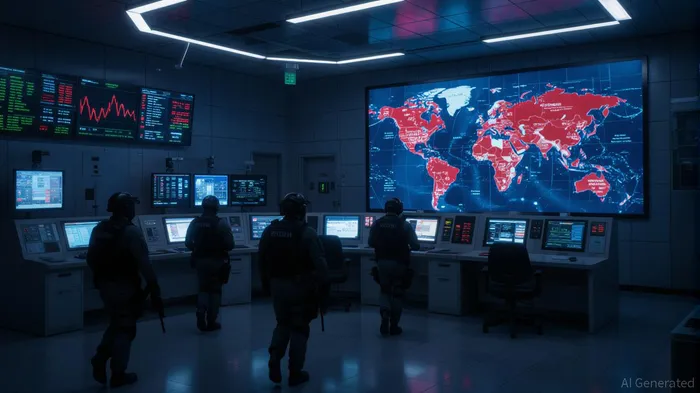 Geopolitical risks exacerbate this imbalance.
Kazakhstan, the world's largest uranium producer, has struggled to boost output despite favorable prices, while geopolitical tensions in Ukraine and Niger have created uncertainty over supply continuity. In response, nations are diversifying their uranium sources.
Sweden, for instance, has lifted a decades-old ban on uranium mining to bolster domestic production.
Strategic Investment Opportunities Amid Uncertainty
For investors, the uranium sector offers a mix of high-risk, high-reward opportunities. Direct investments in mining companies like CamecoCCJ-- and NexGen EnergyNXE-- provide exposure to spot price movements, while
uranium ETFs such as the Global X Uranium ETF (URA) offer diversified access to the sector. Royalty and streaming companies, including Uranium Royalty Corp., present another avenue, allowing investors to benefit from price appreciation without operational risks (https://www.cruxinvestor.com/posts/uranium-market-dynamics-signal-investment-opportunities-amid-supply-constraints).
Geopolitical dynamics are reshaping investment strategies.
The U.S. government's push for domestic uranium production-bolstered by executive orders expediting reactor approvals-has created pricing premiums for American-sourced uranium. Meanwhile, countries like China, India, and the UAE are expanding their nuclear capacities,
driving demand for secure, geopolitically stable uranium supplies.
Experts anticipate uranium prices could reach $90–$100 per pound by year-end 2025,
driven by supply constraints and long-term demand from small modular reactors (SMRs) and clean hydrogen projects.
The International Atomic Energy Agency (IAEA) has confirmed that sufficient uranium resources exist to support growth through 2050, but achieving this will require unprecedented investment in mining, conversion, and enrichment infrastructure.
Conclusion: Balancing Risk and Resilience
The nuclear energy sector stands at a crossroads. While geopolitical threats to infrastructure and supply chains pose significant risks, they also underscore the urgency of investing in resilient, diversified uranium markets. For investors, the path forward lies in strategic allocations to both physical uranium assets and companies positioned to navigate the complexities of a fractured global landscape. As the world races toward net-zero, nuclear energy-and the uranium that fuels it-will remain a critical, if volatile, asset class.

Stay ahead of the market.
Get curated U.S. market news, insights and key dates delivered to your inbox.




Comments
No comments yet