
Geopolitical Turmoil and the Rise of Precision Warfare: Navigating Defense Sector Opportunities in a Fractured World
 Aime Summary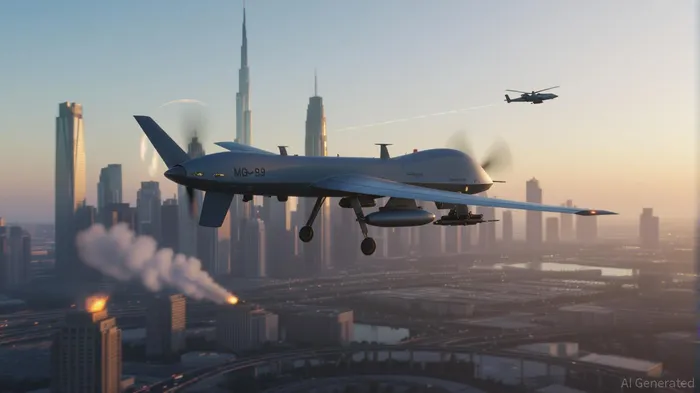
The world in August 2025 is defined by a volatile geopolitical landscape, where Israel's escalating military operations in Gaza have become a flashpoint for global instability. As the Israeli government weighs a full reoccupation of the Gaza Strip, the humanitarian crisis deepens, with over 61,000 fatalities and 151,000 injuries reported since October 2023. The conflict has not only strained international relations but also accelerated demand for advanced military technologies, particularly in urban warfare and precision systems. For investors, this confluence of geopolitical risk and technological innovation presents a unique opportunity to capitalize on the defense sector's evolution.
The Strategic Shift: Urban Warfare and Precision Tech
The Gaza conflict has underscored the limitations of traditional military strategies in densely populated areas. Israeli forces, now controlling 75–80% of the territory, face challenges in distinguishing combatants from civilians, a problem exacerbated by Hamas's use of human shields. This has driven a global pivot toward precision-guided munitions, AI-driven surveillance, and autonomous drone systems. Companies specializing in these technologies are now at the forefront of defense spending, with governments prioritizing solutions that minimize collateral damage while maximizing operational efficiency.
Key Innovators in Precision Warfare
1. General Atomics (GA): The developer of the MQ-9 Reaper and MQ-4C Triton, General Atomics leads in high-endurance surveillance and strike drones. Its AI-powered targeting systems are critical for urban operations, where real-time data fusion and autonomous decision-making are paramountPARA--.
2. Northrop Grumman (NOC): With its RQ-4 Global Hawk and collaborative combat aircraft (CCA) programs, Northrop is advancing AI-enabled swarming capabilities, allowing drones to operate in contested environments.
3. Elbit Systems (ESLTF): Israel's Elbit SystemsESLT-- excels in medium-altitude, long-endurance (MALE) drones like the Hermes 900, which integrate open-architecture systems for real-time threat detection in urban zones.
4. RTX (RTX): Formerly Raytheon Technologies, RTX's Coyote family of tube-launched drones and AESA radar systems are tailored for precision strikes and urban surveillance.
Investment Opportunities: ETFs and Stocks to Watch
The defense sector's volatility is mirrored in its financial instruments. While the S&P Aerospace & Defense Select Industry Index has faced headwinds due to Trump-era tariffs, a $1 trillion proposed U.S. defense budget for fiscal 2026 has reignited investor optimism. Here are the top ETFs and stocks to consider:
1. iShares U.S. Aerospace & Defense ETF (ITA)
- Holdings: GE AerospaceGE--, RTXRTX--, BoeingBA--.
- Pros: High exposure to precision tech leaders.
- Cons: Overconcentration in a few names (e.g., GEGE-- and RTX account for 45% of the fund).
2. Global X Defense Tech ETF (SHLD)
- Holdings: PalantirPLTR-- Technologies, Leonardo, Rheinmetall.
- Pros: Focus on European defense firms and AI-driven analytics.
- Cons: Higher expense ratio (0.50%) compared to peers.
3. Individual Stocks
- Lockheed Martin (LMT): A stalwart in precision drones and collaborative autonomous aircraft (CAAs).
- Kratos Defense (KTOS): Pioneering attritable jet-powered drones like the XQ-58A Valkyrie for contested urban environments.
- AeroVironment (AVAV): Known for loitering munitions such as the Switchblade 600, ideal for infantry-level urban strikes.
Geopolitical Risks and Mitigation Strategies
While the defense sector offers compelling growth potential, investors must remain cognizantCTSH-- of geopolitical risks. A full Israeli reoccupation of Gaza could trigger broader regional conflicts, potentially destabilizing oil markets and straining U.S.-Israel relations. Additionally, international pressure for a ceasefire may lead to policy shifts that impact defense budgets. To mitigate these risks, diversification across geographies and technologies is key. For instance, European defense firms like Airbus and BAE Systems are benefiting from the EU's rearmament push, offering a counterbalance to U.S.-centric volatility.
Conclusion: Balancing Risk and Reward
The Israel-Gaza conflict has accelerated the demand for precision warfare technologies, creating a fertile ground for defense sector innovation. As governments worldwide modernize their militaries, investors who align with companies at the forefront of urban warfare and AI-driven systems stand to gain significant returns. However, the path is not without risks—geopolitical miscalculations, regulatory shifts, and humanitarian pressures could disrupt market dynamics. By carefully selecting ETFs with diversified holdings and individual stocks with strong R&D pipelines, investors can navigate this turbulent landscape while positioning themselves to capitalize on the next phase of global security evolution.
In a world where conflict and technology are inextricably linked, the defense sector remains a critical barometer of geopolitical change. For those willing to look beyond the headlines, the opportunities are as clear as the stakes are high.

Stay ahead of the market.
Get curated U.S. market news, insights and key dates delivered to your inbox.
AInvest
PRO
AInvest
PRO



Comments
No comments yet