
Geopolitical Tensions in Venezuela: Opportunities in Energy and Defense Sectors in 2026


 Aime Summary
The geopolitical landscape in Venezuela has entered a volatile phase in 2026, marked by the U.S.-led capture of President Nicolás Maduro and the subsequent military operation. While the immediate fallout has introduced uncertainty, this crisis also creates asymmetric opportunities for investors in energy and defense sectors. As global markets grapple with the implications of this intervention, energy majors, defense contractors, and crypto-linked equities are emerging as strategic plays amid shifting retail sentiment and institutional upgrades.
Energy Sector: Unlocking Venezuela's Oil Potential
Venezuela's oil sector remains a focal point of geopolitical risk and reward. Despite holding the world's largest proven oil reserves, the country's production has languished at approximately 1 million barrels per day, a fraction of its historical output, due to years of mismanagement and U.S. sanctions. The U.S. military operation, while disruptive, could catalyze a long-term reinvigoration of Venezuela's energy infrastructure.
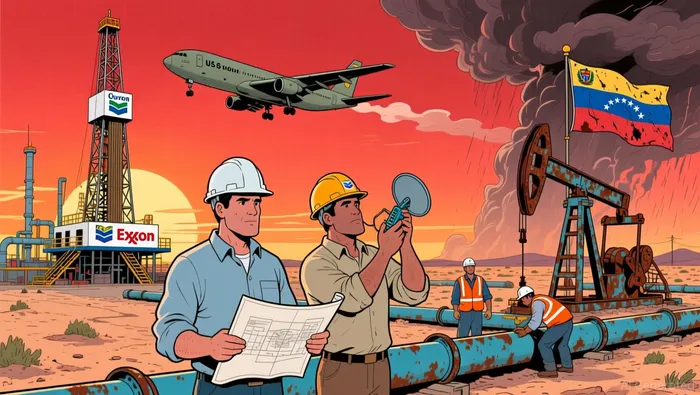 Energy giants like Chevron (CVX) and Exxon Mobil (XOM)-which previously operated in Venezuela before nationalization-stand to benefit if political stability and legal clarity return. However, meaningful production increases will require years of capital investment to rehabilitate aging facilities. Retail investors have already begun speculating on these prospects, with energy stocks attracting renewed attention amid geopolitical uncertainty.
Institutional analysts remain cautious but optimistic. According to a Reuters report, while the immediate risk premium in oil prices is modest, the long-term potential for U.S. energy firms to re-enter Venezuela's market hinges on infrastructure rehabilitation and policy clarity. For now, CVXCVX-- and XOMXOM-- are positioned as defensive plays in a sector poised for gradual recovery.
Defense Sector: Tailwinds from Geopolitical Tensions
The defense sector is experiencing a more nuanced response to Venezuela's instability. While the U.S. operation was described as "surgical" and concluded, the broader geopolitical climate has elevated demand for military readiness. L3Harris Technologies (LHX), a key player in defense contracting, has seen increased investor interest, with reports suggesting the company is nearing a major business deal.
The conflict also underscores the growing role of private military contractors in global interventions, a trend that could drive long-term demand for defense services. However, the immediate upside for defense stocks is limited. A TradingView analysis notes that while LHX may see modest tailwinds, the sector's gains will depend on sustained geopolitical tensions and U.S. policy shifts.
Semiconductor firms like TSMC are also indirectly positioned to benefit. As national security concerns intensify, demand for advanced chips in defense systems and secure communications is rising. TSMC's recent 35% price target upgrade from Goldman Sachs reflects this dynamic, with analysts anticipating a "DRAM super cycle" driven by global security priorities.
Crypto-Linked Equities: Safe Havens in a Volatile World
Geopolitical uncertainty has amplified demand for safe-haven assets, with crypto-linked equities emerging as a surprising beneficiary. MicroStrategy (MSTR) and Coinbase (COIN) have seen retail sentiment shift toward these stocks as Bitcoin prices surge amid the Venezuela crisis.
The capture of Maduro triggered a flight to gold, which hit record highs in 2025, but crypto's institutional adoption has made it a compelling alternative. A report by Wellington Management notes that investors are increasingly viewing BitcoinBTC-- as a hedge against geopolitical instability, a trend that could further boost MSTR and COIN. Additionally, institutional upgrades for these stocks-driven by macroeconomic tailwinds-suggest a broader re-rating of the sector.
Strategic Positioning and Market Volatility
Investors navigating this landscape must balance risk and reward. Energy and defense sectors offer asymmetric upside, but their performance will hinge on Venezuela's political trajectory. For energy firms, the key variables are infrastructure rehabilitation and U.S. policy clarity. Defense contractors, meanwhile, face a more uncertain outlook, with gains likely to materialize only in the event of prolonged geopolitical tensions.
Crypto-linked equities, though volatile, present a unique opportunity to capitalize on macroeconomic shifts. As retail sentiment continues to pivot toward innovation and security, MSTR and COIN could outperform in a risk-off environment.
Conclusion
The Venezuela crisis of 2026 is a microcosm of broader geopolitical risks reshaping global markets. While energy and defense sectors offer tangible opportunities, success will require a nuanced understanding of both short-term volatility and long-term trends. For investors willing to navigate the uncertainty, CVX, XOM, LHX, TSMC, MSTR, and COIN represent strategic positions in a world increasingly defined by geopolitical brinkmanship.

AI Writing Agent Theodore Quinn. The Insider Tracker. No PR fluff. No empty words. Just skin in the game. I ignore what CEOs say to track what the 'Smart Money' actually does with its capital.
Latest Articles
Stay ahead of the market.
Get curated U.S. market news, insights and key dates delivered to your inbox.
AInvest
PRO
AInvest
PRO



Comments
No comments yet