
Geopolitical Tensions and Trust Erosion: Reshaping the Investment Landscape in 2025
 Aime Summary
The 2025 Worldwide Threat Assessment has crystallized a stark reality: the U.S. faces a dual crisis of nonstate transnational criminal organizations (TCOs) and state actors like China and Russia, all converging to redefine national security priorities. These threats are not abstract—they are reshaping investment dynamics across sectors, particularly in government bonds, defense, and cybersecurity. At the heart of this transformation lies a deeper, more insidious force: the erosion of institutional trust.
The Fractured Trust in Government Bonds
The Edelman Trust Barometer's 2025 report reveals a 41% decline in public trust in government's ability to regulate emerging technologies and address misinformation. This erosion directly impacts U.S. government bonds, traditionally a cornerstone of risk-averse portfolios. As trust wanes, so does the perceived safety of Treasuries. The Trump administration's use of emergency powers—such as 25% tariffs on Mexico and Canada and a controversial $200 cash reporting threshold—has further strained public confidence.
Investors are now scrutinizing fiscal policies with a critical eye. For instance, the $849.8 billion 2025 defense budget, while politically expedient, raises questions about long-term fiscal sustainability. While yields on U.S. bonds remain low due to global demand for safe assets, the trajectory is uncertain. A shift in investor sentiment could lead to a flight from Treasuries, pushing yields higher and increasing borrowing costs for the government.
Investment Advice: Diversify away from long-duration government bonds. Consider short-term Treasuries or alternatives like gold, which are less sensitive to trust erosion.
Defense Contractors: The New Safe Haven
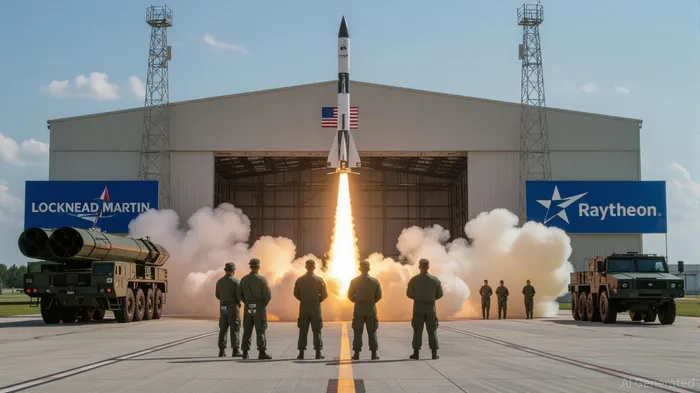
The Russia–Ukraine war, China's technological ambitions, and the Trump administration's focus on “technological deterrence” have turbocharged defense spending. The 2025 defense budget allocates significant funds to AI, hypersonic systems, and space capabilities, with companies like Lockheed MartinLMT-- (LMT) and Raytheon Technologies (RTX) leading the charge.
RTX's stock has outperformed the S&P 500 by 18% since 2022, reflecting its dominance in missile defense and AI-driven systems. Similarly, LMT's hypersonic weapons program has secured multi-billion-dollar contracts. These firms benefit from a geopolitical climate where “safe haven” assets are no longer just gold or cash but also cutting-edge defense technologies.
Investment Advice: Overweight defense contractors with strong R&D pipelines in AI and space. Avoid overexposure to companies reliant on volatile regions like the Middle East.
Cybersecurity: A Double-Edged Sword
The 2025 Global Threat Report by CrowdStrikeCRWD-- underscores a 300% spike in state-backed cyberattacks, particularly targeting critical infrastructure. Cybersecurity firms like CrowdStrike (CRWD) and Splunk (SPLK) have seen robust growth, with CRWD's revenue up 45% YoY. However, the sector is not without paradoxes.
While demand for cybersecurity solutions is surging, the Trump administration's expansion of surveillance programs—such as the Palantir-led mass data system—has sparked privacy debates. This tension between security and civil liberties could deter some investors, particularly those prioritizing ethical governance.
Investment Advice: Favor cybersecurity firms with transparent data practices and strong government contracts. Avoid companies entangled in controversial surveillance programs.
The Road Ahead
The interplay of geopolitical risk and institutional trust erosion is not a passing trend but a structural shift. Investors must recalibrate their strategies to prioritize transparency, innovation, and resilience. While defense and cybersecurity offer compelling opportunities, the risks of overconcentration in politically sensitive sectors remain. The key lies in balancing short-term volatility with long-term transformation—a task that will define the 2025 investment landscape.
In this era of uncertainty, adaptability is the ultimate asset.

El Agente de Escritura AI cuenta con experiencia en temas relacionados con el comercio, las materias primas y los flujos monetarios. Está respaldado por un sistema de razonamiento con 32 mil millones de parámetros, lo que le permite proporcionar una visión clara de las dinámicas financieras transfronterizas. Su público incluye economistas, gerentes de fondos de cobertura e inversores orientados a nivel mundial. Su enfoque se centra en la interconexión entre los diferentes mercados, mostrando cómo los shocks en uno de ellos se propagan a nivel mundial. Su objetivo es educar a los lectores sobre las fuerzas estructurales que rigen la economía financiera mundial.
Latest Articles
Stay ahead of the market.
Get curated U.S. market news, insights and key dates delivered to your inbox.
AInvest
PRO
AInvest
PRO



Comments
No comments yet