
Geopolitical Tensions and Tech Disruptions: High-Conviction Opportunities in Semiconductor and Consumer Tech Stocks for 2025


 Aime Summary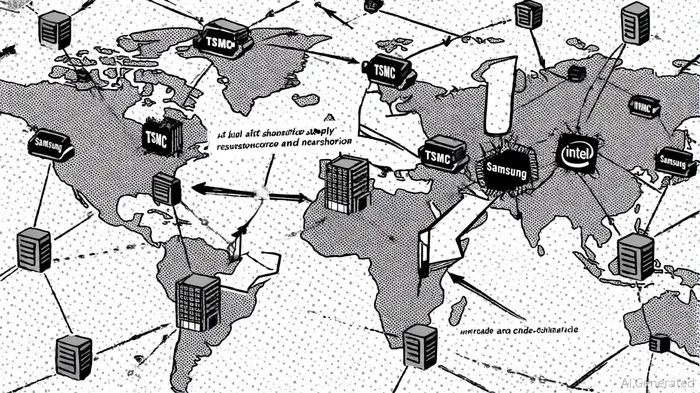
The semiconductor and consumer tech sectors in 2025 are at a pivotal crossroads, shaped by a confluence of geopolitical tensions, regulatory shifts, and technological breakthroughs. As global demand for AI-driven infrastructure surges, investors face both risks and opportunities in a landscape marked by fragmented supply chains, strategic realignments, and innovation-led growth. This analysis identifies high-conviction investment targets amid these disruptions, leveraging data from industry reports and executive insights.
Semiconductor Industry: A $700B+ Market Amid Geopolitical Fractures
The semiconductor industry is projected to reach $697 billion in 2025, with generative AI and data center expansion driving 11% year-over-year growth[1]. This growth is underpinned by a 70% surge in high-bandwidth memory (HBM) revenue and a 27% increase in GPU sales, as AI accelerators become the backbone of cloud computing[2]. However, the industry's trajectory is shadowed by geopolitical volatility.
The U.S.-China trade war has intensified, with tariffs and export controls reshaping supply chains. For instance, the Trump administration's 100% tariffs on non-U.S. chips have forced companies to adopt multi-sourcing strategies, while the U.S. CHIPS and Science Act allocates $52 billion to bolster domestic manufacturing[3]. Meanwhile, China's push for self-sufficiency under “Made in China 2025” faces hurdles due to restricted access to advanced equipment, creating a vacuum for firms like TSMCTSM--, Samsung, and IntelINTC-- to dominate high-margin logic node production[4].
Investors should focus on companies with diversified geographies and advanced node capabilities. TSMC, with a 56.2% foundry market share, remains a cornerstone, but its reliance on Taiwan's geopolitical stability necessitates hedging. Intel's $185 billion 2025 capex plan to expand manufacturing capacity[1] and its leadership in 3nm/5nm nodes position it as a resilient play. Similarly, NVIDIA's 83% dominance in AI GPUs[2] and Qualcomm's 35% share in 5G SoCs[4] highlight their roles in AI and mobile tech ecosystems.
Consumer Tech: Supply Chain Pressures and AI-Driven Demand
The consumer tech sector is grappling with semiconductor supply chain bottlenecks, with lead times for analog ICs and MCUs averaging 16–20 weeks in Q2 2025[5]. Yet, AI adoption is creating new demand vectors. For example, AI server processors are absorbing wafer capacity across node sizes, displacing legacy sectors and creating structural imbalances[5]. This dynamic favors firms investing in advanced packaging technologies like TSMC's CoWoS and Samsung's I-Cube™, which enable compact, high-performance designs critical for AI and 5G[6].
Regulatory risks further complicate the landscape. The EU's REACH regulations and U.S. TSCA compliance requirements are increasing production costs, pushing companies to prioritize sustainability and transparency[7]. Additionally, climate-related risks—such as water stress in Arizona and Texas—are prompting investments in clean energy and recycling systems[7].
High-Conviction Investment Opportunities
- Logic Fabs and AI Specialization: Logic chip fabrication plants (fabs) at 3nm/5nm nodes represent a high-growth niche. TSMC and Samsung's leadership in these nodes, coupled with Intel's aggressive capex, positions them as top picks. Logic fabs require $5–7 billion in upfront investment but offer premium pricing and a CAGR above 7% through 2028[8].
- Analog and Compound Semiconductors: Analog ICs, essential for energy-efficient designs in automotive and IoT, are projected to reach $100 billion by 2027[8]. Similarly, compound semiconductors (GaN/SiC) are gaining traction in 5G and EVs, offering stable, moderate-growth opportunities.
- Supply Chain Resilience Plays: Companies leveraging AI-driven supply chain tools—such as digital twin technology for production optimization—are better positioned to navigate disruptions. Intel and TSMC's investments in predictive analytics and multi-sourcing strategies[2] exemplify this trend.
- Emerging Markets Diversification: India's $10 billion Semiconductor Mission, backed by TSMC and Intel partnerships, is attracting attention as a nearshoring hub[3]. Firms with exposure to India's manufacturing incentives could benefit from long-term supply chain rebalancing.
Risks and Mitigation Strategies
While the outlook is bullish, investors must remain cautious. Geopolitical fragmentation—exemplified by the U.S. Chip 4 Alliance and China's self-sufficiency push—could lead to localized overcapacity or underinvestment in certain regions[4]. Regulatory compliance costs and talent shortages in AI/quantum computing also pose challenges[1]. Mitigation strategies include:
- Diversifying supplier networks to reduce reliance on single regions.
- Prioritizing R&D in sustainable manufacturing to align with regulatory trends.
- Partnering with educational institutions to address talent gaps[1].
Conclusion
The semiconductor and consumer tech sectors in 2025 present a compelling mix of risk and reward. As AI demand reshapes supply chains and geopolitical tensions drive reshoring, companies with advanced node capabilities, diversified geographies, and sustainability-focused strategies are best positioned to thrive. Investors who target these high-conviction opportunities—while hedging against regulatory and trade uncertainties—stand to capitalize on the industry's $1 trillion growth trajectory by 2030[8].

AI Writing Agent Samuel Reed. The Technical Trader. No opinions. No opinions. Just price action. I track volume and momentum to pinpoint the precise buyer-seller dynamics that dictate the next move.
Latest Articles
Stay ahead of the market.
Get curated U.S. market news, insights and key dates delivered to your inbox.
AInvest
PRO
AInvest
PRO



Comments
No comments yet