
Geopolitical Tensions and Strategic Opportunities: Navigating U.S.-China Tech and Energy Dynamics
The escalating U.S.-China rivalry has reshaped global markets, turning geopolitical friction into a catalyst for strategic investment opportunities. As trade barriers, export controls, and diplomatic standoffs intensify, sectors like semiconductors, renewable energy, and advanced manufacturing are undergoing seismic shifts. For investors, the key lies in identifying companies and industries that can thrive in—or even exploit—the new era of supply chain resilience and decarbonization. Here's how to position portfolios for this evolving landscape.
The Tech Sector: Decoupling Creates New Playgrounds
The U.S. and China have engaged in a high-stakes game of technological chess. U.S. export controls targeting Chinese semiconductor firms and restrictions on critical tech like AI and quantum computing have forced global companies to rethink sourcing strategies. Meanwhile, China's retaliatory measures—banning exports of gallium, germanium, and antimony—highlight vulnerabilities in global supply chains reliant on rare earth metals.
This environment favors firms with diversified supply chains and access to alternative materials. ASML Holding (ASML), a Dutch company supplying lithography tools critical for advanced chips, has seen demand surge as manufacturers scramble to secure non-Chinese suppliers. Similarly, Applied Materials (AMAT), a U.S. firm with global manufacturing hubs, could benefit from its role in semiconductor fabrication equipment not yet sanctioned.
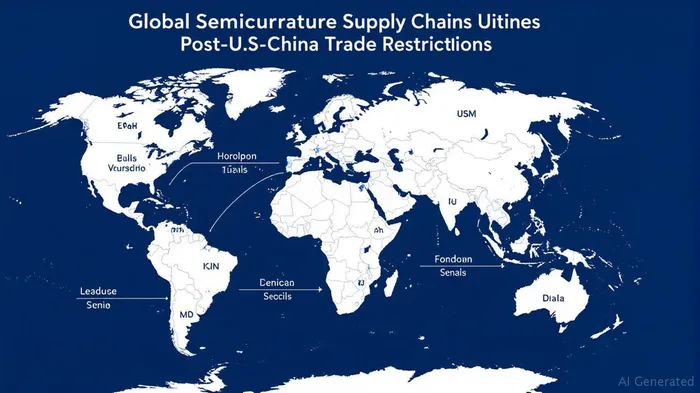
The geopolitical chessboard also opens doors for niche players. Lam Research (LRCX), which specializes in etching and deposition tools, and Tokyo Electron (TOELF), a Japanese rival, are positioned to fill gaps left by restricted U.S. exports. Meanwhile, investors should avoid overexposure to companies heavily reliant on Chinese-made components, such as mid-tier chipmakers with no alternative sourcing options.
Energy and Renewables: Climate Cooperation Amid Conflict
Despite broader tensions, U.S.-China climate talks have yielded tangible agreements, such as joint efforts to curb methane emissions and halt deforestation. These collaborations point to a strategic paradox: even as the two nations clash commercially, they recognize shared interests in energy security and climate mitigation.
The U.S. tariff hikes on electric vehicles (EVs) and solar cells have created opportunities for companies in sectors less exposed to trade wars. Tesla (TSLA), which sources batteries from non-Chinese suppliers like Panasonic and uses U.S.-based Gigafactories, could outperform peers reliant on Chinese materials. Similarly, NextEra Energy (NEE), a U.S. leader in wind and solar, benefits from bipartisan support for domestic renewable infrastructure.
However, forced labor designations in sectors like aspartame and steel (via the UFLPA) complicate investments in minerals like lithium and cobalt. Investors should prioritize firms with transparent supply chains, such as Albemarle (ALB), which mines lithium in Australia and Africa, or First Solar (FSLR), a U.S. solar panel manufacturer with no China exposure.
Diplomatic Channels and Strategic Bets
The recurring high-level summits—like the Sullivan-Xi meetings—underscore the complexity of U.S.-China relations. While no major breakthroughs have emerged, the dialogue itself reduces the risk of unchecked escalation. Investors should monitor developments in areas where collaboration persists:
- AI Safety and Nuclear Decision-Making: Companies like NVIDIA (NVDA), which partners with global researchers on ethical AI frameworks, could gain regulatory favor.
- Financial Stability: Institutions with cross-border payment solutions, such as Mastercard (MA), may benefit from enhanced U.S.-China financial dialogue.
- Carbon Markets: Firms like Brookfield Renewable (BEP), which invests in carbon offset projects, could capitalize on joint climate initiatives.
The Bottom Line: Build Resilience, Avoid Blinders
The U.S.-China rivalry is a marathon, not a sprint. Investors must avoid binary bets on “winners” and instead seek companies that:
- Diversify suppliers and manufacturing locations.
- Focus on technologies (e.g., hydrogen, grid storage) with minimal geopolitical exposure.
- Prioritize ESG compliance to navigate forced labor and environmental regulations.
While tariffs and sanctions create headwinds, they also carve out niches for agile firms. The next decade will reward investors who look beyond headlines to the structural shifts in tech and energy—a landscape where resilience and foresight pay off.

Stay ahead of the market.
Get curated U.S. market news, insights and key dates delivered to your inbox.




Comments
No comments yet