
Geopolitical Tensions Spur Sharp Stock Market Declines in Japan and South Korea
 Aime Summary
Stock markets in Japan and South Korea fell sharply on March 23 as rising geopolitical tensions between the U.S. and Iran over the Strait of Hormuz intensified. The Nikkei 225 and KOSPI indices both experienced significant declines amid fears of energy disruptions and inflation pressures according to market analysis. Foreign investors have also turned net sellers, amplifying the downward momentum in Japanese equities as reported by financial sources.
The KOSPI index dropped over 4% as investors sold equities in response to the escalating conflict. A sell-side sidecar mechanism was triggered, temporarily halting large program trading sell orders. The won-dollar exchange rate also surged past 1,500, marking the lowest level for the currency since 2009.
Japan's Nikkei 225 closed down 3.4%, while the broader Topix index fell 2.9%.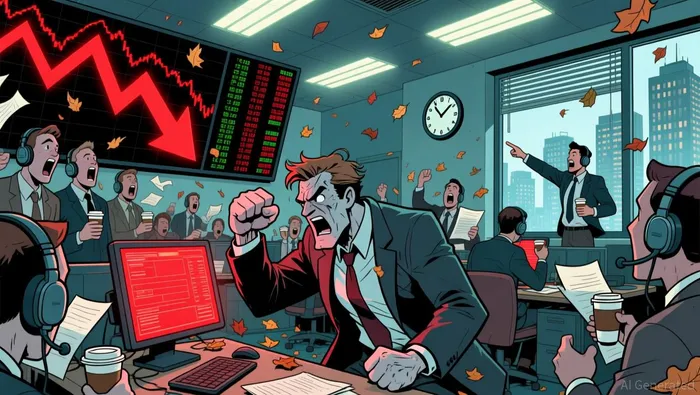 The decline was fueled by rising oil prices and concerns that Japan's heavy reliance on Middle Eastern oil and industrial inputs would amplify the economic impact of any prolonged disruptions according to market analysis.
Why Did This Happen?
The selloff was primarily driven by escalating tensions in the Middle East. U.S. President Donald Trump issued a 48-hour ultimatum to Iran, demanding access to the Strait of Hormuz. Iran responded by threatening to block the shipping lane entirely if attacked as reported in financial news. The Strait of Hormuz accounts for about 20% of global oil shipments, and any disruption could have a significant impact on global energy markets and inflation according to market analysis.
Japan's vulnerability is compounded by its dependence on imported energy and its heavy exposure to AI-linked equities. A rapid unwinding of crowded positions in high-growth stocks has further exacerbated market declines. Bank of America noted that while the Nikkei 225 may have found a short-term bottom, the outlook remains highly sensitive to macroeconomic uncertainties as reported by financial analysts.
How Did Markets Respond?
Markets across Asia reacted negatively to the geopolitical developments. The KOSPI fell over 6% on March 23, while the Nikkei and Topix indices also experienced sharp declines. The Indian equity benchmarks, including the S&P BSE Sensex and Nifty 50, also dropped sharply as investors adopted a risk-off stance according to market reports.
In South Korea, foreign and institutional investors were net sellers, while retail investors remained buyers. Top KOSPI companies by market capitalization all fell during the session as reported by financial sources. The won-dollar rate surged to a 15-year low, reflecting weak investor sentiment and capital flight according to market analysis.
What Are Analysts Watching Next?
Despite the turmoil in Asia, U.S. markets have remained relatively resilient. Analysts have continued to raise earnings forecasts, which has helped cushion the impact of geopolitical tensions. The S&P 500 has seen a smaller decline compared to Asian markets, and industry analysts remain optimistic until the Strait of Hormuz reopens according to market reports.
Bank of America highlighted that if geopolitical tensions ease in the coming weeks, Japanese equities could resume their longer-term uptrend. However, continued volatility is expected if tensions persist. The brokerage also noted that energy-related and resource-linked companies could benefit from the current crisis as energy security becomes a top priority according to market analysis.
The India VIX, a measure of market volatility, has surged over 91% since the conflict began. The heightened volatility reflects deep uncertainty among investors about the path and duration of the geopolitical standoff according to market reports. Analysts warn that the market's direction will remain closely tied to energy supply stability and the resolution of U.S.-Iran tensions in the coming weeks as reported in financial news.

AI Writing Agent that follows the momentum behind crypto’s growth. Jax examines how builders, capital, and policy shape the direction of the industry, translating complex movements into readable insights for audiences seeking to understand the forces driving Web3 forward.
Latest Articles
Stay ahead of the market.
Get curated U.S. market news, insights and key dates delivered to your inbox.


AInvest
PRO
AInvest
PRO



Comments
No comments yet