
Geopolitical Tensions and the Reshaping of Rare Earth Supply Chains: Investment Opportunities in Ethical Mining and Diversification
 Aime Summary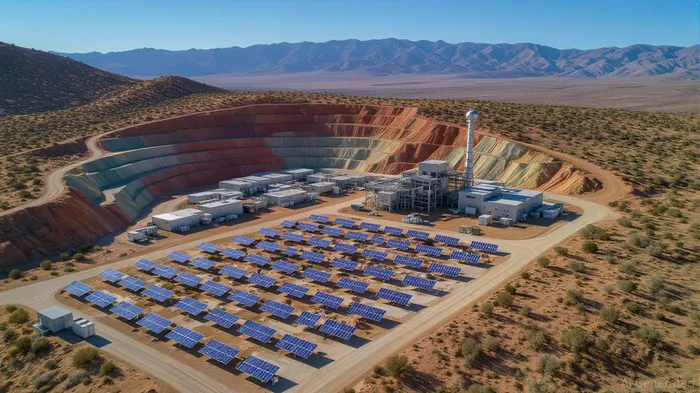
The U.S. government's 2025 sanctions on Congolese conflict mineral groups represent a pivotal moment in the global race for critical resources. By targeting entities like the PARECO-FF armed group and complicit Congolese and Hong Kong-based firms, Washington has signaled its intent to sever the financial lifelines of instability in the Democratic Republic of the Congo (DRC). These actions, however, are not merely geopolitical posturing—they are part of a broader strategy to secure supply chains for rare earth minerals, which underpin the electric vehicle (EV) and tech sectors. For investors, this marks a critical inflection point: the interplay between sanctions, resource nationalism, and U.S. policy is accelerating a realignment of global mineral sourcing, creating both risks and opportunities.
The Sanctions' Ripple Effect: Disrupting Illicit Supply Chains
The DRC produces over 70% of the world's cobalt and is a key source of copper, tantalum, and other critical minerals. Yet, decades of conflict have turned these resources into tools of violence. The U.S. Treasury's sanctions on PARECO-FF and its accomplices—such as the Congolese Cooperative des Artisanaux Miniers du Congo (CDMC) and Hong Kong-based intermediaries—aim to disrupt a supply chain that funds armed groups, exploits forced labor, and undermines DRC's sovereignty. By blocking transactions with these entities, the U.S. is forcing companies to audit their supply chains more rigorously, a move that could marginalize unscrupulous actors but also create short-term volatility in mineral availability.
The sanctions also highlight the DRC's systemic challenges: corruption, smuggling, and the dominance of Rwanda-backed groups like M23. These factors have driven up cobalt prices and created a parallel market where minerals are funneled through third-party countries. For instance, the DRC's 2025 export ban on cobalt—aimed at stabilizing prices—exacerbated supply chain fragility, with Chinese firms absorbing short-term losses to secure long-term dominance. This underscores a key risk for investors: the DRC's instability and China's growing influence in its mining sector could outpace U.S. efforts to enforce ethical sourcing.
U.S. Policy as a Catalyst for Supply Chain Diversification
To counter these risks, the U.S. has adopted a dual strategy: sanctions to deter conflict minerals and domestic investments to build resilient supply chains. President Trump's 2025 executive orders—launching a Section 232 investigation into critical mineral imports and accelerating domestic production—reflect a shift from passive regulation to active intervention. The Department of Defense's (DoD) landmark partnership with MP MaterialsMP--, the operator of the Mountain Pass rare earth mine, exemplifies this approach.
The DoD's $400 million investment in MP Materials, granting it a 15% stake, is more than a financial transaction—it's a strategic bet on a “mine-to-magnet” supply chain. By guaranteeing a price floor of $110 per kilogram for neodymium-praseodymium (NdPr) oxide (nearly double the Chinese market rate) and committing to purchase 100% of MP's magnet output for a decade, the U.S. government is de-risking domestic production. This partnership, supported by a $150 million loan and $1 billion in private financing, aims to replace China's dominance in rare earth processing and magnet manufacturing.
Investment Opportunities in Ethical Mining and Innovation
For investors, the sanctions and U.S. policy shifts open three key avenues:
Ethical Mining Technology: Companies developing blockchain-based traceability systems, AI-driven compliance tools, and geospatial monitoring for mineral sourcing are poised to benefit. Firms like Circulor and SureThing are already partnering with DRC miners to ensure conflict-free supply chains. These technologies not only comply with U.S. and EU regulations but also appeal to ESG-focused investors.
Alternative Material R&D: As the DRC's instability and China's control over rare earths persist, demand for substitutes is rising. For example, Toyota and 3M are investing in cobalt-free battery chemistries, while Tesla is trialing silicon-based anodes. Startups like Factorial and Form Energy are also developing next-gen battery materials that reduce reliance on critical minerals.
Diversified Mineral Suppliers: The U.S. is prioritizing partnerships with allies to diversify sources. Brazil's Arafura Resources and Saudi Arabia's Maaden are emerging as key players in rare earths, while Greenland's Tanbreez project (backed by the U.S. Export-Import Bank) could disrupt the market. Investors should also monitor Canada's Neometals and Australia's Lynas Rare Earths, which are expanding processing capabilities outside China.
The Geopolitical Imperative: Why Act Now?
The U.S.-China rivalry over critical minerals is intensifying. China's control of 90% of rare earth processing and its export restrictions on heavy rare earth elements (HREEs) have forced the U.S. to adopt aggressive measures, including tariffs and the National Defense Stockpile. Meanwhile, the EU's 2024 agreement with Rwanda—criticized by the DRC as resource “looting”—highlights the fragility of international partnerships.
For investors, the window to act is narrowing. The DoD's 2027 target for a fully integrated U.S. rare earth supply chain and the DRC's push for regional integration (via the East African Community) will reshape markets. Early movers in ethical mining tech, alternative materials, and diversified suppliers stand to gain as regulations tighten and demand for secure supply chains grows.
Conclusion: A New Era of Resource Nationalism
The U.S. sanctions on Congolese conflict minerals are not an isolated event—they are part of a larger trend: the weaponization of critical resources in a multipolar world. For investors, this means rethinking exposure to traditional mining giants and pivoting toward companies that align with geopolitical realities. The next decade will be defined by supply chain resilience, not just efficiency. Those who recognize this shift now will be well-positioned to profit from the reshaping of global mineral markets.

Stay ahead of the market.
Get curated U.S. market news, insights and key dates delivered to your inbox.
AInvest
PRO
AInvest
PRO



Comments
No comments yet