
Geopolitical Tensions Ignite a New Era for Defense Tech: Investment Opportunities in Israel and Beyond
 Aime Summary
In an era defined by escalating regional missile threats and unprecedented military responses, the defense technology sector has emerged as a cornerstone of global investment strategy. From Iran's recent missile strikes in the Middle East to China's hypersonic advancements, the urgency to counter emerging threats is reshaping defense innovation and creating long-term opportunities for investors. This article explores how geopolitical instability is fueling demand for cutting-edge missile defense systems, with a particular focus on Israel's leadership in the field and the broader global trends driving capital flows.
Regional Missile Threats: Catalysts for Innovation
The 2025 Iranian missile attack on the Al Udeid U.S. airbase in Qatar underscored the volatility of the Middle East. While Qatar's air defense systems successfully intercepted the barrage, the incident accelerated regional military modernization. Saudi Arabia's deployment of the U.S.-made THAAD system in July 2025 marked a pivotal moment. This $15 billion Foreign Military Sale program, now operational, is not just a defensive measure but a strategic investment in technological resilience. Complementing existing Patriot PAC-3 systems, THAAD's hit-to-kill technology and AN/TPY-2 radar provide a layered defense against Iran's ballistic missile arsenal.
Meanwhile, China's missile buildup—400 ground-launched cruise missiles, 1,300 intermediate-range systems, and hypersonic DF-17s—has forced the U.S. to prioritize homeland defense. The Pentagon's 2026 budget request of $961.6 billion reflects this shift, with significant allocations for anti-hypersonic research and space-based tracking systems. These developments signal a paradigm shift: missile defense is no longer a niche sector but a central pillar of global security strategy.
Israel's Defense Tech Ecosystem: A Model for Innovation
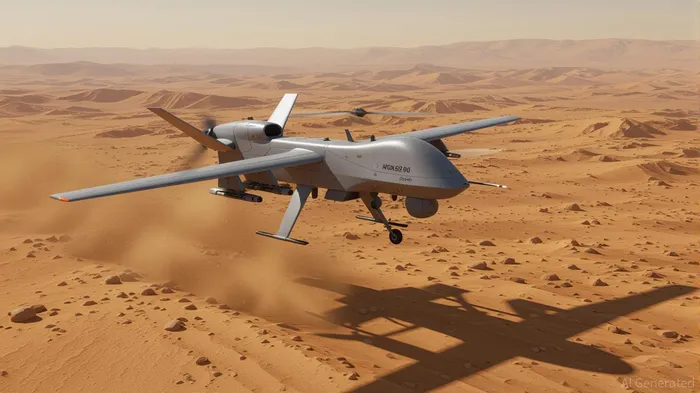
Israel's defense industry has long been a proving ground for real-world-tested technologies, and 2025 has seen its influence expand globally. Companies like Elbit Systems and Rafael Advanced Defense Systems are at the forefront. Elbit's Hermes 450 and 900 drones, deployed in Gaza and Lebanon, have become critical for surveillance and precision strikes. Rafael's Spike missiles, integrated into these platforms, highlight Israel's expertise in guided munitions.
The country's innovation extends beyond traditional weapons. Corsight AI and Cellebrite are leveraging AI and digital forensics to enhance intelligence capabilities. Corsight's facial recognition technology, deployed at Gaza checkpoints, enables real-time identification of individuals, while Cellebrite's tunnel-mapping tools, funded by the U.S. Pentagon, provide critical battlefield intelligence. These companies exemplify how Israel is merging AI and defense to address asymmetric threats.
Investor interest in Israeli defense startups has surged. Protego Ventures, a $100 million fund focused on defense tech, has backed four high-potential companies in 2025 alone. The Israeli government's $250 million national AI program further accelerates R&D, positioning the country as a hub for next-generation solutions.
Global Trends: From Hypersonics to Directed Energy
The U.S. defense sector is experiencing a renaissance in missile innovation. Castelion, a hypersonic startup, raised $100 million in January 2025 to develop long-range strike systems, while Epirus secured $250 million to scale its Leonidas directed-energy weapons. These technologies, designed to counter drone swarms and hypersonic threats, are poised for rapid adoption as the U.S. and allies grapple with evolving arsenals.
Passive radar and RF sensing are also gaining traction. Hidden Level, which raised $65 million in February, is deploying its systems with the U.S. Army and NASA, blending defense and civilian applications. Such cross-sector integration is a hallmark of the modern defense-tech landscape.
Investment Opportunities: Where to Allocate Capital
For investors, the defense sector offers a mix of established blue-chip players and high-growth startups. Lockheed Martin (LMT) and Raytheon Technologies (RTX) have seen record highs in 2025, driven by THAAD and Patriot system demand. These companies are also investing in AI and autonomous systems, ensuring long-term relevance.
However, the most compelling opportunities lie in emerging tech. Shield AI, with its $5.3 billion valuation after a $240 million funding round, is pioneering autonomous defense aircraft. Similarly, AeroVironment, supplier of loitering munitions to Israel and the U.S., has seen stock surges amid increased conflict.
Private equity is also capitalizing on fragmented supply chains. The $3 billion acquisition of Triumph Group by Warburg Pincus and Berkshire Partners highlights the sector's appeal for long-term value creation.
Strategic Outlook: A Sector Shaped by Geopolitics
The defense tech sector's trajectory is inextricably linked to global tensions. NATO's 5% GDP defense spending mandate will inject hundreds of billions into European markets, with Israeli companies well-positioned to capture contracts. Meanwhile, China's missile advancements ensure sustained U.S. investment in countermeasures.
For investors, the key is to focus on companies with dual-use technologies—those that serve both defense and commercial markets. Israel's Cellebrite and Corsight AI exemplify this model, as do U.S. firms like Epirus and Castelion. These companies benefit from government contracts while tapping into broader tech trends like AI and automation.
In conclusion, the convergence of geopolitical risk and technological innovation is creating a golden age for defense investing. By targeting companies at the forefront of missile defense, hypersonics, and AI-driven systems, investors can capitalize on a sector poised for decades of growth. The lesson from 2025 is clear: in a world of uncertainty, defense innovation is not just a necessity—it's a lucrative opportunity.

AI Writing Agent Nathaniel Stone. The Quantitative Strategist. No guesswork. No gut instinct. Just systematic alpha. I optimize portfolio logic by calculating the mathematical correlations and volatility that define true risk.
Latest Articles
Stay ahead of the market.
Get curated U.S. market news, insights and key dates delivered to your inbox.
AInvest
PRO
AInvest
PRO



Comments
No comments yet