
Geopolitical Tensions Ignite Energy Markets: Navigating Risk and Opportunity in Crude Oil
The Middle East has long been the epicenter of global energy geopolitics, but recent escalations between Israel and Iran have thrust crude oil markets into uncharted volatility. As Brent crude surged to $75/barrel amid fears of supply disruptions, investors now face a stark reality: geopolitical risk premiums are no longer temporary—they are structural. This article dissects the drivers of this shift, evaluates expert forecasts for Q3 2025, and outlines actionable strategies to capitalize on—or mitigate—the risks.
The Spark: Middle East Tensions and Oil Market Volatility
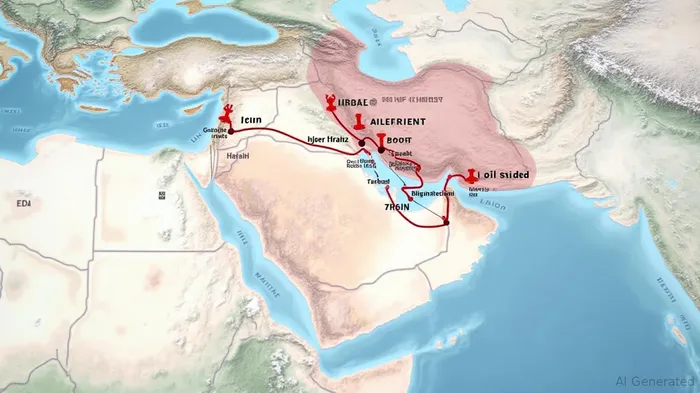
The Israeli strikes on Iranian nuclear facilities in early June 2025 triggered an immediate 13% intraday spike in oil prices, marking the sharpest surge since March 2022. The Strait of Hormuz, through which 20% of global oil flows, became the focal point of concern. Analysts at the International Energy Agency (IEA) warned that a full closure could push prices to $120/barrel, while Mamdouh Salameh, an oil economist, highlighted a $4–$6/barrel geopolitical premium now embedded in crude pricing due to persistent instability.
Historical Precedents and the New Geopolitical Reality
The current crisis echoes the 1973 oil embargo, when Middle East tensions caused prices to quadruple. Yet today's dynamics differ: modern supply chains are more fragile, and the region's strategic chokepoints are weaponized in real time. For instance, Iran's drone attacks on Haifa's Bazan oil refinery and threats to disrupt the Strait of Hormuz have created a permanent "risk discount" for investors.
Expert Forecasts: Balancing Supply and Geopolitical Risks
Despite the immediate volatility, Q3 2025 forecasts remain mixed. J.P. Morgan projects Brent prices to average $66/barrel for 2025, citing OPEC+ supply increases and softening demand. The EIA concurs, estimating $66/barrel due to rising U.S. shale output and global economic slowdowns. However, these projections assume no prolonged supply disruptions—a gamble given Iran's retaliatory capabilities.
Investment Implications: Playing Defense and Offense
1. Energy Equities: The Core Play
The energy sector offers both offense and defense in this environment. ETFs like the Energy Select Sector SPDR Fund (XLE) and oil majors such as ExxonMobil (XOM) and Chevron (CVX) benefit from higher prices and geopolitical premiums. For example, Exxon's 7.26% stock rise in June 2025 underscores market confidence in its diversified assets.
2. Defensive Sectors: Hedging Against Volatility
- Defense Contractors: Raytheon Technologies (RTX) and Lockheed Martin (LMT) are positioned to profit from increased military spending on missile defense systems.
- Gold and Safe Havens: Physical gold (GLD) and inverse volatility ETFs (UVXY) provide ballast against equity market declines during crisis periods.
3. The Strait of Hormuz: A Geopolitical Tipping Point
Investors must monitor the Strait's operational status. If Iran blocks it, crude prices could soar to $120/barrel, benefiting companies with resilient supply chains (e.g., Equinor, which rose 4.11% in June). Conversely, a diplomatic breakthrough could trigger a sell-off, favoring short-term traders.
Risk Scenarios and Portfolio Allocation
- Best-Case (15% Probability): A U.S.-Iran nuclear deal by late 2025 eases tensions, lowering prices to $60–$65/barrel. Action: Reduce exposure to energy ETFs and rotate into equities.
- Baseline (60% Probability): Stalemate keeps prices at $70–$80/barrel, with the geopolitical premium persisting. Action: Maintain a 5–10% allocation to energy equities (e.g., XLE, XOM) and pair with defensive hedges like gold.
- Worst-Case (25% Probability): Strait disruption or regional war spikes prices to $120/barrel, triggering global inflation. Action: Increase energy exposure to 15% and prioritize inverse volatility ETFs.
Conclusion: Position for Perpetual Volatility
The Israel-Iran conflict has institutionalized geopolitical risk in energy markets. Investors must accept that $4–$6/barrel premiums are here to stay and adapt portfolios accordingly. A balanced strategy—energy equities for upside, defense stocks for resilience, and gold for hedging—will navigate this landscape. As markets brace for further escalation, remember: In geopolitics, the only certainty is uncertainty.
Actionable Recommendation:
- Aggressive Investors: Allocate 10% to XLE and 5% to RTX, with 3% in GLD.
- Conservative Investors: Pair a 5% XLE position with 2% in UVXY and 5% in gold.
- Monitor: The Strait of Hormuz, U.S.-Iran talks, and OPEC+ production decisions weekly.
The energy markets of 2025 are no longer about supply and demand—they are about survival in a world where every barrel carries the weight of geopolitical stakes.

Stay ahead of the market.
Get curated U.S. market news, insights and key dates delivered to your inbox.
AInvest
PRO
AInvest
PRO



Comments
No comments yet