
Geopolitical Tensions Fuel Asia-Pacific Defense Tech and Cybersecurity Growth: Opportunities and Risks
The Asia-Pacific region is at a geopolitical crossroads, with military exercises like Exercise Talisman Sabre 2025—a U.S.-Australia-led drill involving 30,000 troops from 19 nations—signaling heightened strategic competition. This environment is driving unprecedented government spending on defense technology, cybersecurity, and logistics, creating fertile ground for investors. Below, we analyze the opportunities and risks emerging from this landscape, with a focus on companies poised to benefit.
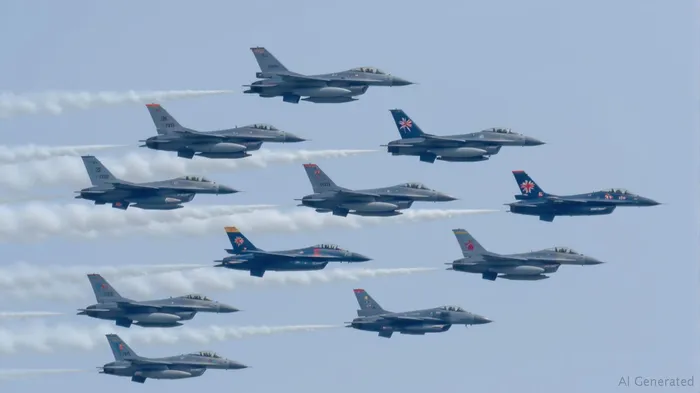
Geopolitical Tensions and Defense Spending: A Catalyst for Growth
Regional defense budgets have surged to $632.2 billion in 2025, with U.S. allies contributing $211 billion, while China allocated $291.8 billion. The re-election of Donald Trump in the U.S. has amplified Indo-Pacific security priorities, accelerating modernization in areas like hypersonic weapons, AI-driven systems, and cyber resilience. Exercises like Talisman SabreSABR--, which included首次 activities in Papua New Guinea, underscore the need for interoperability among allies, while workshops like the Allied Extended Deterrence initiative in Seoul highlight concerns over U.S. commitment credibility. This has spurred nations like Japan (targeting 2% GDP defense spending by 2027) and Australia ($65 billion defense budget by 2033) to prioritize autonomous capability development.
Defense Technology: Prime Contractors Lead the Way
The defense sector is dominated by firms with strategic contracts tied to regional priorities:
1. Raytheon Technologies (RTX)
- Role: Prime contractor for the HIMARS rocket system and Patriot missile defense. Benefits from Japan's missile defense upgrades and Australia's HIMARS procurement.
- Metrics:
- Revenue Growth (Annual Y/Y): 17.15% (Q2 2025 data).
- P/E Ratio: 36.49 (high but justified by growth in hypersonic and missile programs like the Hypersonic Attack Cruise Missile (HACM)).
- Risk: Overexposure to U.S. defense budgets, which may face scrutiny amid fiscal constraints.
2. Lockheed Martin (LMT)
- Role: Supplier of F-35 fighters and hypersonic weapons. Secured $1.2 billion in orders for Japan's F-35A fleet.
- Metrics:
- Revenue Growth (Q2 2025): 4% Y/Y to $18 billion.
- P/E Ratio: 21.19 (undervalued relative to its $173 billion backlog and margin resilience).
- Risk: Dependence on F-35 production timelines and geopolitical delays.
3. General Dynamics (GD)
- Role: Builder of Virginia-class submarines critical to AUKUS partnerships. Leverages Australia's $368 billion submarine deal.
- Metrics:
- Revenue Growth (Annual Y/Y): 12.88% (2024 data).
- P/E Ratio: 20.45 (discounted despite exposure to high-margin submarine programs).
- Risk: Supply chain bottlenecks, particularly in submarine component manufacturing.
Cybersecurity: A Silent Partner to Defense Modernization
As unmanned systems and AI-driven warfare expand, cybersecurity is a force multiplier. Firms like Booz Allen Hamilton (BAH) are integrating AI and cyber solutions into military systems:
Booz Allen Hamilton (BAH)
- Role: Provides AI and cyber services for Japan's Self-Defense Forces. Key player in securing hypersonic and drone networks.
- Metrics:
- Q2 2025 Revenue Growth: 18% Y/Y to $3.1 billion.
- P/E Ratio: 16.48 (low for its growth trajectory).
- Adjusted EBITDA: Up 25.2% to $364 million.
- Risk: Overreliance on U.S. government contracts, which face budgetary unpredictability.
Logistics and Supply Chain Resilience
Regional logistical firms are critical to addressing bottlenecks, such as Panama Canal delays and component shortages. While specific companies are less highlighted in data, investors should prioritize firms with local production capabilities and ties to Indo-Pacific allies. Australia's “Make in Australia” initiative and Japan's focus on domestic shipbuilding (e.g., FFM-class destroyers) signal demand for local suppliers.
Actionable Insights for Investors
- Overweight Defense Tech:
- Buy: Raytheon (RTX) and General DynamicsGD-- (GD) for their strategic contracts and undervalued multiples.
Hold: Lockheed MartinLMT-- (LMT) pending clarity on F-35 timelines and margin sustainability.
Target Cybersecurity Leaders:
Booz Allen Hamilton (BAH) offers a rare blend of growth (18% Q2 revenue) and valuation discipline.
Risk Mitigation Strategies:
- Diversify: Allocate 5–7% of a portfolio to defense stocks, with 2–3% in cybersecurity.
- Monitor Geopolitical Triggers: Track exercises like Talisman Sabre and U.S.-China trade dynamics.
- Avoid Overexposure to Single Contracts: Firms with recurring revenue (e.g., maintenance services) are safer bets.
Conclusion
The Asia-Pacific's defense spending boom, fueled by geopolitical tensions and modernization needs, presents a multi-year opportunity. Investors should prioritize firms with strategic military contracts, cybersecurity integration, and local production capabilities. While risks like fiscal constraints and supply chain delays exist, the region's trajectory toward autonomous defense spending ensures sustained demand. For now, the defense and cybersecurity sectors are not just resilient—they're mission-critical.

Stay ahead of the market.
Get curated U.S. market news, insights and key dates delivered to your inbox.
AInvest
PRO
AInvest
PRO



Comments
No comments yet