
The Geopolitical and Technological Implications of Starlink's Direct-to-Cell Expansion in Conflict Zones
 Aime Summary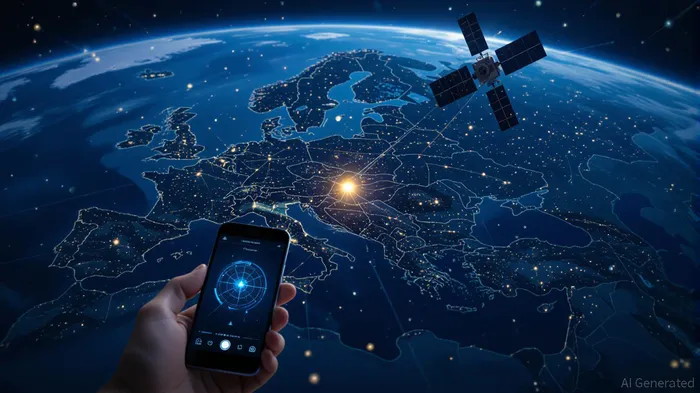
The world is witnessing a seismic shift in how nations and corporations approach communication infrastructure. SpaceX's Starlink Direct-to-Cell (D2C) technology, now operational in Ukraine, has redefined the boundaries of crisis resilience and geopolitical strategy. By enabling 4G smartphones to connect directly to satellites in a wartime environment, this innovation has not only kept Ukraine's communication networks alive but also signaled the dawn of a new era in satellite-based telecoms. For investors, this is more than a technological breakthrough—it's a harbinger of a multi-decade trend where space-based infrastructure becomes the backbone of global crisis response and national security.
A New Paradigm for Crisis Resilience
In 2025, Ukraine's deployment of Starlink D2C has proven that satellite communications can bypass the vulnerabilities of terrestrial networks. During the Zhytomyr region trials, the system achieved 3 Mbps download speeds and 0.5 Mbps upload speeds—sufficient for critical messaging, video calls, and over-the-top (OTT) services. This capability has been a lifeline for Ukrainian civilians and military personnel, enabling real-time coordination in liberated regions and sustaining humanitarian efforts in hospitals and emergency services. The success of D2C in Ukraine has shown that satellite networks can function as mobile communication hubs, even in areas without electricity or traditional infrastructure.
The strategic implications are profound. Nations are now racing to integrate low-Earth-orbit (LEO) satellite systems into their crisis response frameworks. The U.S., EU, and China are investing heavily in sovereign satellite capabilities, while Russia is militarizing its space assets. For investors, this global push toward technological sovereignty creates a goldmine of opportunities in aerospace, cybersecurity, and AI-driven infrastructure.
The Investment Landscape: Aerospace and Satellite Infrastructure
The LEO satellite market is projected to grow from $7.71 billion in 2024 to $11.53 billion by 2032, driven by demand for high-speed internet, earth observation, and secure communications. Key players like SpaceX, Amazon's Project Kuiper (AMZN), and OneWeb are leading the charge, but the ecosystem extends to smaller firms specializing in satellite manufacturing, ground infrastructure, and cybersecurity.
Investors should focus on companies that are not only building satellites but also addressing the challenges of space congestion and regulatory complexity. For example, Planet Labs PBCPL-- (PL) is leveraging AI to enhance earth observation data, while Eutelsat (ETL) is positioning itself as a European alternative to Starlink. Additionally, cybersecurity firms like CrowdStrikeCRWD-- (CRWD) and PalantirPLTR-- (PLTR) are becoming critical partners in securing satellite networks against cyberattacks and geopolitical threats.
Geopolitical Strategies and Long-Term Value
The geopolitical stakes in satellite communications are escalating. The U.S. is prioritizing national defense through initiatives like the Golden Dome missile defense system, while the EU is funding its own satellite networks to reduce reliance on U.S. providers. China's 15,000+ satellite constellation and Russia's R-441 “Liven” system underscore a global race to control space-based infrastructure.
For investors, the key is to identify firms that align with these geopolitical trends. SpaceX's D2C technology has already demonstrated its value in Ukraine, but the long-term winners will be those that can scale their solutions across conflict zones, natural disaster regions, and emerging markets. Companies like ViasatVSAT-- (VSAT) and Hughes Network Solutions (HNS) are also positioning themselves to capitalize on the growing demand for resilient satellite broadband.
The Road Ahead: Positioning for the Satellite Revolution
The lessons from Ukraine are clear: satellite communications are no longer a luxury but a necessity for crisis resilience. As nations diversify their communication infrastructure and invest in sovereign satellite capabilities, the demand for LEO networks will only grow. This trend is expected to drive innovation in satellite design, AI-driven network optimization, and cybersecurity protocols.
Investors should adopt a dual strategy:
1. Long-term bets on companies building the next generation of satellite infrastructure (e.g., SpaceX, AmazonAMZN--, OneWeb).
2. Short-term opportunities in firms addressing immediate challenges like space debris mitigation and regulatory compliance.
The satellite communications revolution is here, and it's being accelerated by geopolitical tensions and technological breakthroughs. For those willing to invest in this space, the rewards could be as vast as the stars themselves.
Final Takeaway: The Ukraine conflict has proven that satellite communications are a force multiplier in crisis scenarios. As the world moves toward a future where LEO networks underpin global resilience, investors who position themselves in aerospace, cybersecurity, and AI-driven infrastructure will reap the benefits of this next industrial revolution. The time to act is now—before the next war or natural disaster makes terrestrial networks obsolete.

Delivering real-time insights and analysis on emerging financial trends and market movements.
Latest Articles
Stay ahead of the market.
Get curated U.S. market news, insights and key dates delivered to your inbox.




Comments
No comments yet