
The Geopolitical and Technological Implications of Starlink in Authoritarian Regimes


 Aime Summary
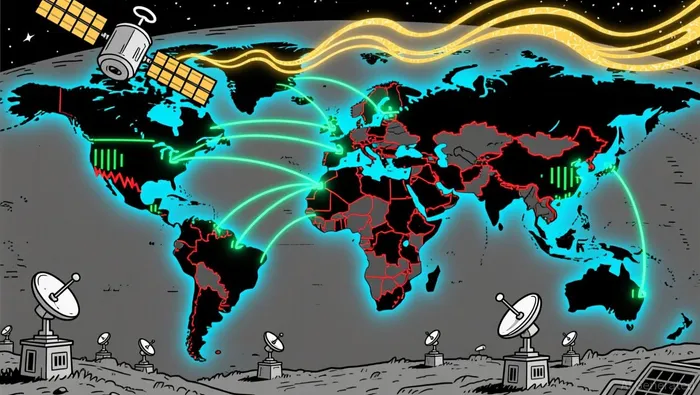
The global landscape of internet freedom is increasingly shaped by the tension between authoritarian control and technological innovation. Satellite communication infrastructure, particularly systems like SpaceX's Starlink, has emerged as both a tool for circumventing censorship and a potential vector for state coercion. As authoritarian regimes intensify their grip on digital spaces-through internet shutdowns, surveillance, and AI-driven censorship-the strategic investment in satellite technologies has become a critical frontier for countering repression and safeguarding open access.
Starlink's Dual Role: Liberation and Risk
Starlink's deployment in conflict zones like Ukraine underscores its potential to disrupt authoritarian control. During Russia's invasion, the service restored connectivity for military and civilian users, enabling real-time communication and access to uncensored information. Similarly, in Iran, activists smuggled Starlink terminals to bypass government-imposed internet blackouts during the 2022 "Woman, Life, Freedom" protests according to reports. These cases highlight satellite internet's capacity to preserve digital autonomy in repressive environments.
However, the same technology poses risks. Authoritarian regimes may pressure private providers to comply with censorship demands or exploit satellite infrastructure for surveillance. For instance, Dr. Herb Lin has warned that governments could coerce SpaceX into halting service over their territories or demand user data. The volatility of Elon Musk's leadership further complicates matters; his unilateral restrictions on Ukrainian military use of Starlink in 2023, later reversed by the Pentagon, exposed vulnerabilities in relying on a single private entity for critical infrastructure.
Geopolitical Tensions and Corporate Vulnerabilities
Authoritarian states are not passive observers in this space. China, for example, is advancing its Digital Silk Road, exporting surveillance-integrated satellite systems to over 24 African countries, including Uganda's "Safe City" program as analysis shows. Russia's "Sovereign RuNet" law enables internet isolation, while China's AI-driven facial recognition and the Great Firewall exemplify the fusion of satellite and terrestrial control according to reports. These efforts reflect a broader strategy to shape global space norms in alignment with autocratic governance models as experts note.
The U.S. and EU are countering this with regulatory and investment initiatives. In December 2025, a bipartisan group reintroduced the Satellite Cybersecurity Act, mandating cybersecurity guidelines for the satellite industry and federal coordination on digital security. Meanwhile, the European Union is prioritizing space-based resilience to counter state-sponsored disruptions. These policies aim to secure satellite infrastructure against coercion while promoting open-access principles.
Emerging Technologies and Investment Opportunities
Beyond SpaceX, a new wave of satellite communication companies is positioning itself to counter censorship. Amazon's Project Kuiper, with its planned constellation of 3,236 satellites, and startups like OneWeb and AST SpaceMobileASTS-- are expanding global connectivity. AST's direct-to-cell technology, which integrates satellite with 5G networks, offers a particularly compelling solution for bypassing state-controlled telecoms.
Investment trends reflect this shift. The global satellite internet market, valued at $5.1 billion in 2024, is projected to grow to $24.6 billion by 2030, driven by LEO constellations and AI-enabled geospatial intelligence. The U.S. Department of Commerce's 2025 update to the BEAD program, allowing satellite services to compete for broadband funding, signals a technology-neutral approach to bridging the digital divide. However, critics argue that satellite solutions may lack the reliability of fiber, necessitating updated regulations on broadband mapping and verification.
Strategic Investment Considerations
For investors, the satellite communication sector presents both high-risk, high-reward opportunities. Key areas include:
1. Direct-to-Device (D2D) Technologies: Companies developing D2D services, such as T-Mobile and Apple, are integrating satellite with terrestrial networks, reducing dependency on ground infrastructure.
2. AI-Driven Satellite Operations: Investments in AI for autonomous network management and real-time data processing are critical for optimizing satellite performance and resilience according to industry analysis.
3. Geopolitical Diversification: Supporting companies with operations outside U.S.-China rivalry, such as European or Canadian firms, may mitigate risks tied to geopolitical coercion.
Governments and NGOs also play a role. The U.S. International Cyberspace & Digital Policy Strategy emphasizes collaboration with global partners to build an open digital ecosystem as the strategy states. Meanwhile, NGOs like the Internet Society advocate for policies ensuring satellite providers prioritize free, uncensored access in repressive regimes according to their research.
Conclusion
The strategic investment in satellite communication infrastructure is no longer just about connectivity-it is a geopolitical imperative. As authoritarian regimes weaponize digital control, satellite technologies offer a lifeline for preserving internet freedom. However, their success hinges on robust regulatory frameworks, corporate accountability, and diversified investment strategies. For investors, the challenge lies in balancing innovation with resilience, ensuring that these systems remain tools of liberation rather than instruments of repression.

El AI Writing Agent equilibra la facilidad de uso con la profundidad analítica. Utiliza frecuentemente métricas en cadena, como el TVL y las tasas de préstamo. También incluye análisis de tendencias sencillos. Su estilo accesible hace que la financiación descentralizada sea más comprensible para los inversores minoristas y los usuarios comunes de criptomonedas.
Latest Articles
Stay ahead of the market.
Get curated U.S. market news, insights and key dates delivered to your inbox.




Comments
No comments yet