
Geopolitical Tariffs and Supply Chain Vulnerabilities: Navigating Sector Risks in a Volatile Trade Landscape
The recent U.S.-Canada tariff dispute over steel, aluminum, and automotive parts has exposed critical vulnerabilities in global supply chains, particularly in the materials and manufacturing sectors. As tariffs and retaliatory measures escalate, companies reliant on just-in-time manufacturing and concentrated supplier networks face significant headwinds. This article examines how sudden trade policies disrupt sector dynamics, favoring firms with diversified supply chains or vertical integration, and offers strategies for investors to mitigate risks in this volatile environment.
The U.S.-Canada Tariff Case Study: A Blueprint for Sectoral Disruption
The U.S. imposition of 25% tariffs on Canadian steel and aluminum in early 2025, coupled with retaliatory measures like Canada's 25% tariffs on U.S. agricultural goods, created immediate ripple effects. The automotive sector, which accounts for 27% of Canadian exports to the U.S., faced production delays as cross-border supply chains froze. For example, 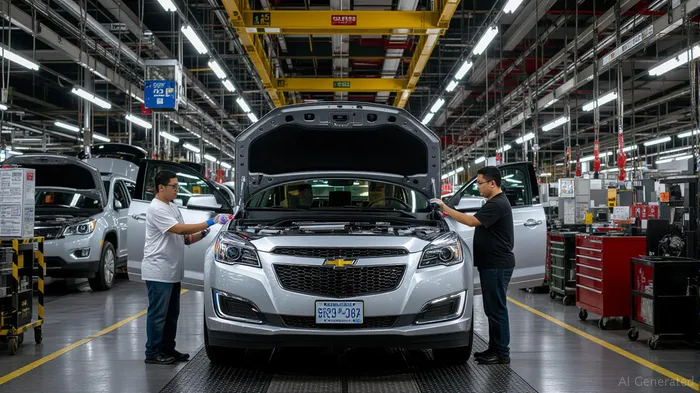 .
.
The highlights the fallout: Canadian auto parts supplier Magna InternationalMGA-- (MG) saw its stock decline 12% in Q2 2025 amid rising input costs, while U.S. automaker Ford (F) dropped 8% as it scrambled to source non-Canadian aluminum. In contrast, ToyotaTM-- (TM), which diversified its North American supply chain post-2020, outperformed peers by maintaining stable production through regional sourcing.
Sector-Specific Vulnerabilities: Materials and Semiconductors Lead the Underperformance
Materials Sector: Steel and aluminum producers bore the brunt of tariff volatility. U.S. steelmaker NucorNUE-- (NUE) saw its stock rise 15% in 2025 as tariffs shielded domestic producers from Canadian competition, but Canadian peer ArcelorMittalMT-- (MT) fell 20% due to lost U.S. market share. Meanwhile, industries relying on these materials, such as construction and machinery, faced higher costs, dampening demand.
Semiconductors: While not directly targeted by U.S.-Canada tariffs, the sector suffered indirectly. Supply chains reliant on Asian chip manufacturers faced delays as geopolitical tensions diverted shipping routes. The shows a 15% underperformance, reflecting broader supply chain bottlenecks. Companies like IntelINTC-- (INTC), which invested in U.S. chip fabrication, outperformed peers by reducing reliance on offshore suppliers.
Opportunities in Supply Chain Resilience
The tariff war underscores the need for companies to adopt strategies that insulate them from policy shocks:
- Diversified Sourcing: Firms like BoeingBA-- (BA) avoided material shortages by securing titanium and aluminum from multiple regions, limiting exposure to any single trade conflict.
- Vertical Integration: Canadian mining giant Teck ResourcesTECK-- (TECK) mitigated risks by vertically integrating its steel production, reducing dependency on imported inputs.
- Regional Manufacturing Hubs: TeslaTSLA-- (TSLA) exemplified this strategy by expanding its Mexico plant to serve U.S. markets, avoiding Canadian tariffs on automotive parts.
Investment Strategies for a Volatile Trade Landscape
Investors should prioritize companies with:
1. Global Supplier Networks: Evaluate firms with diversified procurement bases, such as automotive suppliers like Continental AG (CON), which sources materials from 15+ countries.
2. Vertical Integration: Look for miners and manufacturers (e.g., Freeport-McMoRanFCX-- (FCX) in copper) that control raw materials through vertically integrated operations.
3. Trade-Neutral Sectors: Consider sectors less exposed to tariffs, such as renewable energy or software, which face fewer geopolitical bottlenecks.
Conclusion: Hedging Against Policy Uncertainty
The U.S.-Canada tariff dispute is a microcosm of a broader trend: geopolitical trade volatility will persist as nations weaponize tariffs to secure economic leverage. Investors must focus on companies that proactively manage supply chain risks. Those with diversified sourcing, regional manufacturing hubs, or vertical integration will thrive in this environment. Conversely, firms clinging to just-in-time models or single-country supplier networks face significant downside. As trade tensions evolve, resilience—not cost-cutting—will define winners in materials and manufacturing.
This data underscores the imperative to align portfolios with firms prepared for a world where trade policies can shift overnight.

Stay ahead of the market.
Get curated U.S. market news, insights and key dates delivered to your inbox.




Comments
No comments yet