
Geopolitical Tariff Crossroads: Navigating Risks and Opportunities in Asian Trade Realignment
The escalating U.S.-Japan tariff standoff and India's push for trade deals with the U.S. and ASEAN are reshaping Asia-Pacific supply chains, creating both risks and opportunities for investors. With a July 9, 2025, deadline looming for U.S. tariffs on Japanese auto imports, and India negotiating a landmark trade agreement with the U.S., the region is at a crossroads. This article dissects the geopolitical chessboard and identifies sectors poised to thrive—or falter—in this new trade reality.
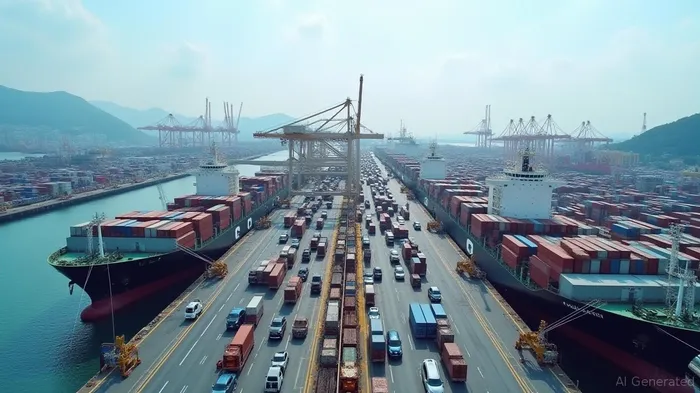
1. U.S.-Japan Tariff Threats: A Supply Chain Stress Test
The U.S. has imposed a 27.5% tariff on Japanese auto imports, with a potential escalation to 35% if no agreement is reached by July 9. This has already inflated U.S. car prices by 13.6%, per Yale's Budget Lab analysis. The stakes are existential for Japanese automakers like Toyota (TM) and Honda (HMC), whose shares have dropped 8% and 12%, respectively, since May 2025 tariff threats resurfaced.
The tariffs are forcing Japanese suppliers to reshore production. Denso is investing $200 million in a Tennessee EV inverter plant, while Aisin is moving transmission production to Mexico to achieve 62% compliance with the U.S.-Mexico-Canada Agreement (USMCA). However, these moves require time and capital, leaving margins squeezed until 2026.
Investment Implication: Short Japanese auto equities ahead of the July 9 deadline. A "no deal" outcome could push Toyota's margins down by 15%, with shares likely to underperform until supply chains restructure.
2. India's Trade Deal Progress: A Geopolitical Counterbalance
While Japan navigates U.S. tariffs, India is advancing strategic trade agreements to strengthen its position. Negotiations with the U.S. aim to double bilateral trade to $500 billion by 2030, with automotive and tech sectors central to the deal. Key points include:
- Automotive Sector: India seeks reduced U.S. tariffs on auto components, while the U.S. aims to open Indian markets for luxury vehicles and EV tech. India's $32 billion automotive parts exports to the U.S. stand to gain from streamlined rules of origin.
- Tech and Digital Trade: Mutual recognition of standards for EV charging infrastructure and smart mobility systems could reduce compliance costs for Indian firms like Tata Motors and Ashok Leyland.
India's red lines—agriculture and dairy—remain unresolved, but a "mini-deal" targeting intermediate goods (e.g., automotive components) and strategic purchases (e.g., BoeingBA-- aircraft) is likely by late 2025.
Investment Implication: Favor Indian automotive stocks like Mahindra & Mahindra (M&M) and Bajaj Auto, which benefit from FDI reforms and access to U.S. markets.
3. Sectors to Watch: Automotive and Tech in the Crosshairs
The tariff war is accelerating structural shifts in two key sectors:
Automotive
- U.S. Winners: U.S. auto parts861154-- suppliers like BorgWarner (BW) and Magna International (MG) are gaining share as Japanese firms reshore. Both stocks are undervalued relative to their growth potential.
- India's Play: India's "Make in India" initiative is attracting EV investments. Tata Motors (via its partnership with Pininfarina) and Hero Electric (e-bikes) are positioned to capitalize on U.S. market access.
Semiconductors and Tech
- Indirect Casualties: Japanese semiconductor suppliers like Renesas face indirect tariff penalties via auto parts. U.S. firms Intel (INTC) and Texas Instruments (TXN) gain market share.
- Equipment Leaders: U.S. semiconductor equipment makers Applied Materials (AMAT) and Lam Research (LRCX) (+22% YTD) are beneficiaries of global reshoring trends.
4. Geopolitical Risks and Strategic Positioning
The July 9 deadline is a binary event:
- No Deal: Japanese auto margins collapse; U.S. reshored supply chains dominate. Investors should short EWJ (iShares MSCIMSCI-- Japan ETF) and pair with long positions in DBA (commodity fund) due to potential rice price spikes.
- Deal Struck: Auto stocks rebound, but U.S. reshoring trends persist. Rotate into Toyota post-agreement but retain exposure to U.S. suppliers like Magna.
For India, the U.S. FTA's success hinges on balancing agricultural protectionism with automotive liberalization. Investors should also monitor India's ASEAN FTA renegotiations, where rules of origin reforms could curb "trade diversion" by Chinese competitors.
Conclusion: Positioning for the New Trade Order
The U.S.-Japan tariff standoff and India's trade diplomacy are forcing a realignment of Asia-Pacific supply chains. Investors must:
1. Short Japanese auto equities ahead of July 9.
2. Buy U.S. auto parts suppliers (BW, MG) and semiconductor equipment makers (AMAT, LRCX).
3. Invest in India's automotive and tech sectors (M&M, INTC) as trade deals materialize.
The winners will be those who adapt to reshored supply chains and geopolitical risk premiums. Stay agile—the next six months will define Asia's trade landscape for years to come.

Stay ahead of the market.
Get curated U.S. market news, insights and key dates delivered to your inbox.




Comments
No comments yet