
Geopolitical Storms and Strategic Ports: Defense and Renewables in Middle East Volatility
The Israel-Iran conflict has reignited fears of supply chain disruptions and geopolitical instability, sending shockwaves through global energy markets. While short-term volatility has rattled equities and commodities, the crisis also highlights two sectors poised for long-term growth: defense contractors and renewable energy firms. These industries are emerging as critical buffers against regional tensions, offering investors resilience in turbulent times.
Defense Contractors: Profiting from Preparedness
The current standoff mirrors historical patterns where geopolitical crises boost defense spending. During the 2003 Iraq invasion, Lockheed Martin's stock surged 18% in six months as U.S. military orders surged. Similarly, the 2020 U.S.-Iran tensions saw Raytheon's shares climb 12% amid heightened missile procurement.
Current Dynamics:
- Israel's Air Campaign: Strikes on Iranian nuclear sites have intensified regional militarization. Defense giants like Lockheed Martin (LMT) and Raytheon Technologies (RTX) are beneficiaries, as nations bulk up air defense systems and missile capabilities.
- Global Arms Race: The U.S. has deployed the USS Thomas Hudner to bolster Israeli defenses, signaling sustained demand for defense tech.
Investment Play:
- Overweight aerospace and defense ETFs like iShares U.S. Aerospace & Defense (ITA), which holds top contractors and has outperformed the S&P 500 by 15% over five years.
Renewable Energy: The Long-Term Hedge Against Fossil Fuel Volatility
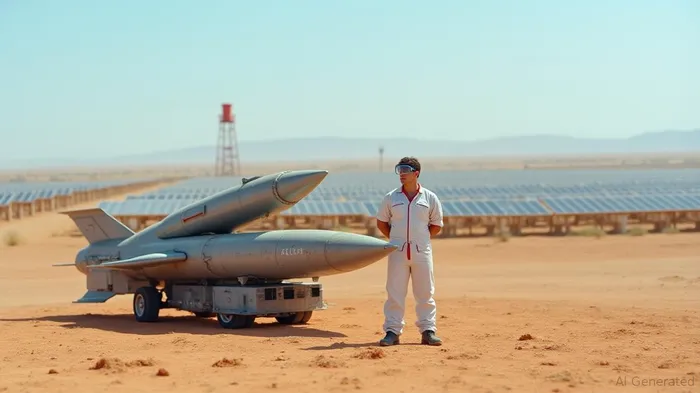
While oil prices spiked 7% post-Israel's strikes, the conflict underscores the risks of fossil fuel dependence. Middle Eastern nations, facing supply chain fragility, are accelerating renewable investments to reduce geopolitical exposure.
Key Trends:
1. Saudi Vision 2030: Aims to install 58 GW of renewables by 2030, with projects like the 1.5 GW Sakaka Solar Plant.
2. UAE's Masdar Initiative: Leading global wind and solar projects, including the 2 GW Noor Abu Dhabi solar farm.
3. Iran's Silent Shift: Despite sanctions, Tehran's 2025 budget allocates $5 billion to renewables to bypass fossil fuel embargoes.
Investment Play:
- Hardware Plays: First Solar (FSLR) and Vestas Wind Systems (VWDRY) are key suppliers to Middle Eastern solar/wind projects.
- ETFs: Invesco Solar ETF (TAN) and iShares Global Clean Energy ETF (ICLN) track the sector's growth.
Historical Context: Geopolitics as a Catalyst for Sector Shifts
Past crises reveal how energy volatility drives long-term investment themes:
- 1973 Oil Crisis: Sparked U.S. solar investments and diversification into coal/nuclear.
- 2022 Russia-Ukraine War: Accelerated European green energy adoption, with EU renewables investment rising 30% YoY.
Risks and Mitigation Strategies
- Defense Sector: Over-reliance on government contracts could see volatility if tensions de-escalate. Diversify with ETFs to spread risk.
- Renewables: Policy shifts or delayed project financing may delay returns. Focus on firms with signed PPAs (Power Purchase Agreements) in stable markets.
Conclusion: A Dual-Pronged Investment Strategy
The Israel-Iran conflict is a geopolitical catalyst, but it also signals a structural shift toward energy resilience and defense preparedness. Investors should:
1. Allocate to Defense ETFs (e.g., ITA) for near-term gains tied to militarization.
2. Build a Renewable Core with firms like FSLR and ICLN to capitalize on Middle East diversification.
In a world where energy security is paramount, these sectors offer both stability and growth—a lifeline in the storm of Middle East volatility.
Data as of June 2025. Past performance does not guarantee future results. Consult a financial advisor before making investment decisions.

Stay ahead of the market.
Get curated U.S. market news, insights and key dates delivered to your inbox.
AInvest
PRO
AInvest
PRO



Comments
No comments yet