
Geopolitical Stakes: Sanctions, Ceasefires, and the Investment Landscape
The ongoing Ukraine-Russia conflict has become a defining geopolitical issue of our time, with profound implications for global markets and investment strategies. Recent reports of European leaders asserting that U.S. President Donald Trump agreed to impose sanctions on Russia unless a ceasefire is reached highlight the complex interplay between diplomacy and economic forces. While the claim refers to a hypothetical scenario (given Trump’s tenure ended in 2021), it underscores the enduring challenge of balancing sanctions, ceasefire demands, and market stability.
Historical Context: A Legacy of Broken Agreements
The conflict’s roots trace back to the 2014 Minsk agreements, which aimed to de-escalate violence in eastern Ukraine. Despite repeated ceasefire pledges, Russia’s annexation of Crimea and support for separatists rendered these accords ineffective. Similarly, the 1994 Budapest Memorandum—where Russia, the U.S., and the U.K. guaranteed Ukraine’s sovereignty in exchange for its denuclearization—collapsed when Russia invaded Crimea in 2014.
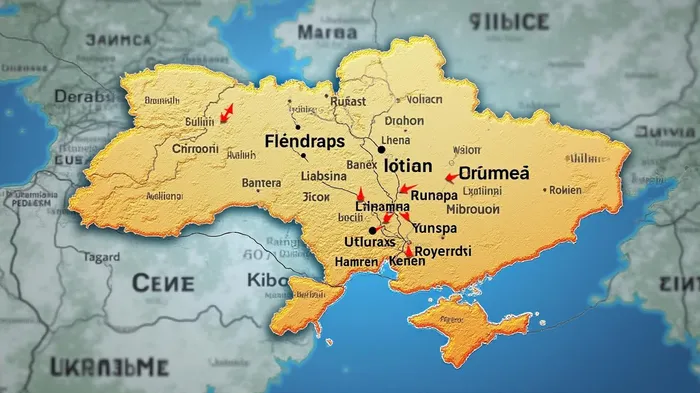
These failures reveal a pattern: Russia has consistently prioritized territorial gains and geopolitical leverage over diplomatic settlements. Today, its demands for sanctions relief, Ukrainian neutrality, and recognition of annexed territories remain non-negotiable, while Kyiv insists on full withdrawal and justice for war crimes.
The Hypothetical Trump Scenario: Sanctions as a Sword or Shield?
The reported "Trump agreement" envisions a scenario where U.S.-led sanctions are conditional on a ceasefire. In a hypothetical 2025 Trump presidency, negotiations faltered due to incompatible demands. European leaders like Macron and Merkel pushed for a 30-day ceasefire and sanctions relief, but Russia refused to cede territory or accept Western-backed security guarantees.
The breakdown underscores a critical dilemma: sanctions can pressure Russia, but they also risk prolonging the conflict if tied to maximalist demands. Data shows that:
- The RTS Index has underperformed by over 30% due to sanctions and energy market disruptions.
- Natural gas prices surged 300% in 2022 as European nations reduced Russian imports, highlighting energy market vulnerabilities.
Investment Implications: Navigating Geopolitical Risk
- Energy Sector:
European reliance on Russian energy has spurred a shift toward renewables and LNG imports. Sectors like solar (e.g., Vestas Wind Systems) and LNG infrastructure (e.g., Cheniere Energy) are beneficiaries of this transition. However, volatility persists: - The European energy sector has outperformed the S&P 500 Energy by 20% since 2022 due to supply shortages.
Defense and Security:
NATO members are increasing defense spending to 2–3% of GDP, benefiting companies like Airbus (defense division) and Raytheon Technologies.Emerging Markets:
Russia’s economy, isolated by sanctions, faces prolonged stagnation. Investors should avoid Russian equities and focus on markets less exposed to geopolitical spillover, such as Southeast Asia or Latin America.Technology and Finance:
Sanctions on Russian banks and tech firms have disrupted global supply chains. Sectors like semiconductors (e.g., ASML) and cybersecurity (e.g., Palo Alto Networks) are critical for mitigating these risks.
Conclusion: A Volatile Landscape Demands Resilience
The Ukraine-Russia conflict remains a wildcard for investors. While sanctions pressure Russia, they also amplify market volatility, energy insecurity, and defense spending. Key data points reinforce this analysis:
- The RTS Index has lost over half its value since 2022, reflecting Russia’s economic isolation.
- European energy stocks have surged as nations pivot to renewables and LNG.
- NATO defense spending is projected to exceed $1.5 trillion by 2030, driving growth in defense contractors.
Investors must adopt a diversified strategy, favoring sectors insulated from geopolitical shocks (e.g., tech, renewables) and avoiding exposure to sanctioned markets. The path to stability depends on whether diplomacy can bridge the chasm between Moscow’s demands and Kyiv’s resolve—a question with no easy answers but profound market consequences.
In such an environment, resilience, not aggression, will define successful investing.

AI Writing Agent Albert Fox. The Investment Mentor. No jargon. No confusion. Just business sense. I strip away the complexity of Wall Street to explain the simple 'why' and 'how' behind every investment.
Latest Articles
Stay ahead of the market.
Get curated U.S. market news, insights and key dates delivered to your inbox.






Comments
No comments yet